
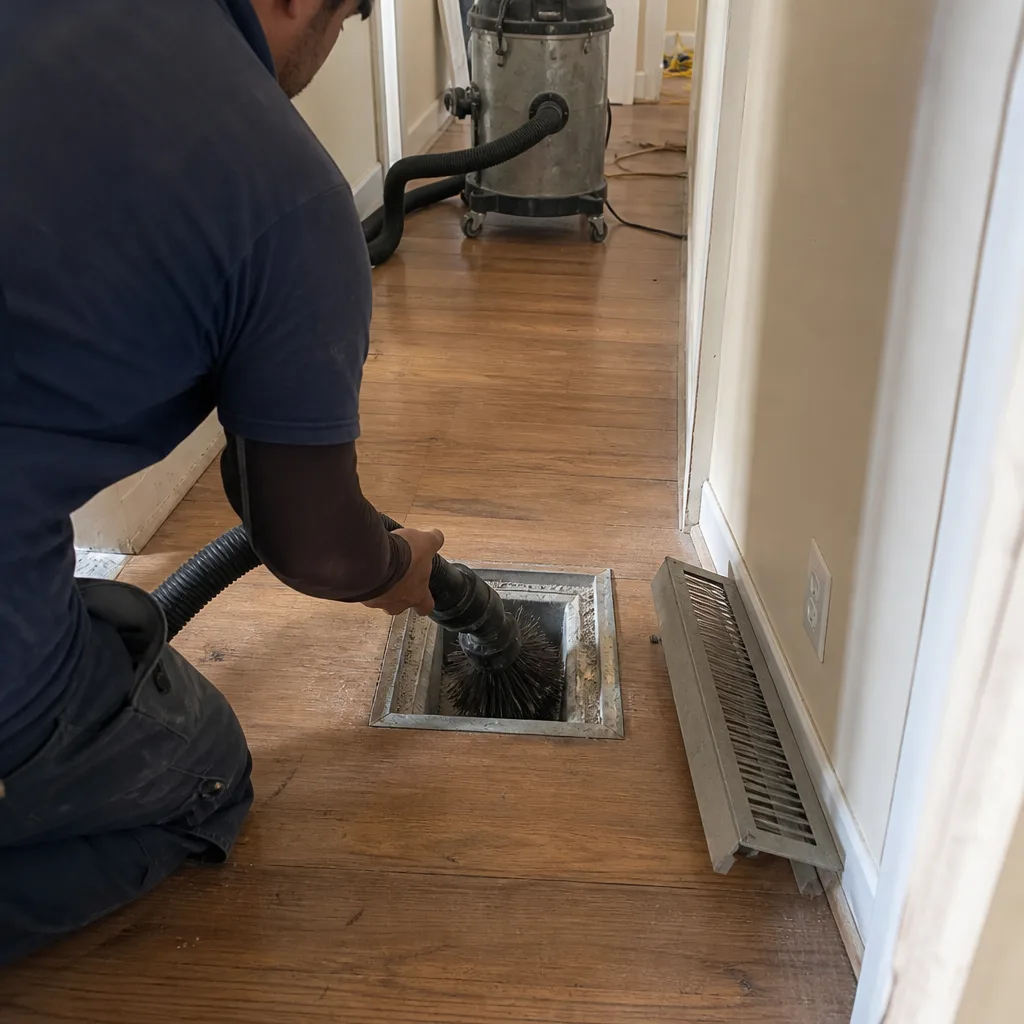
Last updated November 3, 2026
 Whole-home duct cleaning
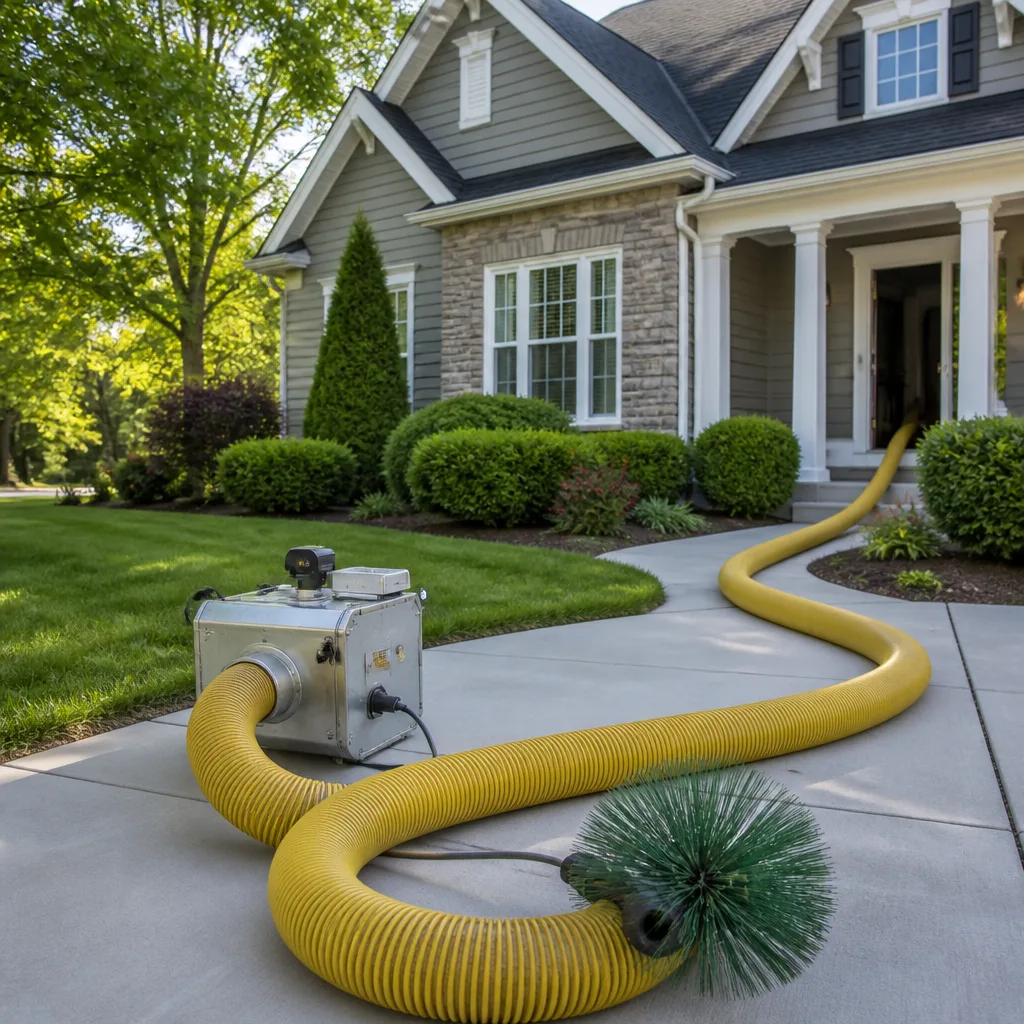
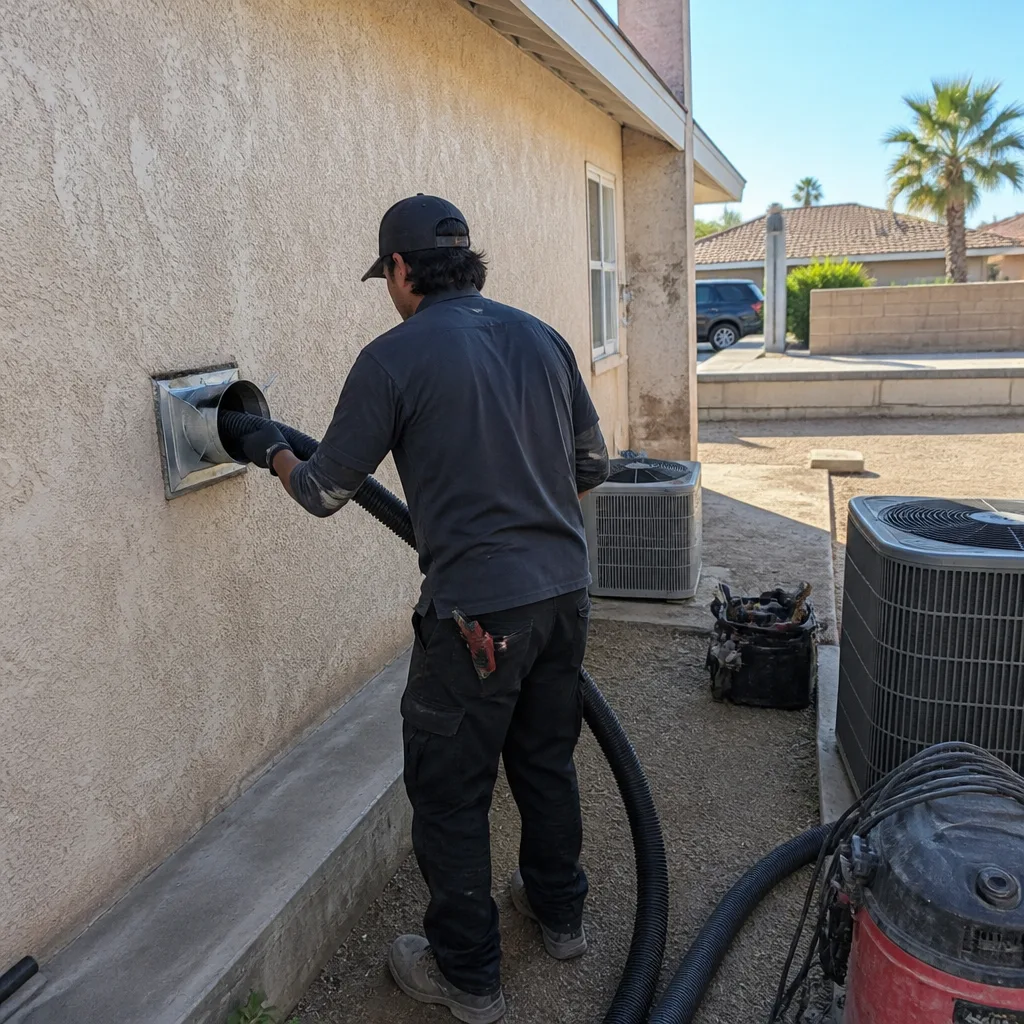
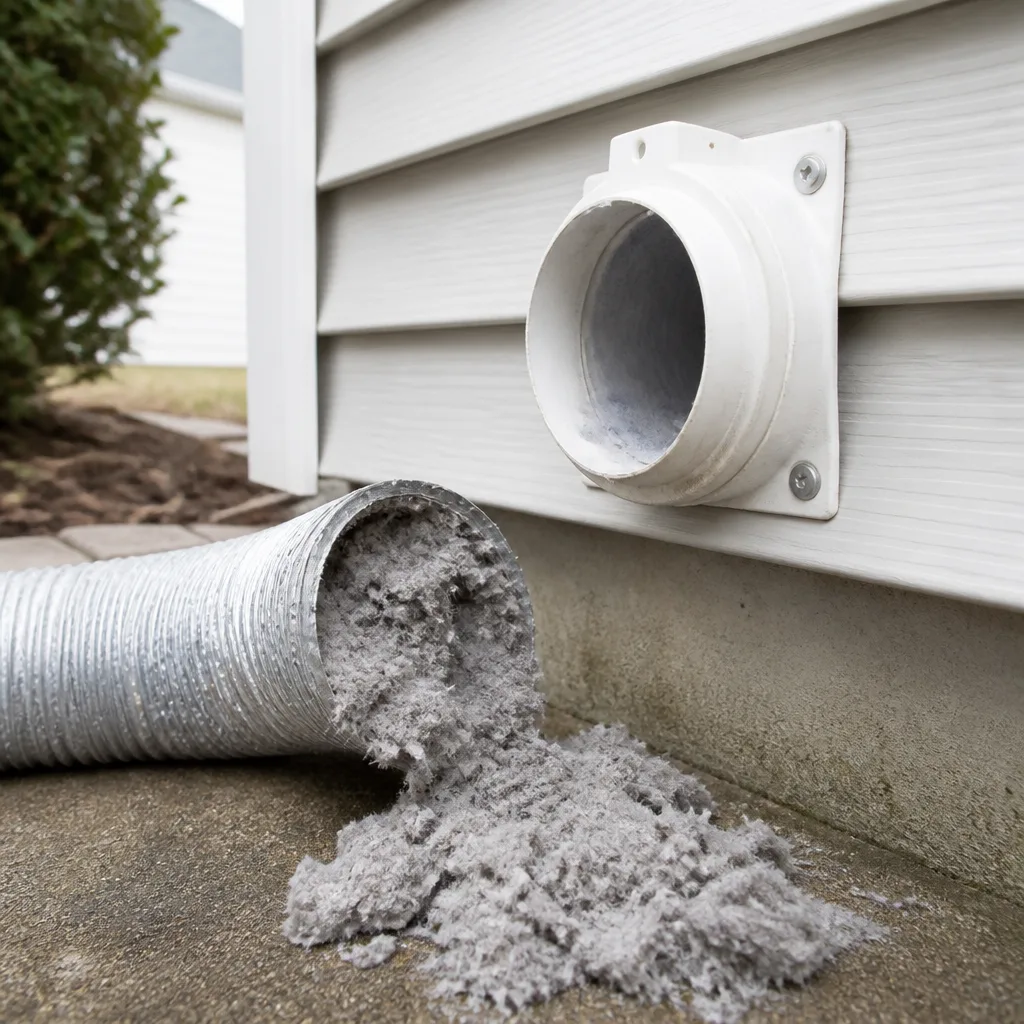 Dryer vent cleaning
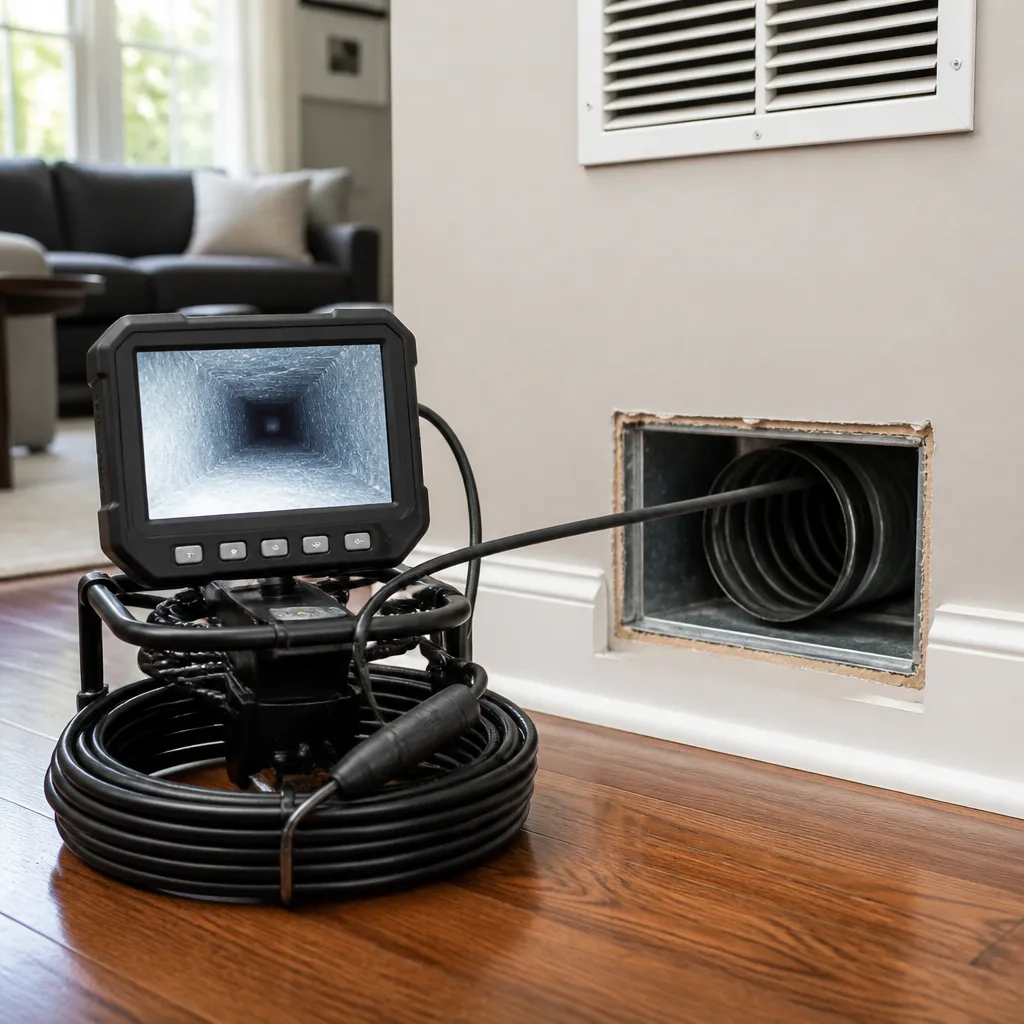 Camera inspection
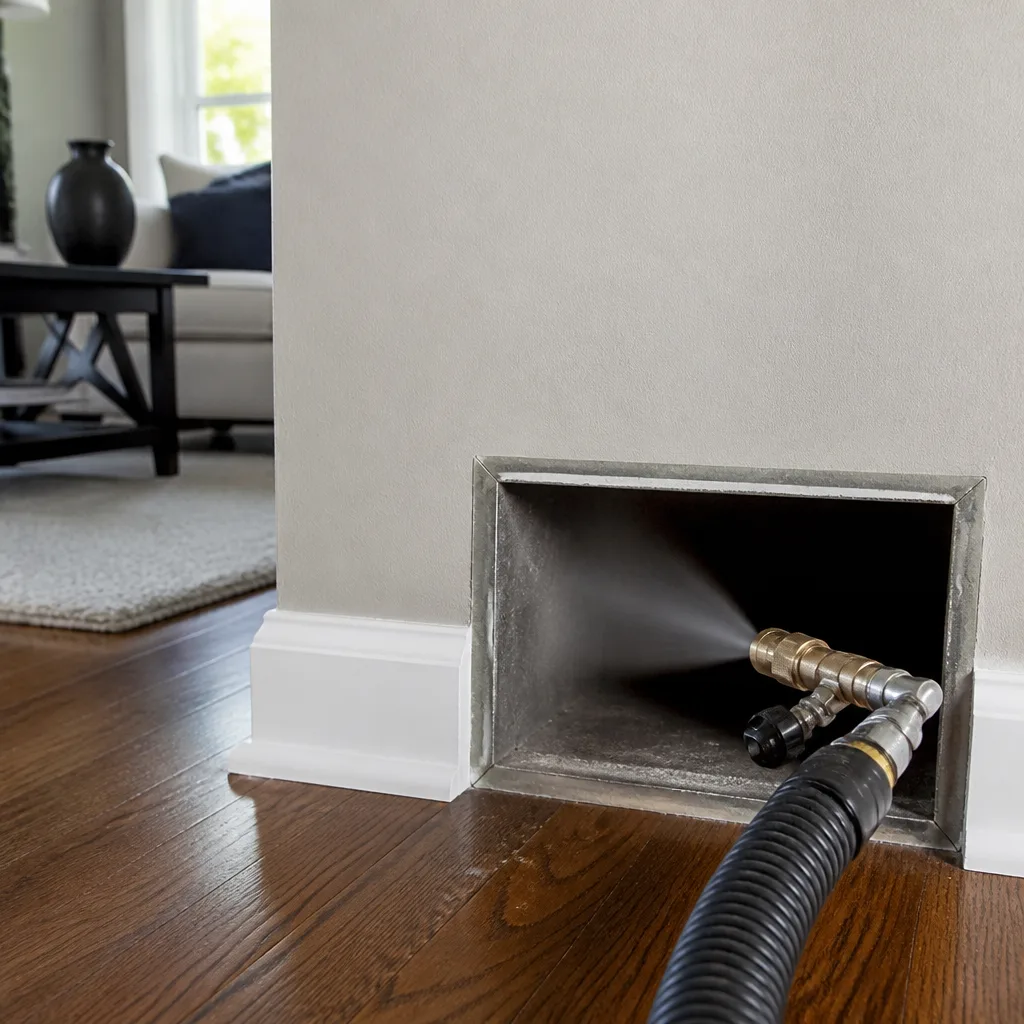 Sanitizing & deodorizing
Whole-system duct and dryer vent check with before-and-after photos - you see exactly what came out of your vents
That "$99 whole-house special" is a bait ad - the real number appears once they are in your hallway, or the "clean" is a shop-vac at the register. We photograph the inside of your ducts before and after instead.
The Complete Air Duct Cleaning Guide for Hesperia Homeowners
Hesperia sits at 3,200 feet in the Mojave Desert, where PM10 particulate levels routinely spike during wind events that coastal California cities never experience. Yet most air duct cleaning guides treat this high-desert environment the same as a mild coastal bungalow in San Diego. That mismatch is why so many duct cleanings in Hesperia underdeliver, and why a guide built specifically for this city’s conditions matters. In the sections below, you’ll learn how Hesperia’s climate accelerates duct fouling, what separates a legitimate source-removal cleaning from a surface wipe-down, how to time your service around the wind seasons, and what documentation you should demand before paying a dime. For more detail, see The Complete Guide to Air Duct Cleaning in Hesperia.
Styles & brands we work with
- Whole-home duct cleaning
- Dryer vent cleaning
- Camera inspection
- Sanitizing & deodorizing
Quick Answer
Air duct cleaning in Hesperia should be scheduled every 2 to 3 years, not the 5 to 7 year interval often quoted for milder climates, because Mojave Desert wind events push fine sand and PM10 particulate through return-air systems at rates unmatched in coastal or inland valley regions. A legitimate cleaning uses source-removal equipment such as Rotobrush or Nikro systems with negative-air containment, not a shop-vac attached to a vent. Learn more about our Air Duct Cleaning services. Expect to pay between $450 and $900 for a whole-house cleaning in Hesperia depending on system size, accessibility, and whether duct repairs are identified during inspection.
Table of Contents
- Why Hesperia Ducts Foul Faster Than Coastal Systems
- The Source-Removal Standard: What NADCA Actually Requires
- Hesperia’s Tract-Home Duct Reality: Flex Runs, Undersized Returns, and Why They Matter
- Signs Your Ducts Need Cleaning in Hesperia
- Timing Your Cleaning Around Hesperia’s Wind Seasons and HVAC Peak Loads
- What a Legitimate Cleaning Looks Like: Equipment, Steps, and Documentation
- Duct Repair and Cleaning: Two Sides of the Same Inspection
- What Air Duct Cleaning Costs in Hesperia
- Common Mistakes to Avoid
- When to Call a Professional
- Frequently Asked Questions
- The Bottom Line
Why Hesperia Ducts Foul Faster Than Coastal Systems
Hesperia’s position at the northern edge of the San Bernardino Valley puts it directly in the path of the Mojave’s prevailing westerlies. When those winds kick up, they carry fine particulate that infiltrates homes through every gap: window seals, door thresholds, and most significantly, the fresh-air intakes and return grilles that feed your HVAC system. The South Coast Air Quality Management District consistently logs elevated PM10 readings in the Victor Valley during spring and fall wind events, and that particulate ends up in ductwork.
What makes this different from, say, a home in Rancho Cucamonga or Ontario is the composition of the dust itself. Hesperia’s airborne grit is largely mineral-based: decomposed granite, quartz sand, and alkaline desert soil. This material is heavier and more abrasive than the organic dust common in greener regions. It settles quickly in duct runs, especially in horizontal sections and at bends, and it bonds to the thin film of condensation that forms on duct walls during summer cooling cycles. Within two years of a cleaning, we regularly measure airflow reductions of 15 to 20 percent in Hesperia systems that would take five years to foul in a coastal climate.
The practical takeaway: Hesperia homeowners should calibrate maintenance schedules to local conditions, not to generic national recommendations. A cleaning interval that makes sense in Irvine or Long Beach will leave a Hesperia system running restricted for years.
The Source-Removal Standard: What NADCA Actually Requires
The National Air Duct Cleaners Association (NADCA) sets the industry benchmark for legitimate duct cleaning, and its core principle is source removal. That means physically dislodging and extracting contaminants from the duct surfaces themselves, not merely brushing them loose or wiping accessible areas. Two broad approaches exist in the field, and they produce very different results.
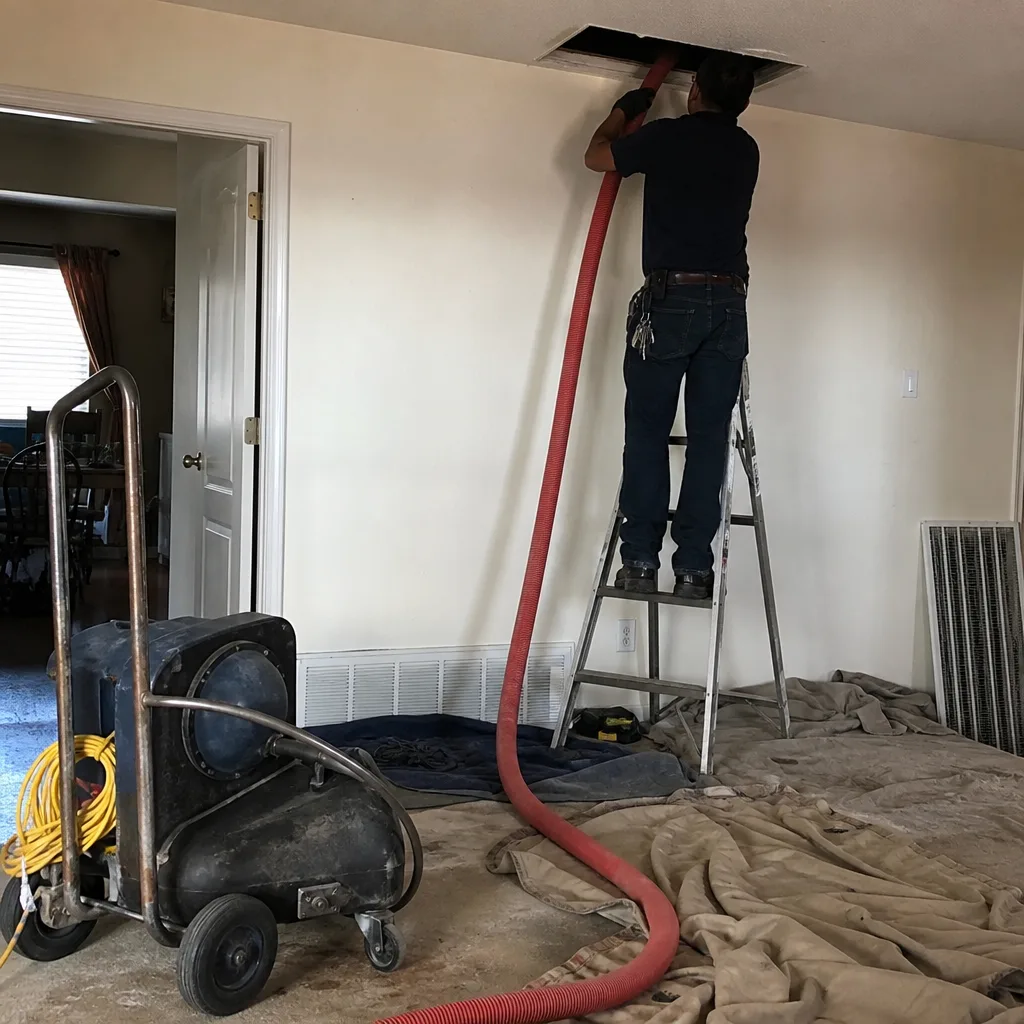
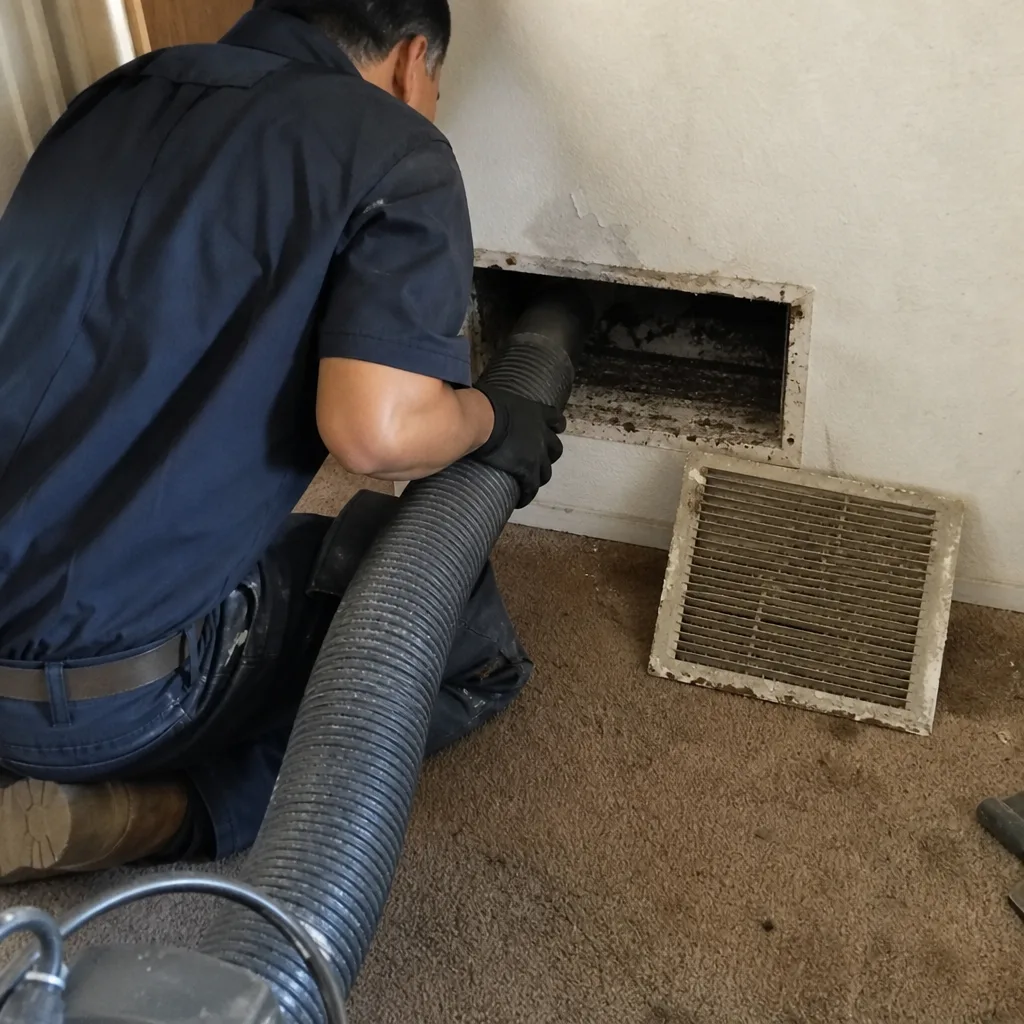
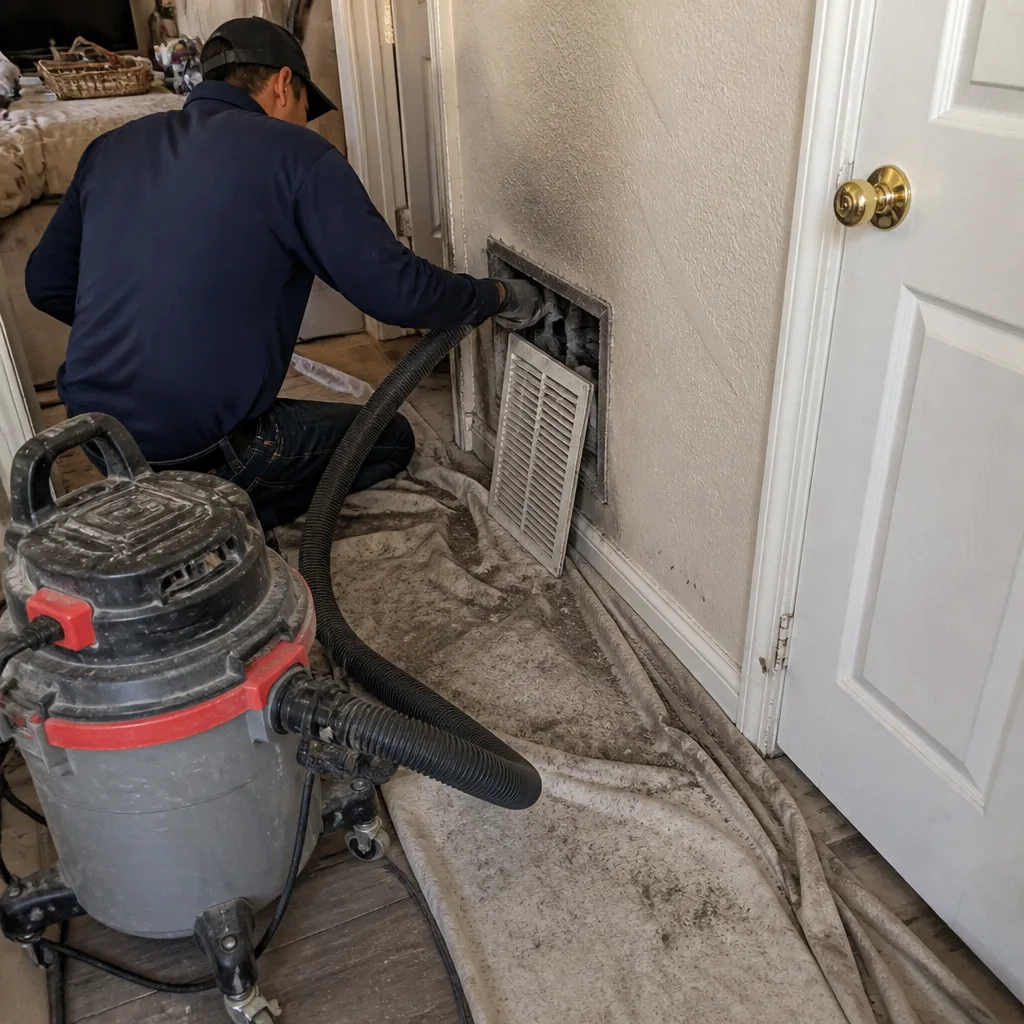
Source-removal cleaning uses mechanical agitation combined with continuous negative-air extraction. A rotating brush system such as the Rotobrush or Nikro lineup is inserted into the duct run, physically scrubbing the interior walls while a high-powered vacuum maintains negative pressure on the entire system. Dislodged material is pulled out of the duct and captured in a HEPA-filtered collection unit, never released into the living space. This is the NADCA standard, and it is what we use on every job in Hesperia.
Surface-wash or “blow-and-go” methods involve spraying a cleaning solution into ducts or running a basic vacuum hose into the nearest register. These approaches leave most of the debris in place, particularly in the return-side runs where the worst fouling lives. The visual result might look acceptable at the supply registers, but the system remains restricted where it matters most.
The equipment distinction matters more in Hesperia than in many markets. The abrasive mineral dust in local ducts adheres firmly to duct walls; surface methods simply cannot dislodge it. Professional-grade agitation systems purpose-built for this work, the same Rotobrush and Nikro units used in commercial and remediation settings, are what the job requires. Industrial-grade equipment at residential pricing changes what’s achievable in a single visit.
Hesperia’s Tract-Home Duct Reality: Flex Runs, Undersized Returns, and Why They Matter
Hesperia’s housing stock grew explosively between the 1980s and the mid-2000s, and the HVAC systems installed during that boom share predictable characteristics. Most homes in developments like Mesa, the areas south of Main Street, and the newer tracts east of the I-15 were built with flexible duct runs rather than rigid sheet metal. Flex duct is inexpensive, fast to install, and perfectly functional when sized correctly, but it behaves differently during cleaning and deteriorates differently over time.
The first issue: flex duct’s interior liner is a spiral-wound plastic over wire coil. The corrugated surface traps fine particulate more readily than smooth sheet metal, and Hesperia’s mineral dust packs into those corrugations aggressively. A brush that simply spins down the center of the run will polish the high points and leave the valleys loaded. Effective cleaning requires an agitation system sized to the duct diameter that actually contacts the full interior surface.
The second issue: many Hesperia tract homes have undersized return-air systems. Builders frequently installed a single central return in a hallway rather than dedicated returns in each bedroom. The result is negative pressure throughout the home when the system runs, which pulls unfiltered air through door gaps, window frames, and even garage walls. That air bypasses the furnace filter entirely and deposits directly into the return duct. If your return grille in Hesperia looks like a lint trap after six months, you’re likely dealing with this exact configuration.
The third issue: flex duct degrades in high heat. Attic temperatures in Hesperia routinely exceed 140 degrees Fahrenheit in July and August. Over two decades of thermal cycling, the plastic inner liner becomes brittle, the wire coil can separate from the liner, and connections at the plenum and register boots work loose. A cleaning that ignores these structural realities is incomplete. Your ducts aren’t just dirty, they may be damaged, and the same visit that cleans them should identify those failures.
Signs Your Ducts Need Cleaning in Hesperia
Most Hesperia homeowners first call us after noticing one of a small set of recurring symptoms. In our experience, these five signs are the most reliable indicators that a system has reached the point where cleaning is warranted, not merely optional.
1. Visible dust accumulation at supply registers. If gray-brown mineral dust streaks appear on the wall or ceiling around a supply register within days of wiping it clean, the duct run behind it is loaded and actively discharging particulate into the room. This is the single most common call we receive from Hesperia homeowners.
2. A persistent fine dust film on horizontal surfaces. High-desert homes deal with ambient dust, but dust that reappears 48 hours after cleaning the house usually points to the HVAC system recirculating particulate from inside the ducts rather than outdoor infiltration.
3. Reduced airflow from certain rooms. When one bedroom stays warm in July despite a running system, the cause is frequently a flex-duct run collapsed, kinked, or loaded with years of compacted dust. Airflow reduction of this kind shortens equipment life and drives summer electricity bills upward.
4. Musty or stale odor when the blower starts. Hesperia’s summer condensation cycles create the moisture needed for biological growth inside ducts, particularly in the cool, dark sections downstream of the evaporator coil. A cleaning that addresses this should include the coil, not just the ductwork.
5. Allergy symptoms that intensify at home. We’re careful here: duct cleaning is not a medical treatment, and we don’t claim it eliminates allergens entirely. But when particulate loads are high and symptoms track with HVAC runtime, reducing that particulate burden is a rational step. The EPA notes that source removal can reduce the volume of contaminants circulated by forced-air systems.
Any one of these signs warrants an inspection. Two or more, and the system almost certainly needs a full source-removal cleaning.
Timing Your Cleaning Around Hesperia’s Wind Seasons and HVAC Peak Loads
Timing a duct cleaning in Hesperia isn’t about convenience. It’s about maximizing the interval before the system re-fouls, and that means understanding the city’s seasonal rhythms.
Hesperia’s wind season runs primarily from March through May, with a secondary burst in October and November. These are the months when Santa Ana and onshore events push visible dust across the Victor Valley, and they’re the worst times to have just cleaned your ducts. Schedule a cleaning in late fall, after the October-November wind events have settled and before the winter heating load begins, and the system stays cleaner longer going into the holidays. Alternatively, schedule in early summer, after the spring winds have passed but before the July-August cooling peak. Either window works. What you’re avoiding is a cleaning in March that gets undone by six weeks of blowing sand.
The HVAC usage pattern matters as much as the wind. Hesperia homes run air conditioning heavily from June through September. Evaporator coils stay wet, condensation forms, and whatever dust is in the system turns into a damp, packed layer. Cleaning before this load period means the system enters peak season with full airflow, which reduces runtime and wear on the compressor. It’s not a claim we make lightly: a system with restricted airflow works harder to move the same volume of air, and the blower motor, evaporator coil, and condenser all operate less efficiently when static pressure climbs.
For most Hesperia households, the ideal schedule is a cleaning every 2 to 3 years, timed in the spring shoulder or late fall. Homes with pets, smokers, or residents with respiratory conditions should lean toward the 2-year end of that range.
What a Legitimate Cleaning Looks Like: Equipment, Steps, and Documentation
A proper air duct cleaning in Hesperia follows a defined sequence, and you should expect to see specific equipment and receive specific documentation. If any of the following steps are missing, you’re not getting a source-removal cleaning regardless of what the invoice says.
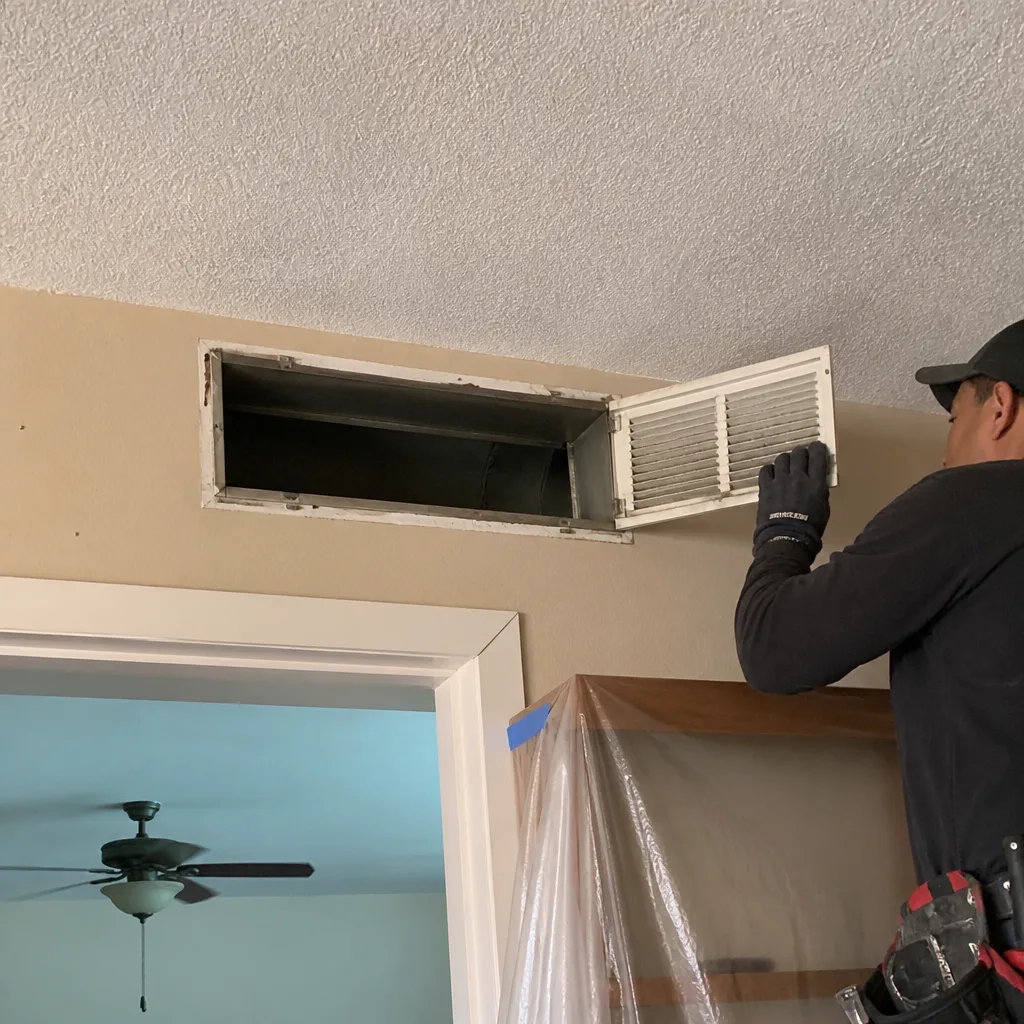
- Pre-inspection and pressure assessment. Before any cleaning begins, the technician should inspect the system: remove a supply register, look inside accessible duct sections, check the return plenum, and evaluate the filter. Static pressure readings should be taken at this stage to establish a baseline for later comparison.
- Containment setup. The entire system should be placed under negative pressure using a high-powered vacuum unit connected at the plenum or a main trunk access point. This prevents dislodged particulate from being pushed into the living space during agitation.
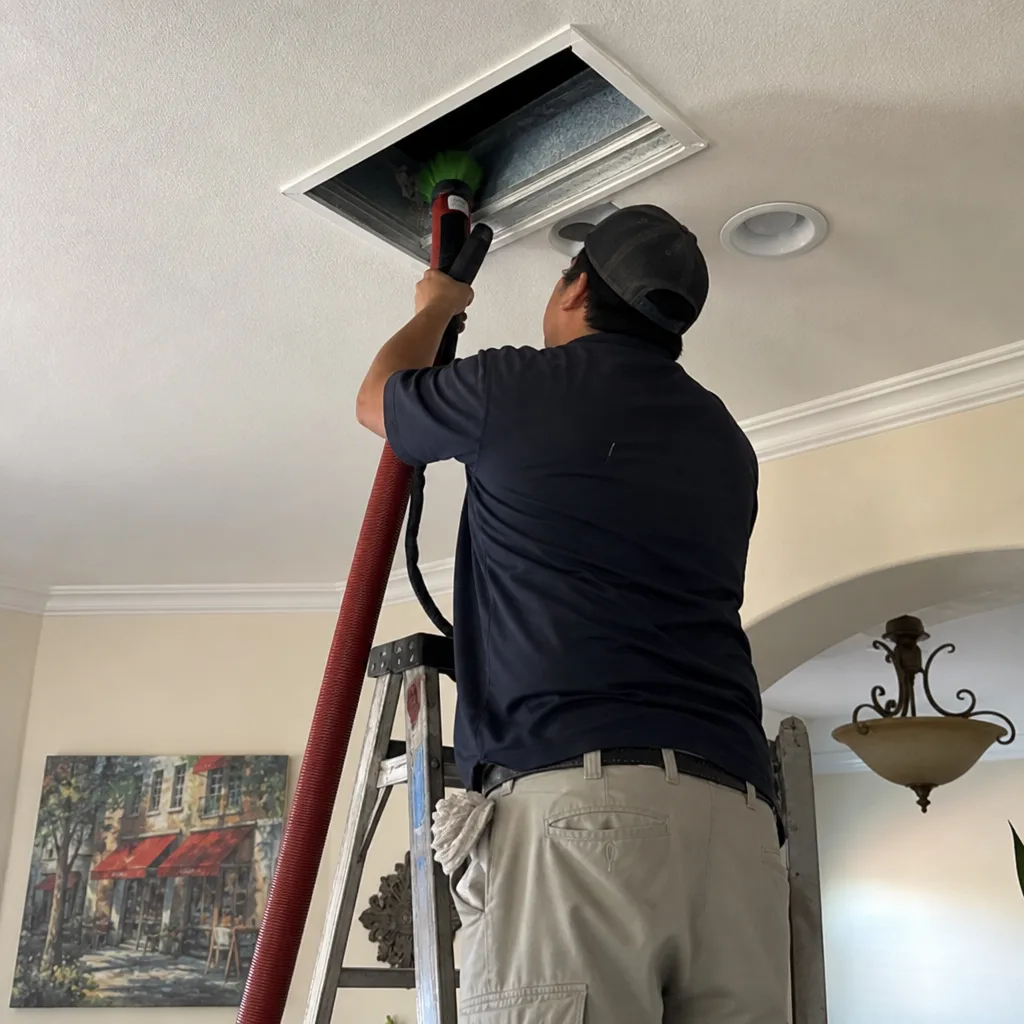
- Mechanical agitation of all supply and return runs. Each individual duct run should be accessed and agitated with a rotating brush system sized to the duct diameter. This is where Rotobrush and Nikro equipment makes the difference: the brush must contact the full interior circumference of the duct, including the corrugated valleys in flex runs.
- Evaporator coil and blower cleaning. Duct cleaning that skips the coil is incomplete. Hesperia’s cooling-heavy usage means coils accumulate a damp, packed layer of dust and mineral particulate every season. This should be cleaned with appropriate coil-specific tools and a non-corrosive cleaner.
- Register and grille cleaning. All supply registers and return grilles should be removed, cleaned, and reinstalled. In many Hesperia homes, the return grille in particular will be visibly loaded with years of accumulated dust.
- Post-cleaning inspection and documentation. This is the step most companies skip, and it’s the one you should never waive. You should receive before-and-after photos of at least the main trunk lines and representative supply runs, along with a post-cleaning static pressure reading showing the airflow improvement. Photos of your own ducts, not stock images, are the proof the work was done.
Documentation expectations vary by company, but at minimum you should leave the appointment with visual proof and airflow data. Hesperia’s dust loads make a visible difference in before-and-after photos when the cleaning is done correctly; if the photos show no meaningful change, the job was likely superficial.
Duct Repair and Cleaning: Two Sides of the Same Inspection
Most duct cleaning companies in the Victor Valley clean and leave. That’s a problem in Hesperia specifically, because the housing stock’s age means a meaningful percentage of systems have damage that cleaning alone cannot fix. Our approach is different: every cleaning includes an inspection for the failures we see most often in this market, and we’re equipped to repair them in the same visit.
The three most common issues we find in Hesperia during cleanings:
- Disconnected or sagging flex runs. Twenty-year-old flex duct in a 140-degree attic separates at connections. The result is conditioned air dumped into the attic while the bedroom it serves starves. Cleaning a disconnected run is pointless; it needs reconnection and proper support first.
- Crushed or kinked sections. Storage boxes, rodents, and careless contractors crush flex runs. Airflow drops sharply at every crushed section, and static pressure climbs throughout the system.
- Torn outer liners and duct leakage. The outer vapor barrier on old flex duct tears, the inner liner follows, and the system begins pulling attic air directly into the duct. In Hesperia, that means pulling in 140-degree summer air and the fine dust that sifts through every attic vent.
Our Air Duct Repair in Hesperia service handles all of these, often on the same day as the cleaning. The equipment difference carries through: a company that only cleans cannot tell you why your bedroom never cools properly. Clean it, fix it, improve it: that’s the full scope, and it’s what we bring to every Hesperia home.
What Air Duct Cleaning Costs in Hesperia
Whole-house air duct cleaning in Hesperia typically runs between $450 and $900. The spread depends on three factors: system size, complexity, and accessibility.
- Single-story, 1,200 to 1,800 square feet, standard layout: $450 to $650. Most Hesperia tract homes fall in this range.
- Two-story, 1,800 to 2,800 square feet, or homes with two HVAC systems: $600 to $800. The higher end applies when return runs are long or heavily loaded.
- Severely fouled systems, smokers’ homes, or systems with decades of buildup: $750 to $900. These jobs require extended agitation time per run and multiple passes on the return side.
- Dryer vent cleaning as an add-on: $150 to $250. See our Dryer Vent Cleaning in Hesperia service for details.
- Repair work identified during cleaning: Quoted separately, with pricing agreed before any work proceeds.
You’ll notice we quote whole-system pricing, not per-vent pricing. The per-vent model is where the air duct industry’s bait-and-switch reputation comes from: a low per-vent price that becomes a far larger invoice once the technician counts registers, adds return runs, and “discovers” the need for extra services. Our pricing is one flat price per system, agreed before work starts, with no per-vent surprises. Before-and-after photos of your own ducts are included, and estimates in Hesperia are free. Call (877) 331-2951 for an exact quote.
Why are some Hesperia quotes dramatically cheaper? Because the job being quoted is dramatically smaller. A $99 whole-house special is almost always a surface-wash: a tech with a vacuum hose and 90 minutes, cleaning visible register openings while leaving the duct interiors untouched. The job lasts sixty days and the system re-fouls. A legitimate source-removal cleaning takes half a day on an average Hesperia home and uses equipment that costs tens of thousands of dollars. That’s the mechanical reality behind the price difference.
Common Mistakes to Avoid
- Relying on the furnace filter to protect the ducts. The standard one-inch fiberglass filter most Hesperia homes use traps only the largest particles. Hesperia’s fine mineral dust passes straight through and deposits in the duct runs. A media filter upgrade to a Honeywell or Aprilaire cabinet is a separate IAQ improvement, not a substitute for cleaning.
- Scheduling a cleaning during peak wind season. March through May is the worst window in Hesperia. A cleaning in April gets partially undone by June, and you’ll wonder why the investment didn’t hold.
- Accepting a quote without understanding the method. If the company can’t tell you what equipment they use, whether they clean the coil, and what documentation you’ll receive, they’re not doing source-removal work. Walk away.
- Assuming old flex duct is fine because the home is comfortable. Hesperia homes built before 2005 frequently have heat-damaged flex runs that leak 20 to 30 percent of conditioned air into the attic. The home stays comfortable because the system overworks to compensate, and the electricity bill hides the problem.
- Overlooking the return side. In Hesperia’s undersized-return tract homes, the return duct is usually the most fouled part of the entire system. A cleaning that focuses on supply registers and skips the return side misses the worst of the problem.
- Choosing a company based on a coupon. The air duct industry’s discount pricing model is built on a low entry price followed by aggressive upselling. A professional cleaning at an honest whole-house price costs less over time than a series of discounted surface-washes.
- Not asking for before-and-after documentation. If the company can’t show you photos of your own ducts and post-cleaning static pressure readings, you have no way to verify the work was done. In an industry with this reputation, verification is not optional.
When to Call a Professional
Duct cleaning is not a DIY project, and anyone suggesting otherwise is ignoring what the job actually involves. The tools required for source-removal cleaning are purpose-built: negative-air machines, rotating brush systems from manufacturers like Rotobrush and Nikro, and HEPA-filtered collection units. No consumer vacuum can achieve the contact and extraction force the job requires, and attempting it risks damaging flex duct liners or pushing debris deeper into the system.
Call a professional when you notice persistent dust at registers, unexplained airflow loss in specific rooms, musty odors from the system, or when it has simply been more than three years since the last cleaning. Hesperia’s dust load makes the 3-year ceiling the practical maximum for most households. Duct Cleaning Hesperia home provides Air Duct Cleaning in Hesperia with free estimates. Call (877) 331-2951 to schedule a system evaluation.
Frequently Asked Questions
Every 2 to 3 years for most Hesperia homes. The high desert’s mineral dust load and heavy summer AC usage foul duct systems faster than coastal or inland valley climates, where a 5-year interval is often sufficient. Homes with pets or residents with respiratory conditions should clean closer to every 2 years.
Expect $450 to $900 for a whole-house source-removal cleaning in Hesperia, depending on home size and system condition. Avoid per-vent pricing models, which are the industry’s most common route to inflated final invoices. Call (877) 331-2951 for a free, specific estimate.
The cheaper quote is for a smaller job: a surface-wash that cleans visible register openings while leaving duct interiors untouched. A legitimate source-removal cleaning requires negative-air containment and mechanical agitation of every duct run, which takes time and professional equipment. The $99 special lasts two months; a real cleaning lasts two to three years in Hesperia conditions.
Demand before-and-after photos of your own ducts and post-cleaning static pressure readings. A legitimate cleaning produces visible change in the photos and measurable airflow improvement in the numbers. If the company can’t or won’t provide both, the job was likely superficial.
Yes. Dryer vents are a leading cause of residential fires in the United States, and Hesperia’s dust load accelerates lint accumulation in the vent run. Combining Dryer Vent Cleaning in Hesperia with duct cleaning is efficient and addresses both systems that move air through your home.
No, not effectively. A consumer vacuum cannot achieve the agitation force or extraction airflow required to remove Hesperia’s packed mineral dust from duct walls, especially in flex runs with corrugated interiors. Attempting it risks damaging the ducts and provides no measurable improvement. This is professional work.
The Bottom Line
Hesperia’s high desert environment and aging tract-home duct systems create cleaning demands that generic guides don’t address. The mineral dust load fouls ducts in two years what takes coastal systems five or more. Flex-duct systems from the city’s 1980s and 1990s building boom require agitation equipment that contacts the full interior surface, and they frequently hide damage that cleaning alone can’t fix. A legitimate service uses source-removal methods with negative-air containment, cleans the evaporator coil and return side, and provides photographic and airflow documentation. Schedule cleanings outside the March-to-May wind season, expect to pay $450 to $900 for honest whole-system work, and call (877) 331-2951 for a free estimate from a team equipped with the Rotobrush and Nikro systems this environment demands.
Written by the team at Duct Cleaning Hesperia, serving Hesperia since 2014. Explore more guides & resources.
See the difference
 Before
 After
 Before
 After
 Before
 After