
Last updated November 2, 2026
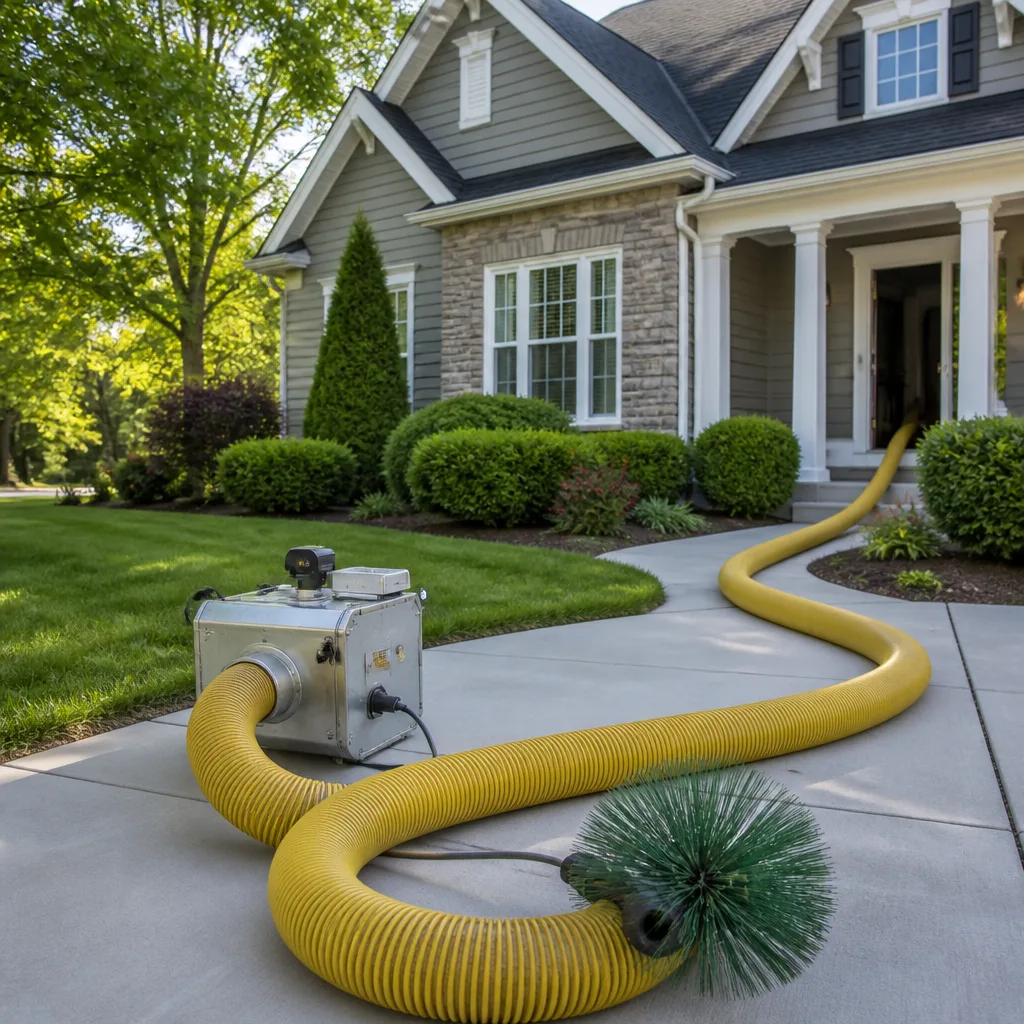 Whole-home duct cleaning
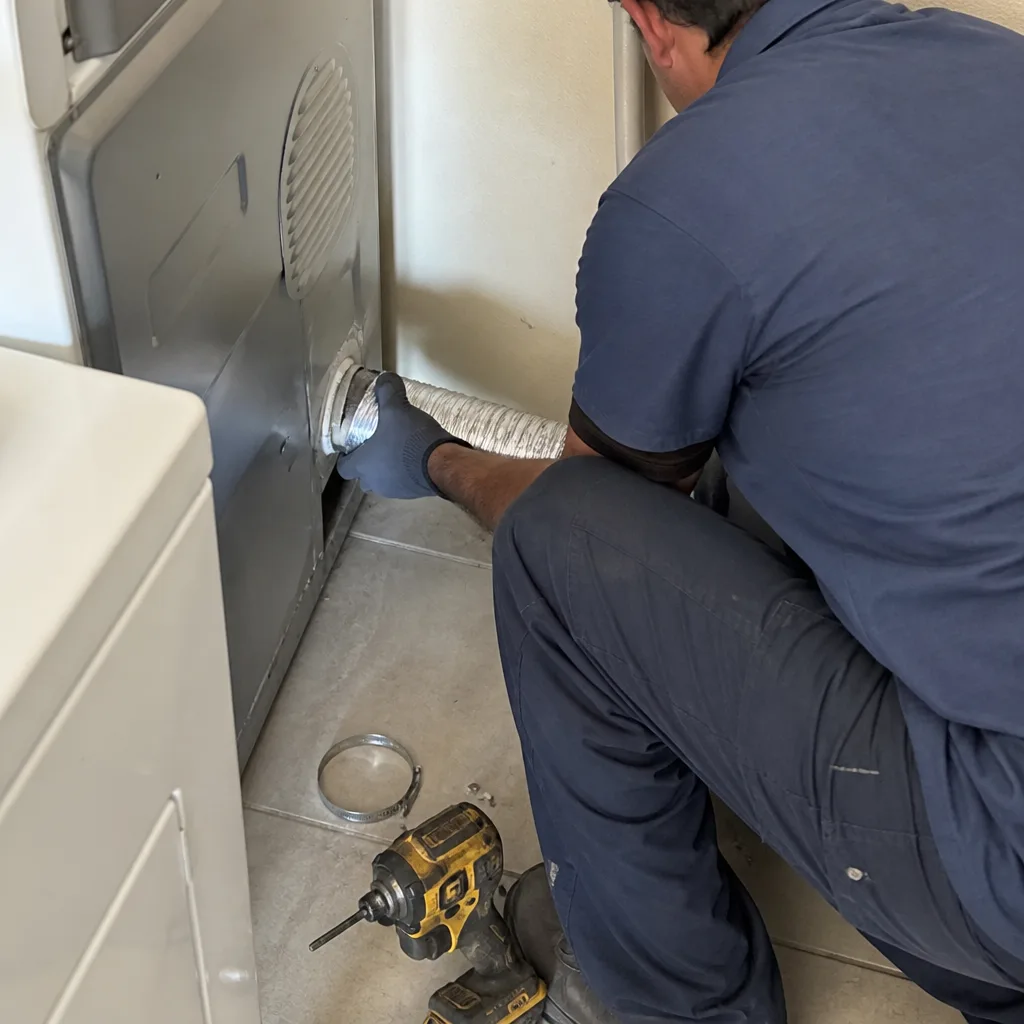
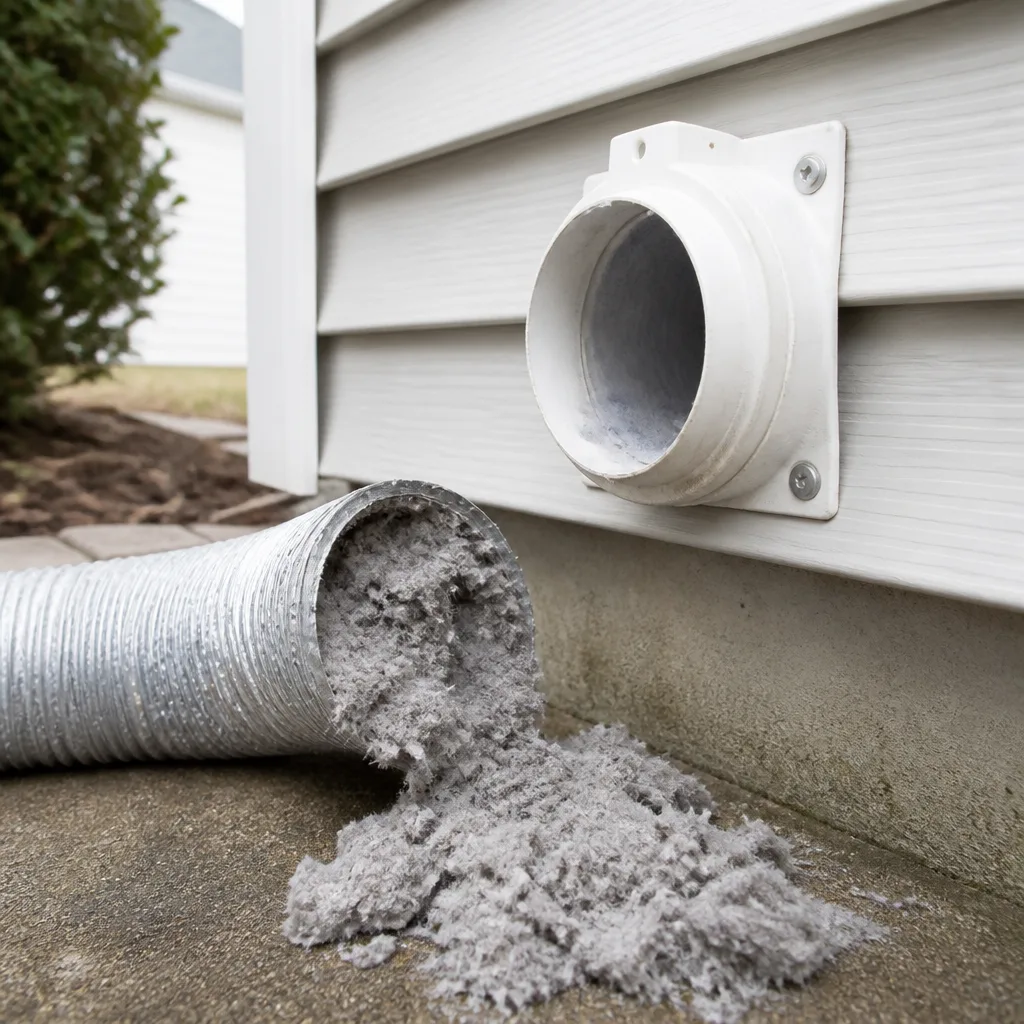 Dryer vent cleaning
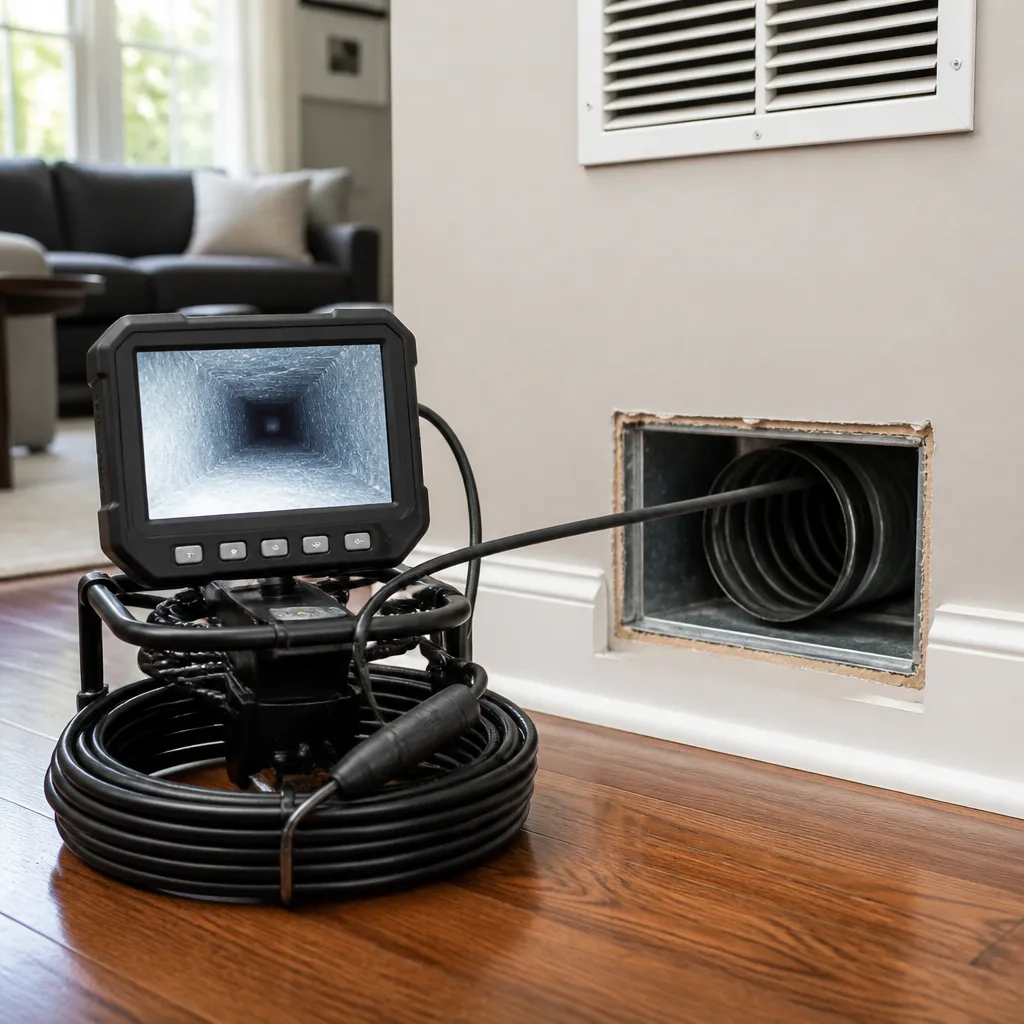 Camera inspection
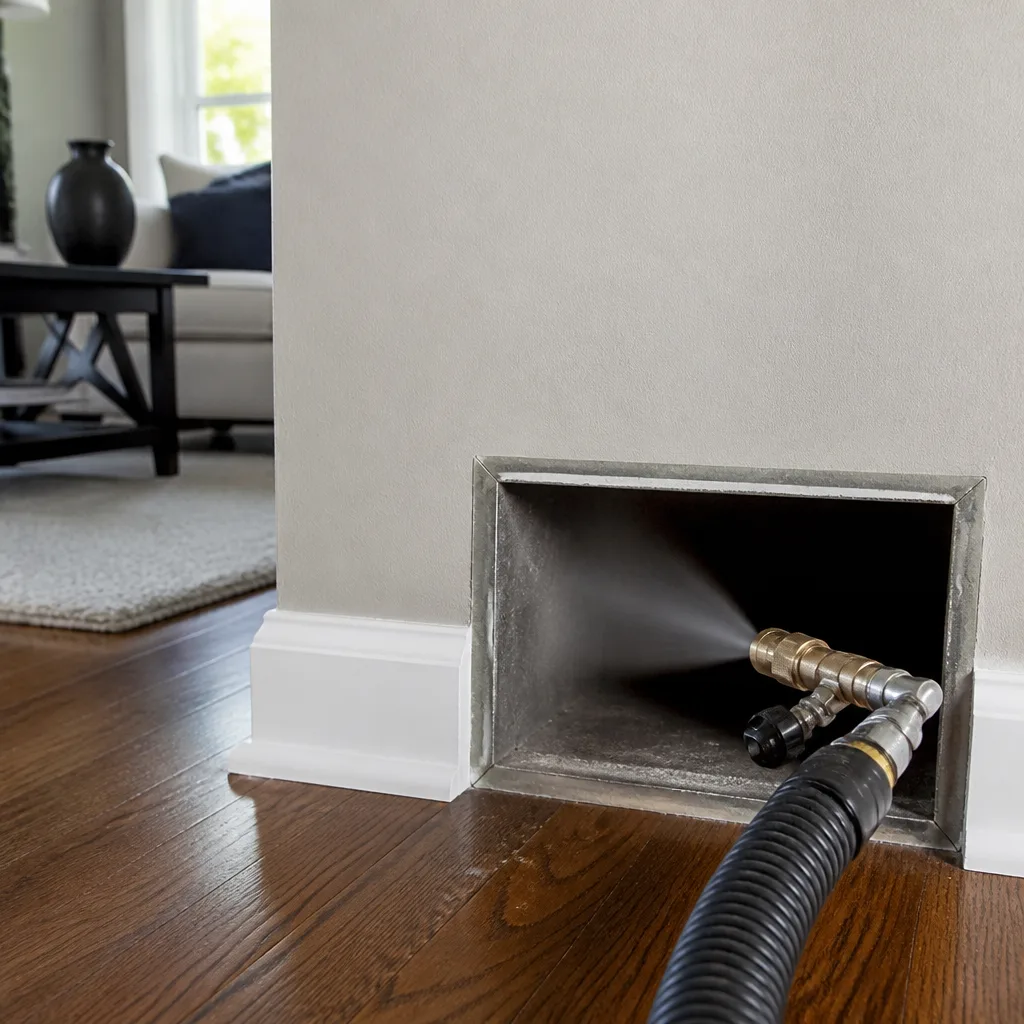 Sanitizing & deodorizing
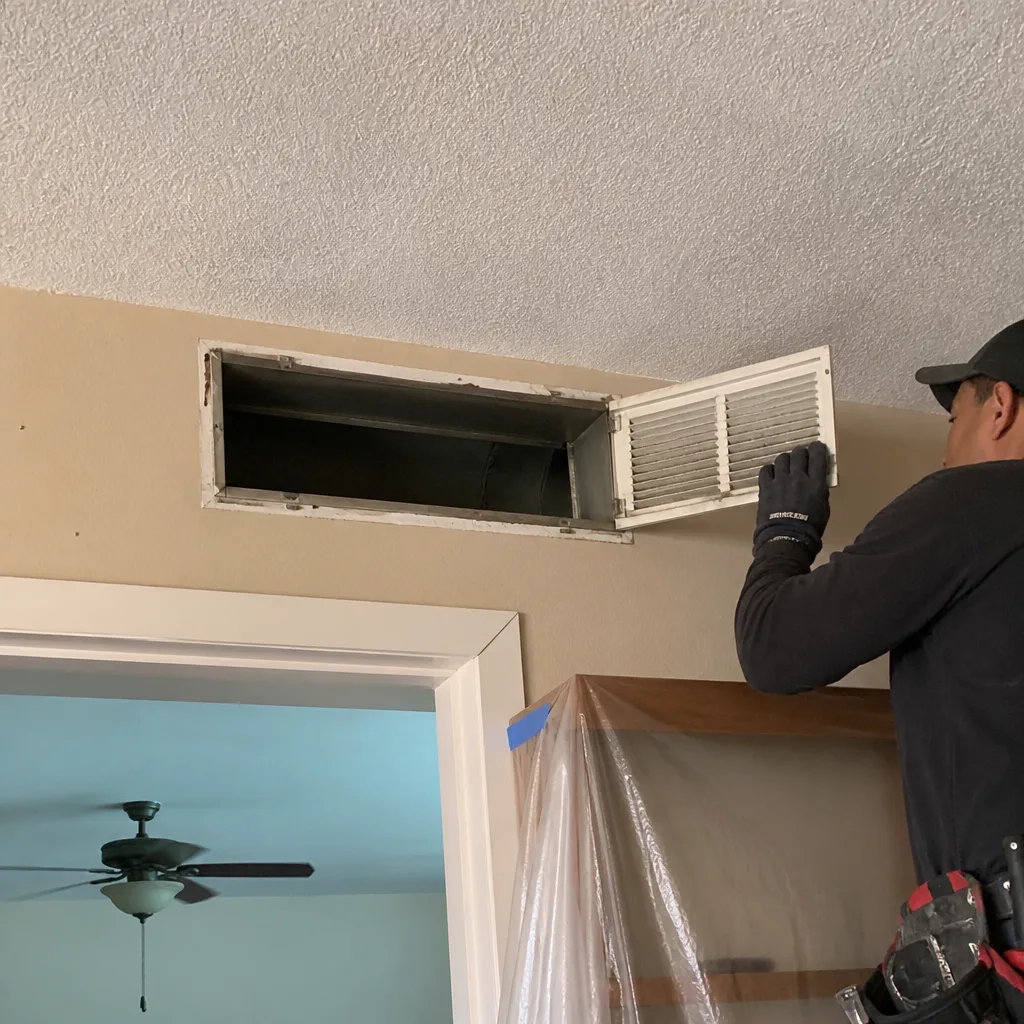
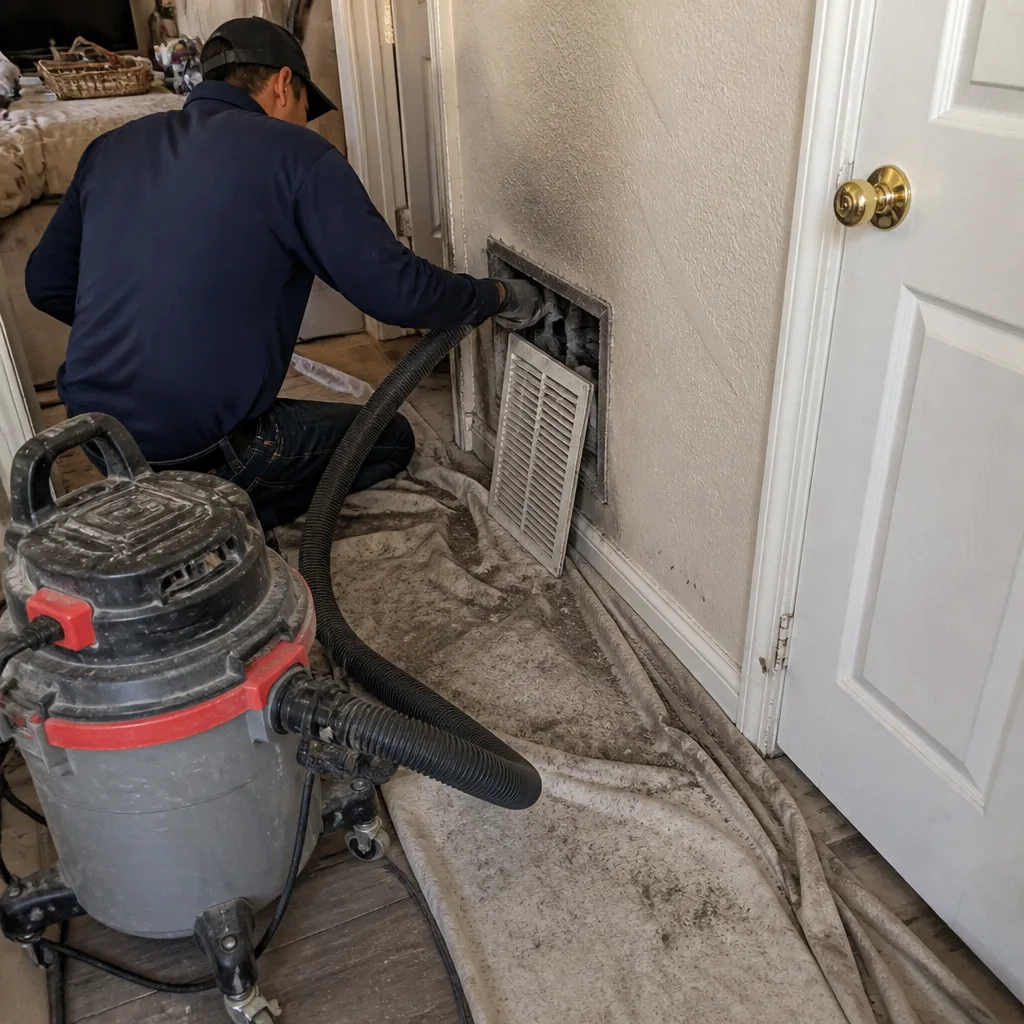
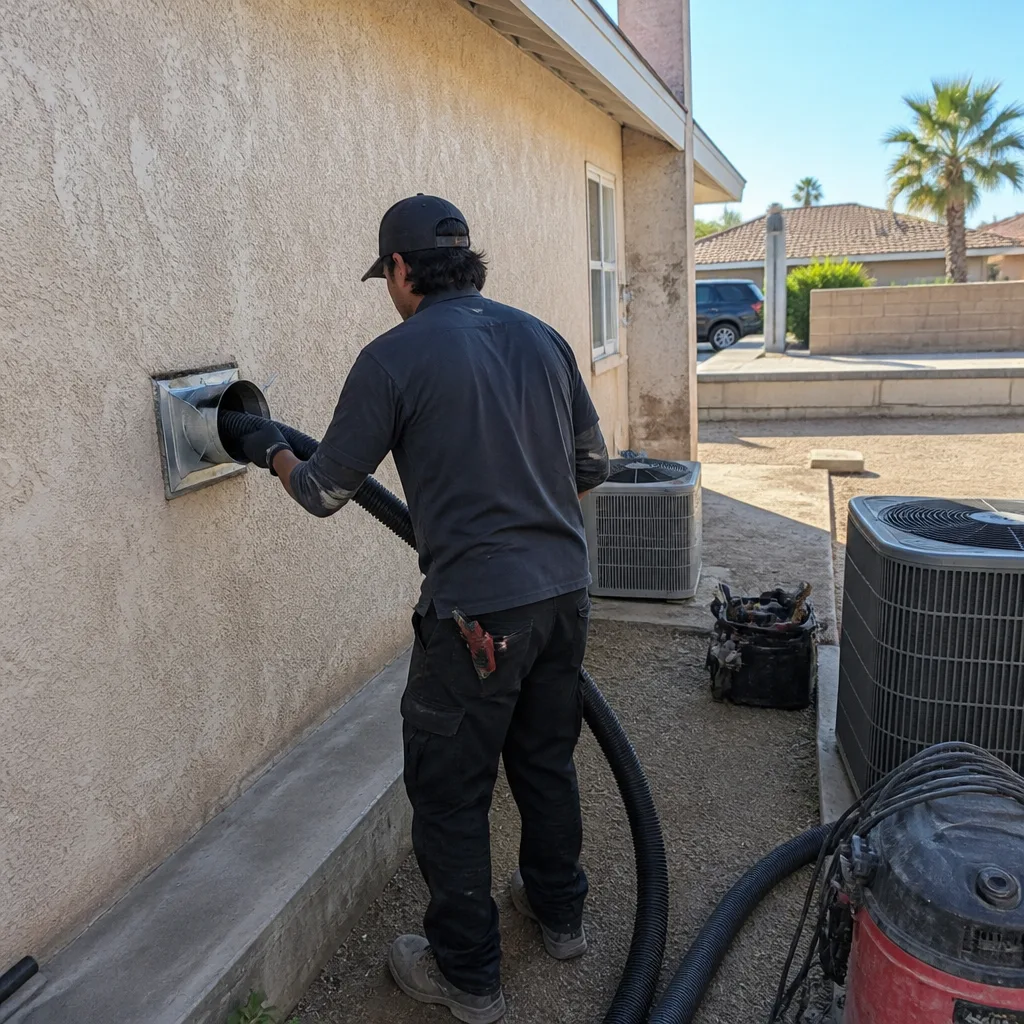
Whole-system duct and dryer vent check with before-and-after photos - you see exactly what came out of your vents
That "$99 whole-house special" is a bait ad - the real number appears once they are in your hallway, or the "clean" is a shop-vac at the register. We photograph the inside of your ducts before and after instead.
Air Duct Cleaning Warning Signs: A Hesperia Homeowner’s Reference Guide
By the time you see dust blowing from a supply register, your ducts have been telling you something for months. Maybe a year. In Hesperia, the signals arrive early and quietly: a filter that loads up faster than it should, a cooling bill that climbs without explanation, a hallway that never quite reaches the thermostat’s number. This guide is about reading those signals before they become symptoms. We’ve written it for homeowners and property managers in Hesperia and the surrounding High Desert who want to catch duct problems at the stage where fixing them is measured in hundreds of dollars, not thousands.
Quick Answer
The earliest air duct cleaning warning signs in a Hesperia home are rarely visible dust at the registers. They show up as a filter that darkens unevenly or smells like warm dust, a 15 to 20 percent summer cooling cost increase with no change in usage, certain rooms that run 4 to 6 degrees warmer than the thermostat setting, and a dry, musty or acrid smell that appears only when the blower starts. If you notice two or more of these together, the duct system needs a professional inspection rather than another month of waiting.
Styles & brands we work with
- Whole-home duct cleaning
- Dryer vent cleaning
- Camera inspection
- Sanitizing & deodorizing
Table of Contents
- How to Read Your Filter as a Diagnostic Tool
- Utility Bill Pattern Analysis for Hesperia Homes
- The Smell Profiles: What Different Odors Actually Mean
- Uneven Room Temperatures and What They Point To
- The Hesperia Dust Factor: Unpaved Roads and Development Sites
- Reduced Airflow and Register Pressure Changes
- Allergy Symptoms That Follow You Indoors
How to Read Your Filter as a Diagnostic Tool
A filter is the cheapest diagnostic instrument in your home. Most Hesperia homeowners look at a dirty filter as a maintenance chore. We look at it as a record of what is moving through your duct system. The color, the weight, the way the dust deposits, and even the smell of the filter when you pull it out all carry information about where contamination is entering and how far it has spread.
Here is what we have learned to look for, having inspected hundreds of High Desert homes:
- Uniform light gray coating: This is normal for Hesperia. Fine desert particulate, mostly silica and clay dust, will load any filter evenly over 30 to 60 days. It means the filter is doing its job. No cause for concern.
- Dark or black deposits concentrated on one side: This suggests return-side leakage. Air is being pulled into the duct system from an unconditioned space, a crawlspace, an attic with old insulation, or a garage. The dark color usually comes from soot, tire dust, or insulation fibers. The leak is upstream of the filter, so the contamination is entering after the filter has already done its job.
- Visible lint or fabric fibers: In homes where the dryer is located near a return vent or where the return plenum passes through a laundry area, dryer lint can get pulled into the duct system. This is more than a cleanliness issue. It concentrates combustible material in the ductwork, and it often signals a dryer vent problem as well.
- Gray, greasy film: This points to cooking residue that has been drawn into the return. It is common in homes where the kitchen exhaust does not actually vent outside and in homes where the cooktop is near a central return. That film captures dust on the evaporator coil and duct walls, and it is one of the more stubborn materials to remove once it builds up.
- Red or orange tint: In Hesperia, this often means windblown soil from specific areas along the Cajon Pass corridor or from the riverbed zones during high-wind days. It is not automatically a problem, but if you see it consistently, your home’s envelope is letting in more external dust than it should.
The Weight Test
Pick up a used filter and compare it to a fresh one of the same brand. A filter that feels noticeably heavier after four weeks in a Hesperia summer is normal. A filter that feels heavy after two weeks suggests an unusually high particulate load. That load is not coming from nowhere. It is either being drawn in through return leaks or it is recirculating because the duct system itself has accumulated dust that the blower keeps kicking back into the air. Either way, the filter is doing twice the work it should, and something upstream needs attention.
What a Filter Cannot Tell You
A filter only records what passes through it. It cannot show you what is stuck to the inside walls of the supply ducts downstream of the filter, and it cannot show you what is growing or accumulating inside the return plenum. For that, the duct surfaces themselves need to be inspected. In our experience, a Hesperia home can have a reasonably clean filter and still have significant buildup inside the supply trunk line, especially in horizontal runs through hot attics where air velocity drops and particulate settles. That is one reason we use camera inspection on air duct cleaning in Hesperia jobs before we start. The filter is a hint. The duct interior is the answer.
Utility Bill Pattern Analysis for Hesperia Homes
Hesperia cooling season runs from May through October, and summer electricity bills in the High Desert are structurally high. But a bill that rises 15 to 20 percent over the same month last year, with no change in thermostat settings, occupancy, or appliance use, is a data point worth taking seriously. Here is why that pattern matters for duct systems specifically.
Your HVAC system does not know what the outdoor temperature is. It only knows how quickly it can move conditioned air through the house and how hard it has to work to satisfy the thermostat. When ducts leak, disconnect, or accumulate enough internal restriction, the system compensates by running longer cycles. The compressor runs longer. The blower runs longer. The result is a bill that climbs even though the house feels the same temperature, or slightly worse.
The pattern usually looks like this:
- Step 1: Compare month-over-month, not total bill. A June bill compared to a July bill tells you little because outdoor temperatures shift. Compare July 2025 to July 2024, or even better, compare cooling degree-days from the utility data if available.
- Step 2: Look for a divergence between usage and comfort. If the bill is up and the house is not more comfortable, that energy is leaking somewhere. If the bill is up and the house is noticeably less comfortable, the system is fighting a restriction, which in a High Desert context often means duct leakage or a dirty filter bypass.
- Step 3: Rule out the obvious first. Have the filter changed, the outdoor condenser coil cleaned, and the refrigerant level checked. If those are fine and the bill pattern persists, the problem is increasingly likely to be in the ductwork itself.
What a 15 to 20 percent unexplained cooling cost increase typically points to in High Desert homes is return-side duct leakage in an unconditioned attic. Attic temperatures above 130 degrees pull hot air into the return through separated joints, which forces the system to cool air that was never supposed to be inside it. The same leak also pulls in attic dust and insulation fibers, which accelerates filter loading. So the utility bill and the filter warning sign often appear together. When they do, the diagnosis is usually structural, not behavioral.
This is where a company that actually repairs ductwork matters. A cleaning-only provider can vacuum out the system. But if the ducts are leaking, the cleaning gives you maybe a season of improvement before the same problem rebuilds. Air duct repair in Hesperia is the service that addresses the leak itself. We carry the tools to both find and fix damaged sections in a single visit, which is the difference between treating the symptom and eliminating the cause.
The Smell Profiles: What Different Odors Actually Mean
Odor is one of the most reliable warning signs a duct system produces, but only if you learn to distinguish between the smell profiles. A Hesperia home with a duct issue will usually produce one of four distinct odor signatures when the blower first starts. Each one points to a different problem and a different response.
1. Warm Dust Smell
This is the smell of a dirty electric heater, a hair dryer on high heat. It appears in the first 10 to 30 seconds after the blower kicks on, then fades. In our experience working in Hesperia homes, this is the single most common complaint we hear before a cleaning. It means dust has accumulated on the heat exchanger, the blower motor housing, or the inner walls of the supply ducts, and the first blast of air is heating that dust and pushing it into the living space. It is not dangerous, but it is a signal that the internal surfaces are carrying a load they should not be. It will not go away by changing the filter, because the dust is downstream of the filter.
2. Musty or Damp Odor
Musty smells in the desert almost always trace back to a moisture event, not an ongoing humidity problem. Think roof leaks, plumbing leaks near a return chase, condensation on an uninsulated duct run, or a past water intrusion that was never dried properly. Even in Hesperia’s dry climate, once organic material inside a duct gets wet, it can support microbial growth in the dark, low-airflow environment of a duct. This smell tends to be constant when the system runs, not just at startup. If the smell is present only when cooling, the evaporator coil and drain pan are prime suspects. If it is present in both heating and cooling, the source is likely in the ductwork itself.
3. Acrid or Burned Debris Smell
This odor profile is sharper. It resembles hot plastic, scorched hair, or burned food. In a duct system, it typically means foreign material has entered the duct and is sitting on or near a hot component. Common sources in Hesperia homes include small toys dropped into floor registers, construction debris left from a remodel, insulation that has broken loose from the attic and settled onto the heat exchanger, or rodent nesting material built inside a duct run. The smell appears when the system fires up and may fade as the surface temperature stabilizes. This is not a smell to ignore. If the material is combustible and the heat source gets hot enough, you have a fire risk, which is part of why we take duct inspection seriously on every job.
4. Pest or Decomposition Odor
Hesperia sits against open desert, and rodents, birds, and insects are a constant pressure on any structure. When an animal dies inside a duct run or nests in an unused register, the smell is distinctive: sweet, sharp, and localized to one or two rooms. You will smell it when the system runs, and the odor may pulse stronger as the blower cycles. This scenario requires physical removal, and it often reveals a gap in the duct system that let the animal in, which then needs to be sealed.
If you are noticing any of these smells, particularly when the system first starts, call a professional before the source spreads. Our Duct Cleaning Hesperia home page explains the full process and what to expect from an inspection. The earlier the signal, the smaller the fix.
Uneven Room Temperatures and What They Point To
Every High Desert home has a warm side. The west-facing rooms catch the afternoon sun. The upstairs, if there is one, runs warmer than downstairs. That is normal thermal loading, not a duct problem. What is not normal is a temperature difference that follows the duct layout instead of the sun.
Here is how to identify which rooms are actually pointing to a duct issue:
- Map your register temperatures, not just room temperatures. On a hot afternoon with the system running, hold a thermometer near each supply register. The air coming out of each register should be roughly the same temperature, within 2 to 4 degrees. A register that blows 8 or 10 degrees warmer than the others is not receiving properly conditioned air. That points to a disconnection, a crushed duct run, or a register fed by a run that has come apart inside a wall or attic space.
- Identify the zone that struggles first. Hesperia ranch homes and two-story builds often share a common pattern: the farthest runs from the air handler, usually the back bedrooms or the front office, lose the most pressure and temperature. If those rooms have always been a few degrees warmer, that is likely a design limitation. If they have become noticeably worse in the past year, that is a change, and changes point to a problem.
- Check the return path. Rooms with doors closed and no return vent will always underperform because the supply air has no path back to the air handler. This is a common issue in Hesperia homes that have been converted or had rooms added. The room is essentially pressurized, and the supply air cannot get in. This is a return-air design issue, and in many cases it can be addressed with a jumper duct or a return vent addition as part of an air duct repair project.
When we are called to Hesperia homes for this specific complaint, we usually find one of three things: a disconnected flex duct in the attic, a crushed section of rigid duct where a homeowner or a previous contractor stepped on it, or a return path that never existed in the first place. All three are fixable. None of them will be fixed by cleaning alone. The point is to know the difference between a thermal problem and a delivery problem, because the repair paths are completely different.
The Hesperia Dust Factor: Unpaved Roads and Development Sites
Hesperia’s geology and development patterns create a dust load that coastal cities simply do not experience. We bring this up because a warning-sign guide written for a generic suburban market misses the reality on the ground here. Homes along the unpaved stretches of the Mesa, near the riverbed zones, or within a half-mile of active grading sites face an external dust intrusion pressure that can overwhelm a duct system in a single season.
The indicator is not subtle. After a wind event, you will see a layer of fine dust on window sills, ceiling fans, and flat surfaces within 24 hours even with windows closed. That dust is not entering through open windows. It is being pulled in through the building envelope: can lights, electrical penetrations, attic hatches, and the duct system itself. The attic in a Hesperia home is not a sealed space. Wind-driven dust enters attic vents and then gets pulled into return ducts through any small separation in the joints.
Homes near active development sites have a compounding problem. Grading operations kick up silica-heavy soil dust that is finer than typical desert particulate and carries slightly more mass. That dust settles faster inside horizontal duct runs, especially in the low-velocity sections where the duct makes a 90-degree turn or where flex duct sags. Over a summer, a duct system serving a home near a grading operation can accumulate a quarter to a half inch of packed dust along the bottom of the trunk line, which is enough to measurably reduce airflow and keep a constant fine particulate load in the indoor air even after the system has been running for hours.
What to watch for if you live in these zones:
- Furniture surfaces dusting over within 24 to 48 hours after cleaning
- Filter loading visibly faster than neighbors in different parts of Hesperia
- Visible dust accumulation on the register grilles themselves
- A fine silt residue in the bathroom, which often has the weakest positive pressure in the home
- Increased static in the air, a sign of very fine particulate suspended in the indoor environment
The fix is not more frequent dusting. The fix is addressing where the dust is entering and what has already accumulated inside the system. We approach this in two stages on air duct cleaning jobs: first, remove the accumulated load with professional equipment, then identify and seal the entry points so the system does not reload itself in eight weeks. A cleaning that does not address the entry points is a short-term fix in a Hesperia dust environment.
Equipment Matters in Hesperia
This is worth saying plainly. Consumer-grade duct cleaning equipment, the kind that attaches to a shop vac or uses small rotating brushes on a drill, cannot remove packed desert silt from a long horizontal trunk run. The material is too heavy and too compacted. We run professional Rotobrush and Nikro systems, the same class of equipment used in commercial and remediation work, because Hesperia dust conditions demand that level of mechanical agitation and negative air pressure. Not every home in the country needs that. Homes here often do. It is one of the reasons we standardized on that equipment rather than a lighter alternative.
Reduced Airflow and Register Pressure Changes
Airflow reduction is often the first real warning sign a homeowner notices, but it is easy to rationalize. The system sounds like it is running. Air is coming out of the registers. It is just not coming out as forcefully as it used to. That is the signal.
Here is a simple test you can do without any tools. Hold a tissue or a strip of toilet paper near a supply register with the system running. It should lift and flutter at roughly a 45-degree angle or higher. Compare that across several registers in the home. If one register produces a weak flutter while another produces a strong one, the weak register is telling you something about the run feeding it. The likely causes, in order of frequency in Hesperia homes, are:
- A disconnected or partially separated flex duct in the attic
- A collapsed section of duct, usually caused by someone stepping on it or by material degradation over time
- A damper that has shifted closed inside the duct
- Excessive internal dust buildup that is narrowing the effective diameter of the run
- A crushed boot where the duct connects to the register
One under-appreciated detail: airflow changes are not always about blockages. A duct system that has developed a leak in a supply run will push conditioned air into the attic instead of the room. The register still blows, but the total air delivered to the house drops. The system runs longer to compensate, the rooms stay slightly uncomfortable, and the bill climbs. If you notice that the airflow from most registers is weak but the system sounds like it is working harder than usual, a supply-side leak is a strong possibility.
This is the kind of finding that a cleaning alone cannot resolve. Our air duct repair service is built around exactly this scenario: we find the failed section, repair or replace it, and the system’s airflow returns to something close to its original design. The cleaning and repair services working together is, in our experience, the fastest way to restore a Hesperia home’s comfort and efficiency.
Allergy Symptoms That Follow You Indoors
A Hesperia resident living with a dust-loaded duct system often describes the same experience: symptoms that improve when they leave the house and return within an hour of coming home. That timing is the diagnostic key. Outdoor allergies in the High Desert tend to follow the wind and the season. A duct-driven reaction follows the indoor air, and it is most noticeable in the morning after the system has run overnight, or in the evening when the system cycles on after being idle.
The mechanism is straightforward. The blower pulls air through a dust-laden return plenum, picks up fine particulate, and distributes it through every room served by the system. The particulate is not just dust. It can include dust mite frass, insect parts, mold fragments, pet dander that has been recirculating for months, and fibers from deteriorating duct insulation. For someone with a reactive airway, that is a constant low-grade exposure. For someone without allergies, the body clears it without a second thought.
We are careful not to overstate what cleaning can do. It is not a medical treatment, and we make no health claims beyond the physical fact that removing accumulated particulate from the surfaces that touch your conditioned air reduces the amount of particulate available for recirculation. That is the credible, measurable effect. In homes where allergic family members sleep better after a proper duct cleaning and system sealing, the change is usually most noticeable in the first two weeks.
If the allergy pattern is paired with any of the other warning signs in this guide, a filter that loads too fast, a musty smell, or airflow loss, the case for an inspection is stronger. Indoor air quality equipment from Honeywell and Aprilaire can help maintain cleaner air after the system is cleaned, and we stock both lines precisely because so many Hesperia homeowners ask us what comes next after the ducts are clean. The answer is usually a system-level approach, not a single product.
Common Mistakes to Avoid
- Changing the filter and calling it done. A new filter improves the air passing through it but does nothing for the dust already packed inside the supply ducts downstream. In a Hesperia home with a loaded system, this just gives a false sense of resolution.
- Assuming one warm room is just “how the house is.” Thermal bias from sun exposure is real, but a room that has become noticeably warmer over a season or two is showing you a change, not a personality trait. Changes have causes.
- Waiting until you can see dust at the registers. Visible register dust is a late-stage sign. By that point, the internal accumulation is significant and the system has been recirculating particulate for months.
- Hiring on price alone for duct cleaning. A low-price cleaning that uses consumer-grade equipment will not remove packed High Desert silt from long horizontal runs. In Hesperia’s dust conditions, equipment caliber is the variable that determines whether the cleaning lasts.
- Ignoring the smell because it fades after a few minutes. A startup odor that fades is a signature, not a resolution. The material is still there. It just stops off-gassing once the surface temperature stabilizes.
- Cleaning ducts without addressing the leaks. If return-side leaks are pulling attic dust into the system, the ducts will reload within months. Cleaning without sealing is a deferred cost, not a saved one.
- Assuming the ducts are fine because the house is newer. New construction in Hesperia often leaves significant construction debris inside duct runs, including drywall dust, sawdust, and scrap materials. Age of the home is not a proxy for cleanliness of the ducts.
See the difference
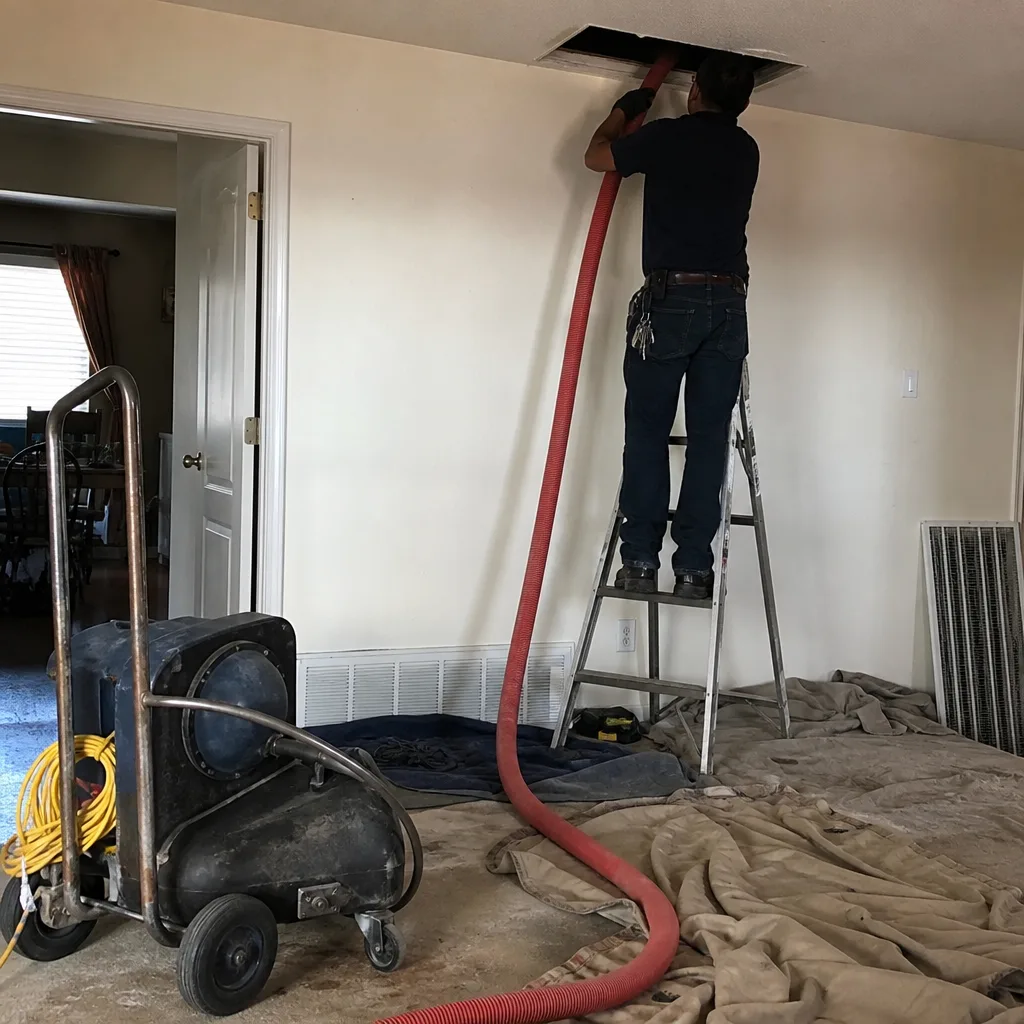 Before
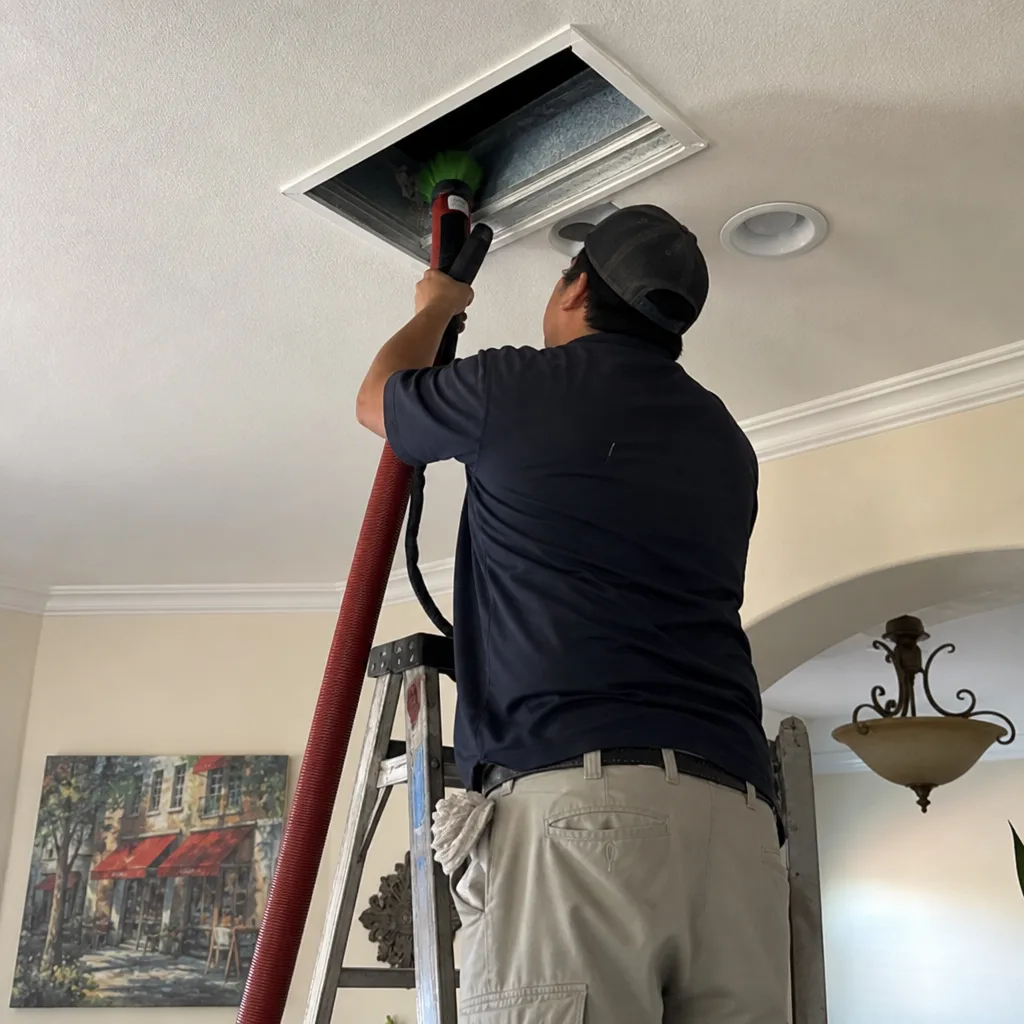 After
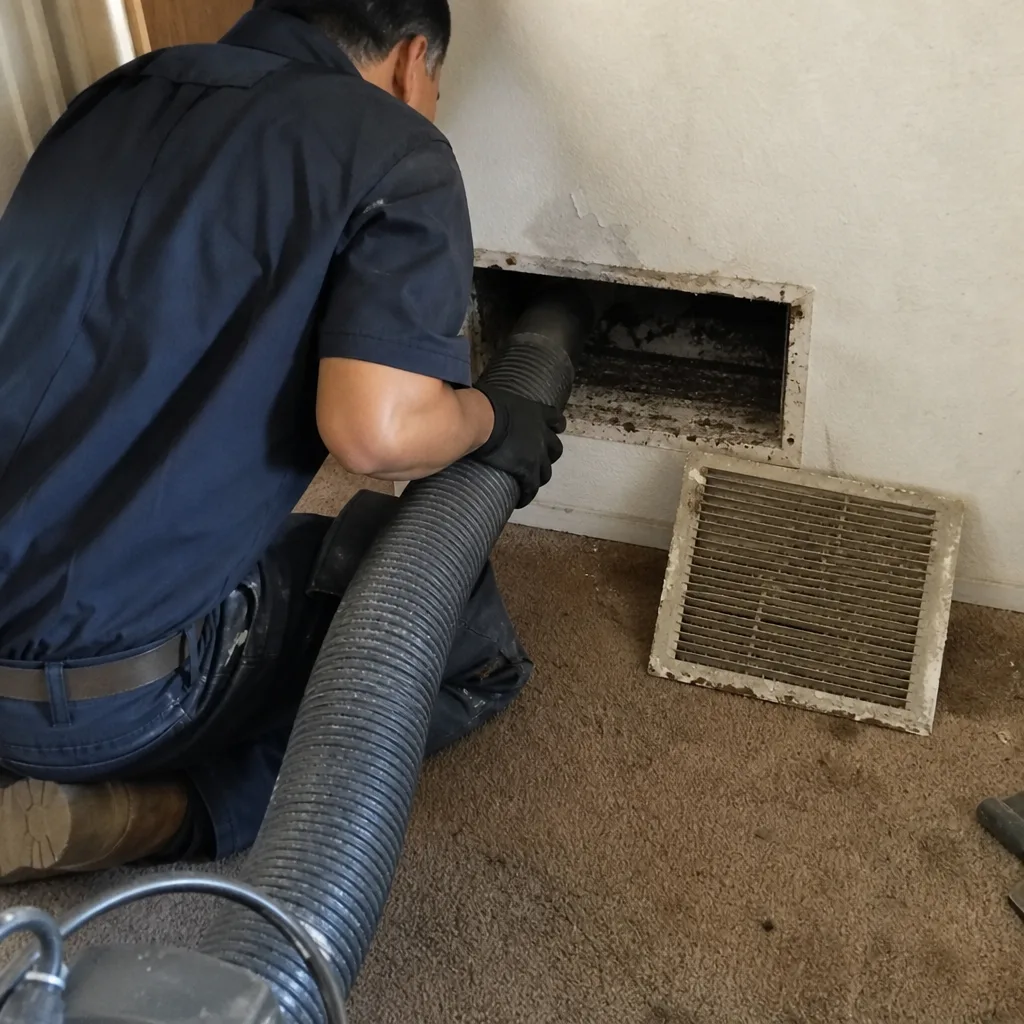 Before
 After
 Before
 After
When to Call a Professional
Call when the warning signs are specific and measurable: a filter that loads heavy in under a month, a cooling bill that has climbed 15 percent or more with no behavioral change, a room that consistently runs 6 degrees warmer than the rest of the house, a smell that returns every time the blower starts, or visible dust at the registers that comes back within a week of cleaning. Any two of these together are enough to justify an inspection. The inspection itself is not a commitment, and it will tell you whether the problem is in the ducts, the equipment, or the home’s sealing. Duct Cleaning Hesperia offers free estimates in Hesperia, California. Call (877) 331-2951 and we will walk the system with you, show you what we find, and give you a straight answer on what needs to happen.
Frequently Asked Questions
Air duct cleaning in Hesperia typically runs between $350 and $650 for a single-system home, with the final number depending on the number of vents, the degree of buildup, and whether the system includes multiple zones or a second return. Larger homes or systems with significant packed dust may run higher. We quote one flat price per system before any work starts, and that price does not change once the technicians are on site. Call (877) 331-2951 for an exact quote on your system. Estimates are free.
In Hesperia’s dust conditions, a home with no unusual external factors should have the ducts inspected every 3 to 5 years. Homes near unpaved roads, active grading, or with occupants who have strong allergy sensitivities may need attention every 2 to 3 years. The filter loading pattern is the best indicator: if you are replacing filters more than twice as often as the manufacturer recommends, the system is carrying a load that warrants an inspection.
The difference almost always comes down to equipment and process. A low-price duct cleaning often uses a small portable vacuum and a rotating brush that cannot remove packed desert silt from long horizontal runs. The job is done faster, the equipment costs less to own, and the results do not last. Higher-priced Hesperia duct cleaning companies are typically running professional Rotobrush or Nikro negative-air systems and doing a more complete job, including camera inspection before and after. You are not just paying for time. You are paying for reach and removal capability.
A legitimate duct cleaning contractor should be able to show you before and after photos or video of the duct interior. We use camera inspection before we start and after we finish, and we walk the homeowner through what we found and what we did. If a company cannot show you the inside of your ducts before and after, you have no way to verify the work. That is a red flag regardless of price.
New construction is often the worst offender for construction debris. Drywall dust, sawdust, and scrap material get left inside duct runs during the build, and the homeowner inherits a system that is dirty on day one. If your home was built in the last five years and the filters have been loading heavy since you moved in, the ducts probably contain construction residue. A cleaning and inspection will tell you for certain.
Dirty ducts restrict airflow, and restricted airflow forces the blower motor and the compressor to work harder for longer cycles. That accelerates wear on both components and on the heat exchanger in the furnace. The cost of a duct cleaning is routinely less than even a single major component replacement, which is why we encourage Hesperia homeowners to treat duct cleaning as mechanical maintenance rather than a cosmetic service. Contact Duct Cleaning Hesperia at (877) 331-2951 if you suspect your system is running restricted.
The Bottom Line
In Hesperia, the cost of a missed duct problem compounds faster than it does in milder climates. The dust load is higher, the cooling season is longer, and the systems run harder for more months of the year. Most of the warning signs covered in this guide cost nothing to look for. They ask only that you pay attention to your filter, your bill, your nose, and the temperature in the far rooms. When any two of those signals line up, call us at (877) 331-2951 before the problem moves downstream. Your ducts carry every breath you take inside your home. It is worth knowing what is in them.
Written by the team at Duct Cleaning Hesperia, serving Hesperia since 2014.