
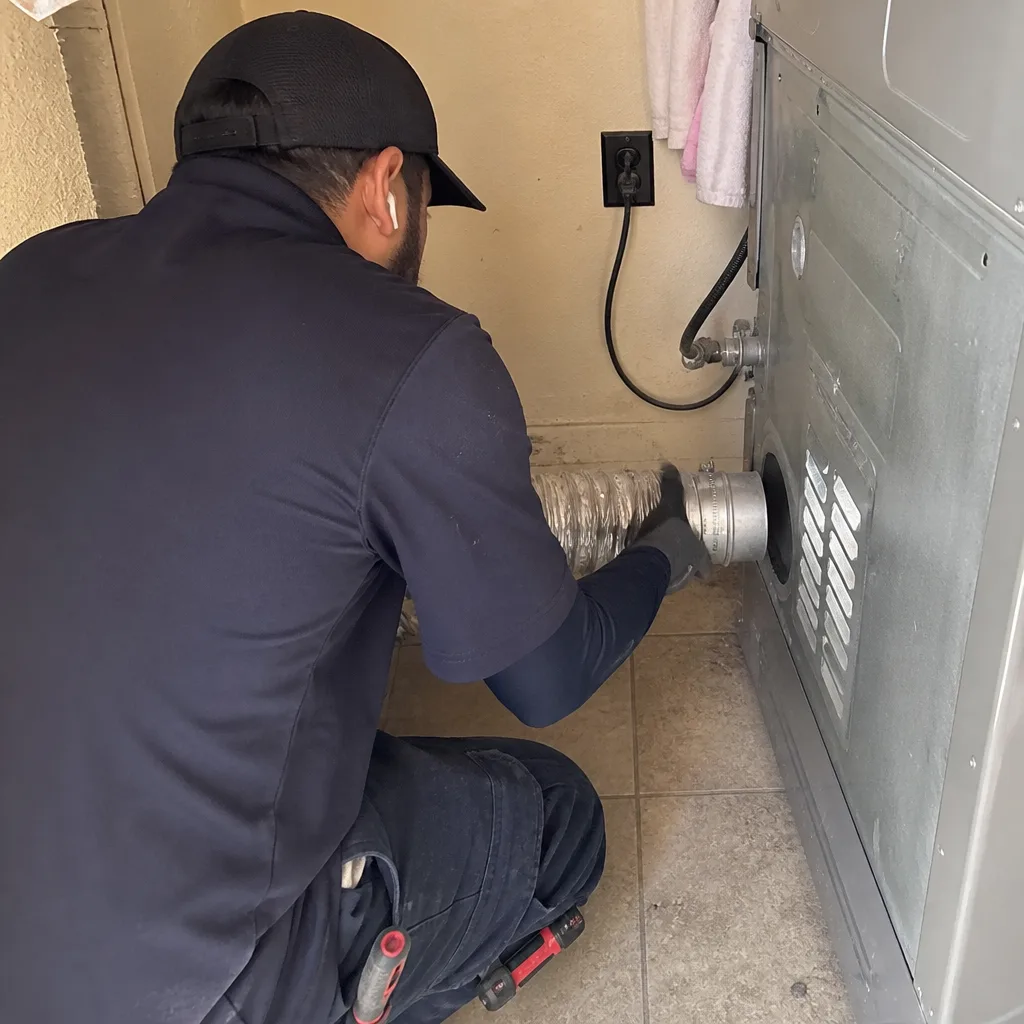
Last updated November 2, 2026
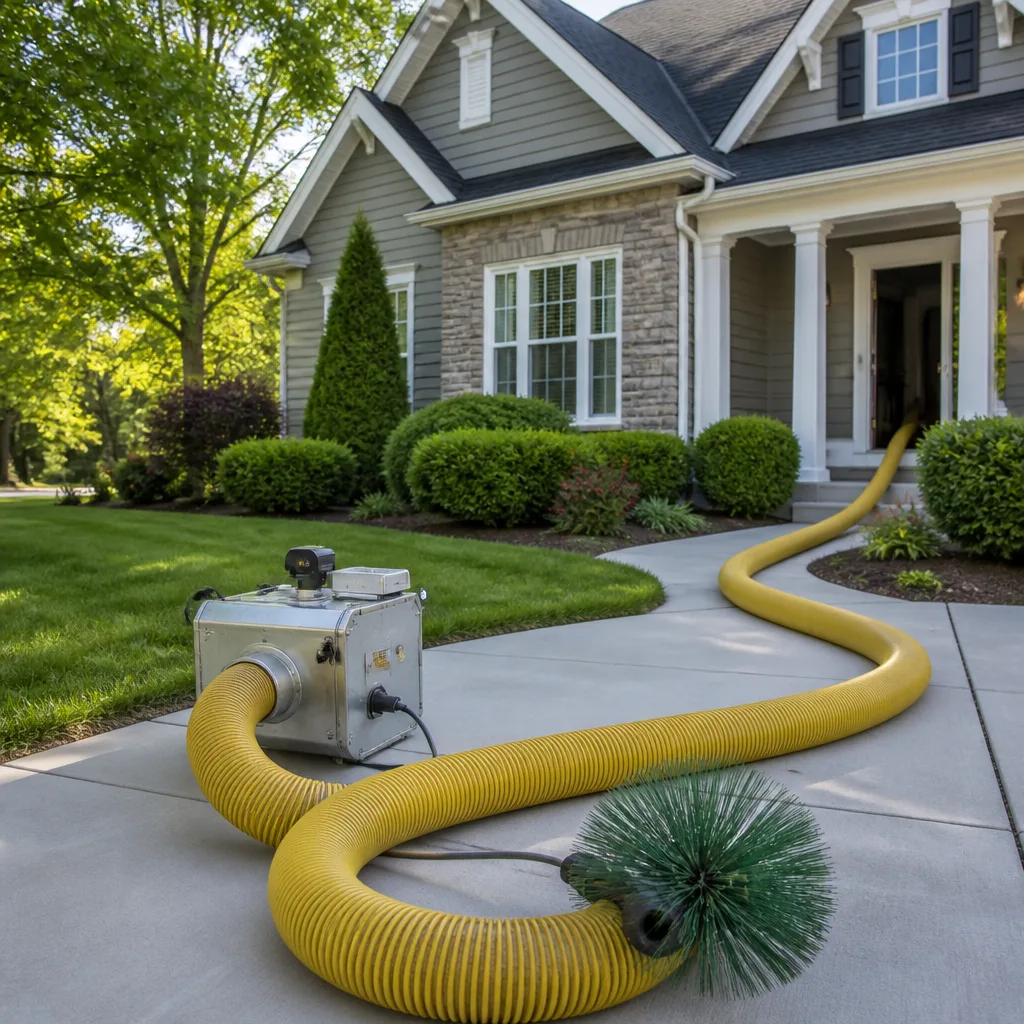 Whole-home duct cleaning
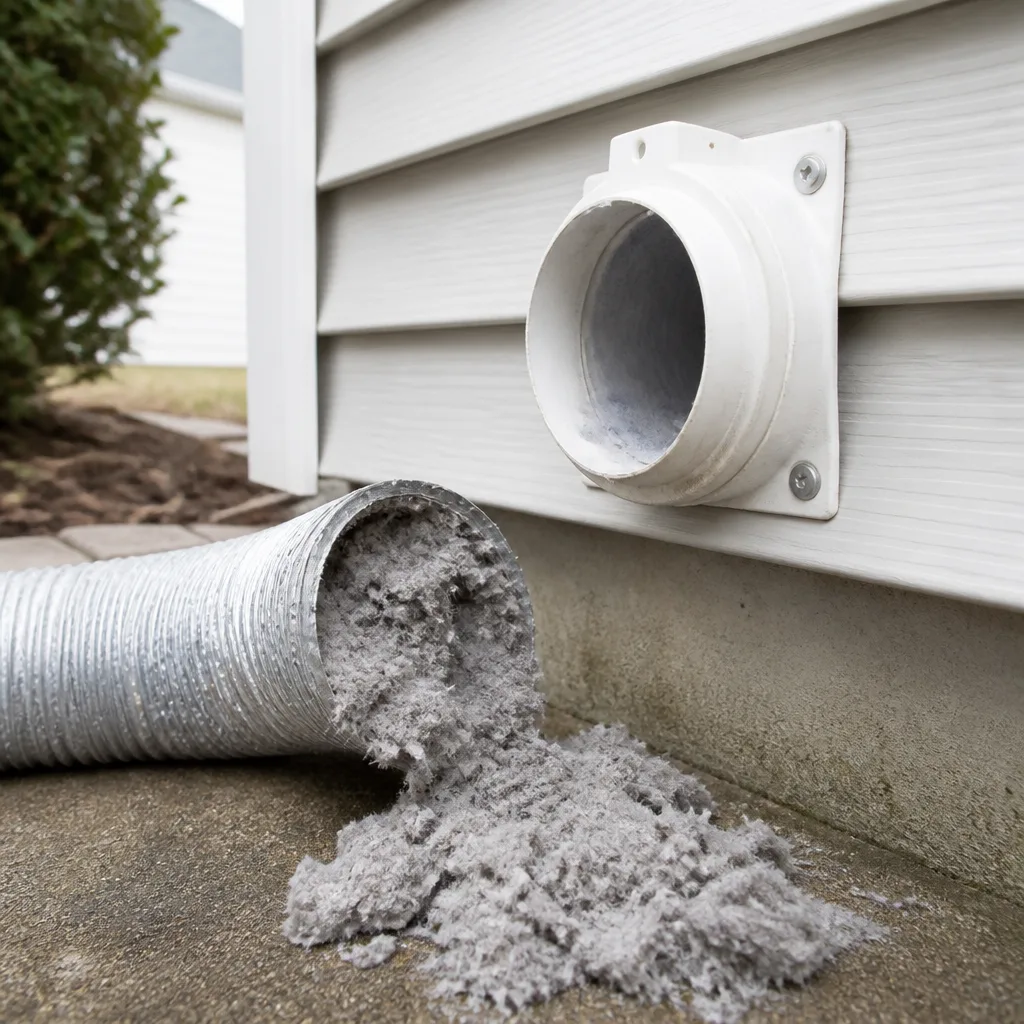 Dryer vent cleaning
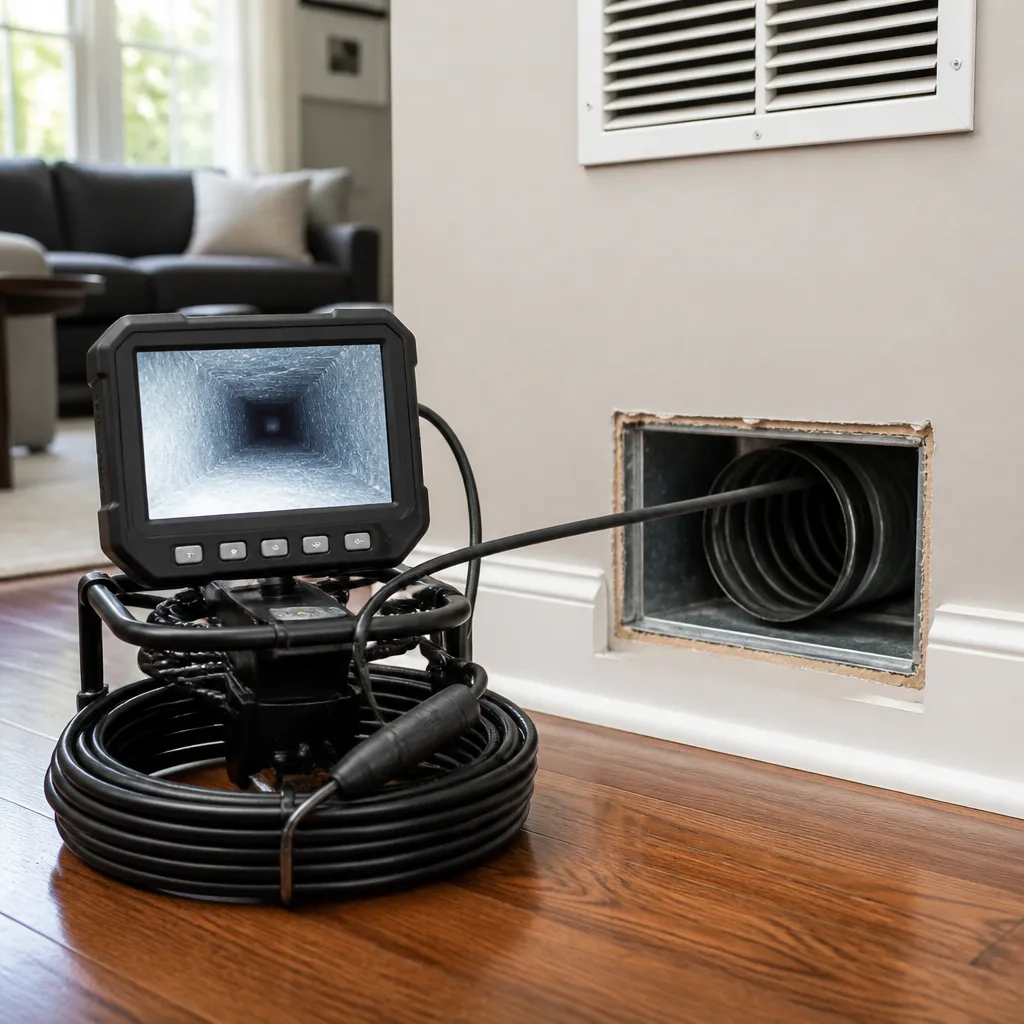 Camera inspection
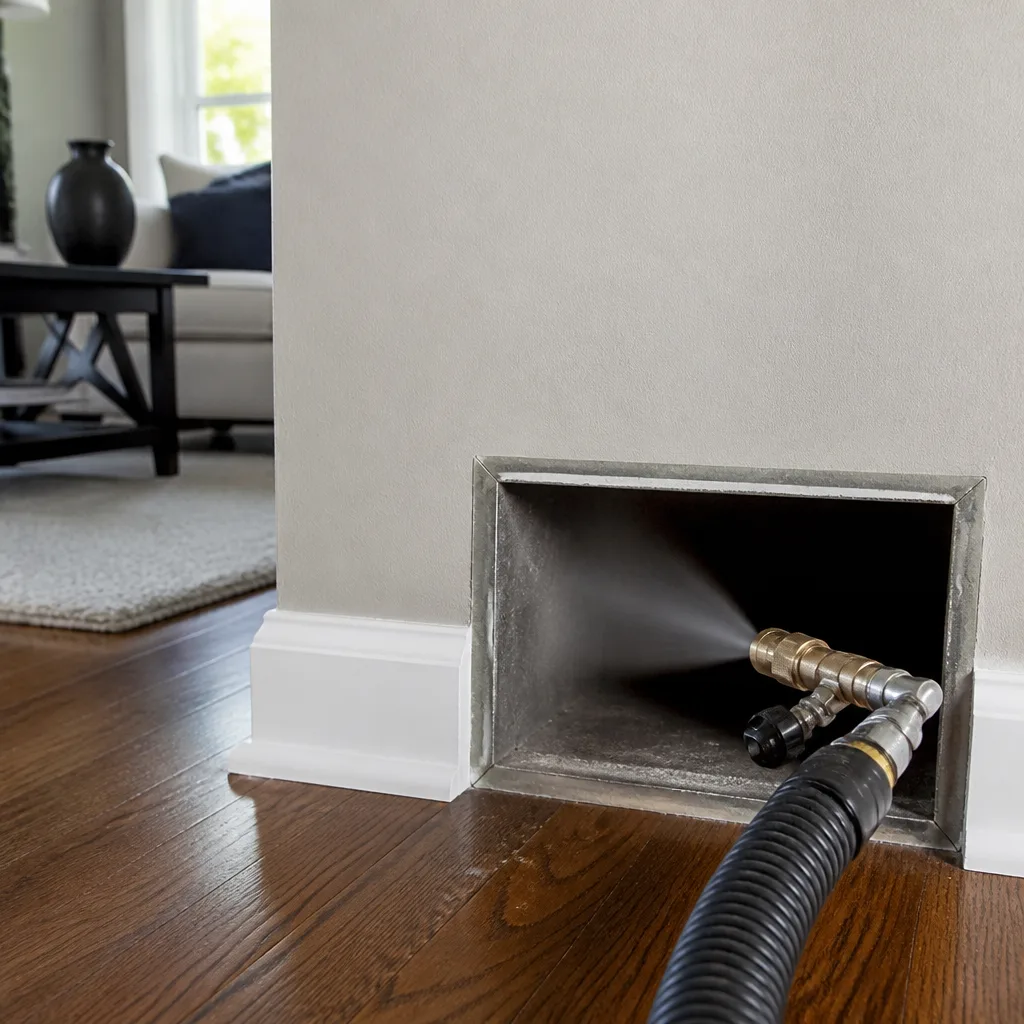 Sanitizing & deodorizing
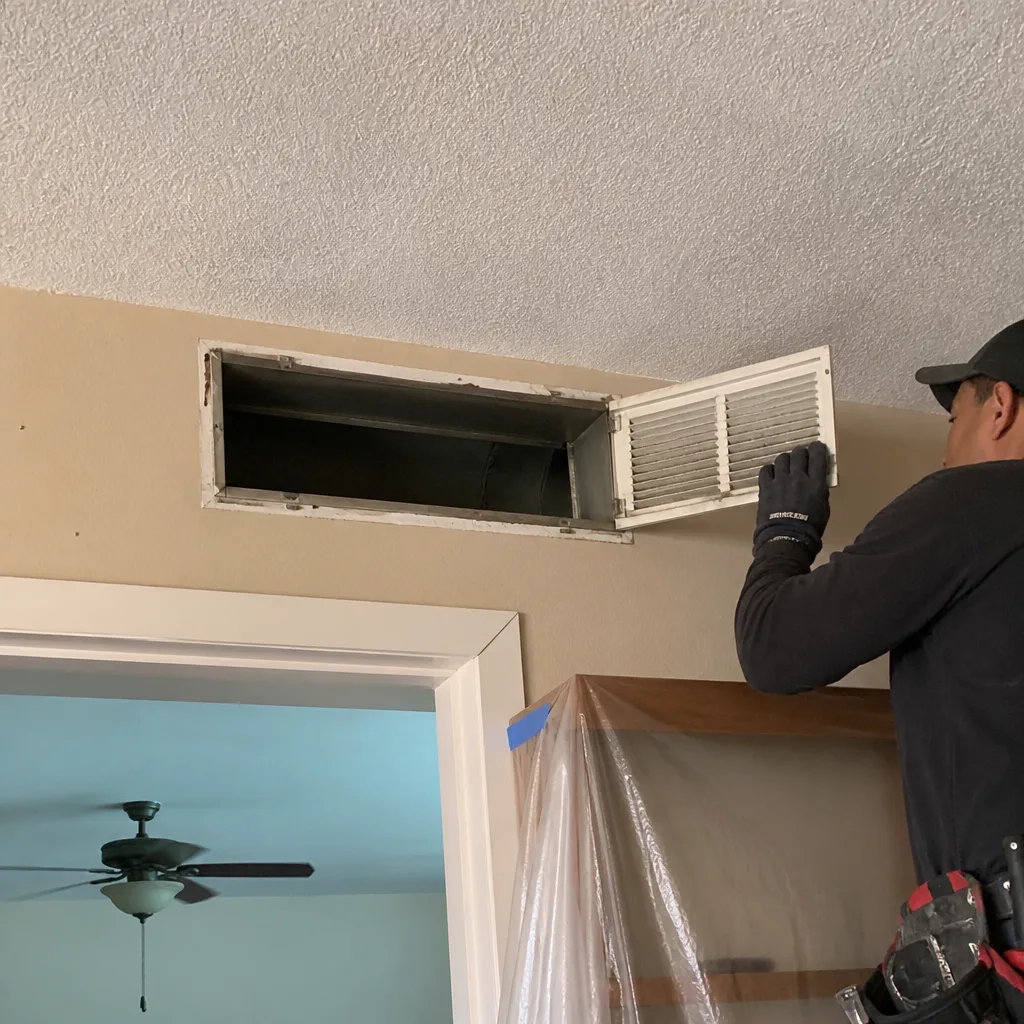
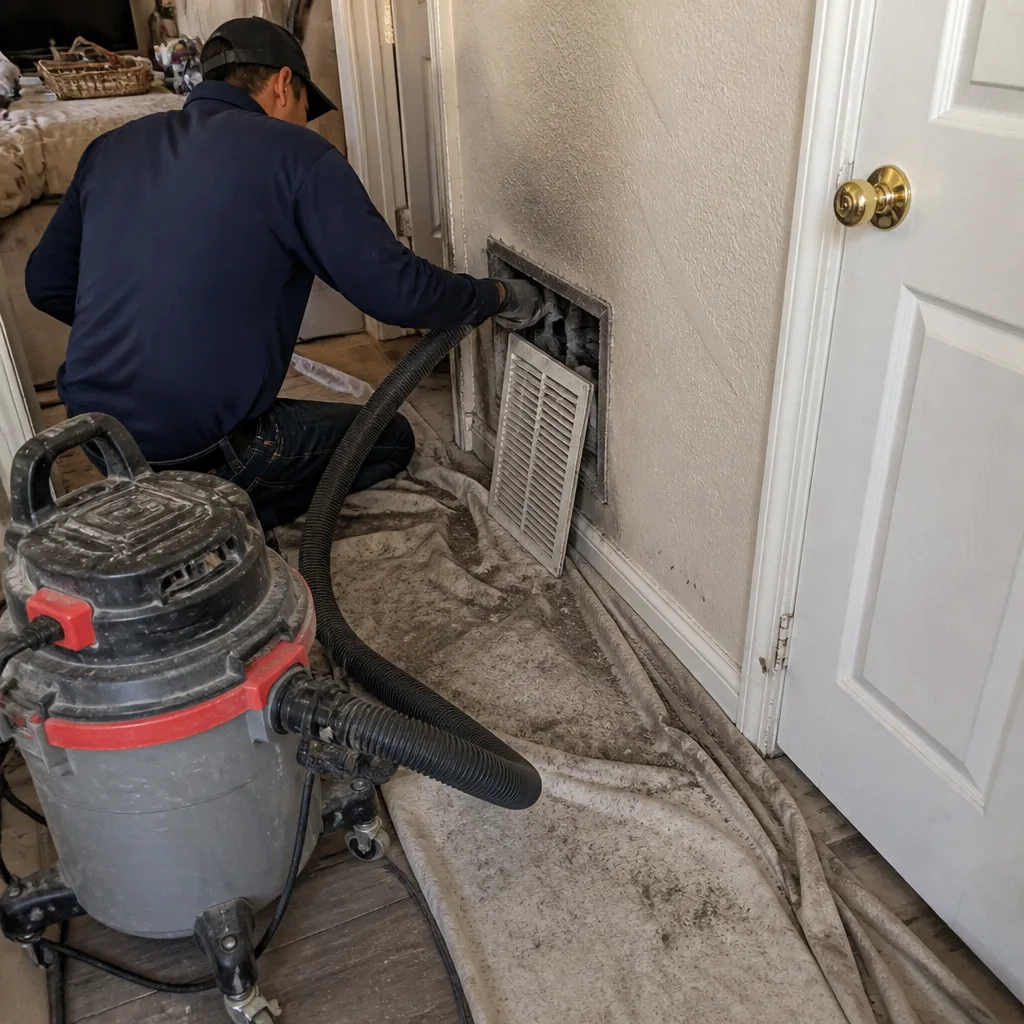
Whole-system duct and dryer vent check with before-and-after photos - you see exactly what came out of your vents
That "$99 whole-house special" is a bait ad - the real number appears once they are in your hallway, or the "clean" is a shop-vac at the register. We photograph the inside of your ducts before and after instead.
How to Hire an Air Duct Cleaning Contractor in Hesperia: A Step-by-Step Guide
The most common air duct cleaning scam in the High Desert doesn’t involve fake companies or fly-by-night operators. It involves real, licensed businesses showing up to your Hesperia home with a portable vacuum that couldn’t clean a studio apartment effectively, then charging you for “whole-home service” anyway. The equipment gap in this industry is staggering, and most homeowners have no way to evaluate it until the crew is already in the driveway. This guide gives you the technical interview framework we’ve developed over years of fixing what underequipped crews leave behind with our Air Duct Cleaning services. By the end, you’ll know exactly which questions expose a cut-corner operation before they touch your system.
Quick Answer
To hire a qualified air duct cleaning contractor in Hesperia, verify three things before booking: (1) they use truck-mounted or high-CFM portable equipment with true negative pressure, not a shop-vac-style unit; (2) they inspect your ductwork before quoting and provide an itemized scope of work, not a flat-rate price sight unseen; and (3) they can handle duct repair in-house if damage is found, rather than cleaning around problems or subcontracting the fix. The best contractors will walk you through their equipment, their process, and their limitations without hesitation.
Styles & brands we work with
- Whole-home duct cleaning
- Dryer vent cleaning
- Camera inspection
- Sanitizing & deodorizing
Table of Contents
- Step 1: Understand What Air Duct Cleaning Actually Requires
- Step 2: The Equipment Questions That Separate Pros from Pretenders
- Step 3: Evaluate the Quote Structure Before You Compare Prices
- Step 4: Verify Certifications Without Being Fooled by Paper
- Step 5: Red Flags During the Estimate Visit
- Step 6: The Repair Question Nobody Asks Until It’s Too Late
- Why Hesperia’s Climate Makes Equipment Quality Matter More
Step 1: Understand What Air Duct Cleaning Actually Requires
Before you can interview a contractor, you need to know what legitimate duct cleaning looks like at the mechanical level. The process is not complicated in principle, but it demands specific tools to do correctly. A professional crew connects a high-powered vacuum system to your ductwork to create negative pressure, then agitates the interior surfaces with rotating brushes or compressed air to dislodge debris that gets pulled into the vacuum. The key word here is negative pressure: the system must pull air through the ducts faster than it escapes, so contaminants are contained and removed rather than blown into your living space.
What does this look like in practice? A legitimate setup in a Hesperia home involves a vacuum unit generating at least 2,000 CFM (cubic feet per minute) of airflow. That number matters more than any brand name or flashy website. A consumer-grade portable unit might pull 400-600 CFM. That’s enough to disturb dust but not enough to extract it through a 25-foot duct run. The dust settles back into the same place it started, just looser, and within weeks your registers show the same buildup. We’ve walked into homes after “cleanings” where the return ducts were visibly cleaner near the register but untouched beyond the first bend.
For context on what a full-scope professional does differently, see our breakdown of air duct cleaning in Hesperia, which covers the process from inspection through final verification. The short version: equipment capacity determines everything downstream.
Step 2: The Equipment Questions That Separate Pros from Pretenders
You don’t need an HVAC background to evaluate equipment. You need to ask the right questions and listen for the right answers. Here’s the interview framework we recommend every Hesperia homeowner use before booking a duct cleaning appointment.
- “What type of vacuum system do you use?” – The answer should be “truck-mounted” or “a high-CFM portable unit.” Truck-mounted systems typically pull 8,000-12,000 CFM using the vehicle’s engine. That’s genuine whole-home capability. High-CFM portables, like professional Rotobrush or Nikro systems, can be effective for most residential jobs when properly configured. If they say “a heavy-duty vacuum” or won’t name the system, that’s a red flag.
- “What’s the CFM rating on your equipment?” – For a portable system, anything under 1,500 CFM is inadequate for ductwork beyond a single room. A professional won’t hesitate to give you this number. We use Rotobrush and Nikro equipment specifically because these are the systems trusted in commercial and remediation settings, not consumer-grade alternatives sold at home improvement stores.
- “How do you agitate the duct interior?” – Negative pressure alone doesn’t clean. The system needs mechanical agitation: rotating brush systems, compressed air whips, or both. If the answer is “the vacuum does the work,” they don’t understand how cleaning works.
- “Do you seal off registers during the process?” – A professional seals each register to maintain negative pressure and prevent debris from escaping into rooms. If they give you a blank look at this question, end the call.
One more thing worth understanding: negative pressure is not a marketing term. It’s the physical mechanism that determines whether dust ends up in the collection container or in your bedroom. When a system can’t maintain negative pressure through the full duct run, the cleaning becomes cosmetic. That’s the difference between equipment that looks professional in a photo and equipment that actually performs in a 2,000-square-foot High Desert home with long trunk lines and multiple registers.
Step 3: Evaluate the Quote Structure Before You Compare Prices
Here’s a counterintuitive truth about air duct cleaning quotes: the cheapest flat-rate offer is often the most expensive service you’ll buy. That $99 whole-home coupon rarely reflects the actual scope of work your system needs, and it usually signals a business model built on upsells and corner-cutting rather than honest labor. In Hesperia, where many homes have ductwork stretched through attics that hit 130 degrees in July, shortcuts compound quickly.
A legitimate quote structure looks like this:
- Inspection first: The contractor asks about your home’s square footage, number of registers, system type, and ideally visits the property before finalizing a price. Quoting sight unseen is a guess, not an estimate.
- Itemized scope: You should see line items for supply ducts, return ducts, plenums, registers, and the air handler or furnace interior. Each component has a price attached.
- Repair contingency: The quote should state clearly what happens if damage is found: who fixes it, what it might cost, and whether the repair is included or separate.
- Access confirmation: The price should account for where your ducts are located. A crawlspace system costs more to clean than a basement system because access is harder.
Flat-rate pricing that covers “everything” without knowing your system’s configuration isn’t a deal. It’s a signal that the contractor either plans to cut corners or plans to upsell you once they’re in the home. The honest conversation sounds like this: “Your system has 14 supply registers, two returns, and a plenum in the attic. Here’s what each component costs to clean properly.” When we quote a job, the price is for the work described, not for a door-opener offer that changes once the equipment is set up.
Step 4: Verify Certifications Without Being Fooled by Paper
NADCA membership and ASCS certification are the standard credentials in this industry, and they do mean something. NADCA (National Air Duct Cleaners Association) members must demonstrate knowledge of proper cleaning procedures and adhere to industry standards for equipment and process. ASCS (Air Systems Cleaning Specialist) certification means an individual has passed an exam covering HVAC system cleaning principles. These are legitimate credentials, and any contractor worth hiring in Hesperia should hold them.
But here’s what those credentials don’t verify:
- They don’t verify equipment quality. A technician can pass the ASCS exam and then use inadequate portable equipment in the field. The certification tests knowledge, not the tools brought to your job.
- They don’t verify honesty in quoting. A certified technician can still work for a company that uses bait-and-switch pricing tactics.
- They don’t verify repair capability. NADCA standards cover cleaning, not duct repair or replacement. A company can be a model NADCA member and still have no ability to fix a damaged duct they find during your cleaning.
Ask to see proof of certification, then ask the equipment questions from Step 2. The paper confirms baseline competence. The equipment questions confirm actual capability. Both matter. In our experience, we’ve seen certified technicians running equipment that couldn’t clean a closet effectively. The certification isn’t worthless, but it’s not a substitute for the equipment conversation.
Step 5: Red Flags During the Estimate Visit
The estimate visit is four to six minutes of observation that tells you more than any phone conversation. Here are the behaviors that should end the relationship before it starts.
1. They quote without looking at the system. If a contractor walks through your Hesperia home, glances at two registers, and hands you a price, they’re not estimating your job. They’re estimating a job. Legitimate quotes account for duct configuration, access difficulty, system age, and visible contamination. A contractor who doesn’t inspect before quoting doesn’t understand the variables that determine scope.
2. They won’t show you their equipment. Ask to see what’s in the truck. If the response is defensive, evasive, or “it’s in the shop today,” that’s your answer. Professionals use equipment they’re proud of. We show every client the Rotobrush or Nikro system we’ll bring into their home, because the equipment is the service. If someone won’t open the truck, it’s because they don’t want you to see what’s inside.
3. They lead with mold scare language. This is the classic upsell opener: “I see signs of microbial growth, and that’s not included in the basic cleaning.” Mold exists in varying concentrations in virtually every environment, and a visual inspection from a duct cleaning technician is not a mold assessment. If someone starts talking about health hazards before they’ve opened a single duct, they’re building a sales pitch, not doing an inspection. Legitimate contractors flag visible concerns and recommend proper testing by a qualified environmental professional. We don’t diagnose mold. We clean ducts.
4. They can’t explain the cleaning process. Ask, “Walk me through what you’ll actually do, step by step.” If the answer is vague (“we hook up the machine and clean everything”), they don’t understand the work. A technical answer includes negative pressure setup, register sealing, agitation method, collection, and final verification. If they can’t explain it, they can’t do it consistently.
Step 6: The Repair Question Nobody Asks Until It’s Too Late
Here’s the scenario that plays out in dozens of Hesperia homes every year: a duct cleaning crew opens your system, discovers a disconnected duct joint, a crushed return plenum, or a torn flex duct section, and… cleans around it. They leave the damage in place, take your payment, and you’re now moving air through the same compromised system you had before, just with less dust. When you call to complain, they tell you duct repair isn’t part of the cleaning service and recommend someone else. That someone else charges a trip fee, and you’re out another $200 before the actual repair starts.
This is why the repair question matters before you hire, not after. Ask directly: “If you find damaged ductwork during cleaning, can you repair it the same day?” The answer tells you everything about how the company is structured.
Most duct cleaning companies don’t employ anyone who can pull new duct, seal joints, or replace a damaged plenum. They clean and walk away. That’s their business model, and it’s a valid one, but it leaves you holding a separate problem. At Air Duct Repair in Hesperia, we handle both because the cleaning process frequently reveals damage that should be addressed before the system is reassembled. A disconnected joint isn’t just an efficiency problem. It’s pulling attic air, insulation fibers, and dust directly into the airflow that reaches your living space. Cleaning a system with that kind of damage is like washing a car with a hole in the door panel: the surface looks better, but the problem persists.
Ask the question. If the answer is “we’d refer you to someone else,” factor that second appointment into your total cost and timeline. If the answer is “we can handle it in-house,” you’ve found a contractor who understands that cleaning and repair are two halves of the same service.
Why Hesperia’s Climate Makes Equipment Quality Matter More
The High Desert presents specific challenges that make air duct cleaning in Hesperia different from coastal or valley locations. Understanding these factors helps you evaluate whether a contractor actually knows the local market or is running a generic playbook.
First, the dust load is extraordinary. Hesperia sits in a wind corridor that carries fine particulate from the Mojave floor, and summer afternoon winds routinely exceed 20 miles per hour. That dust infiltrates homes through doors, windows, and the natural pressure differences between indoor and outdoor environments. By late summer, many local systems carry a heavy particulate load that a low-CFM vacuum can’t move. We regularly see systems where the dust has compacted against the duct walls in layers that require aggressive agitation and high airflow to remove. A portable unit pulling 500 CFM simply won’t do it.
Second, the temperature extremes challenge every material in your system. Attic temperatures in Hesperia regularly exceed 130 degrees from June through September. Flex duct expands and contracts through a 60-70 degree daily swing. Seams separate. Joints loosen. Hangers shift. By the time we reach a system for cleaning, we’re often looking at structural issues that developed since the previous cleaning. This is why the repair conversation from Step 6 matters more here than it would in a moderate climate. Your ducts aren’t just dirty. They may be damaged, and that damage may be affecting airflow and air quality before dust ever enters the picture.
Third, evaporative cooling systems are common throughout the High Desert, and they introduce humidity variables that affect duct interiors differently than refrigerated air. Swamp cooler systems push moist air through ductwork, and when that moisture accumulates in accumulated dust layers, the result is a pasty coating that resists low-powered cleaning attempts. This is a technical reality specific to the Mojave region. A contractor who has never worked with evaporative cooler ductwork may not understand why their normal process isn’t producing results.
Ask any prospective contractor: “Have you cleaned systems in Hesperia homes with evaporative cooling?” If they don’t know why the question matters, keep looking. If you want to understand what a proper Hesperia duct cleaning involves, start with the Duct Cleaning Hesperia home page, which explains our approach to the specific challenges of the High Desert environment.
What a Complete Quote Should Include in Hesperia
Now that we’ve covered the questions to ask, here’s what a legitimate, complete quote actually looks like for a typical Hesperia home. This isn’t a price list. It’s a structure that shows the contractor understands the scope of the work they’re quoting.
| Scope Item | What It Covers | Why It Matters |
|---|---|---|
| System Inspection | Visual assessment of all accessible ductwork, registers, plenums, and the air handler | Identifies damage, access issues, and contamination level before work begins |
| Supply Duct Cleaning | Agitation and extraction of all supply runs from plenum to register | Removes dust, debris, and particulate from the air path that reaches your rooms |
| Return Duct Cleaning | Complete cleaning of return runs, often the dirtiest part of the system | Return ducts pull unfiltered air from living spaces and accumulate the most material |
| Plenum and Trunk Line Cleaning | Primary distribution chambers where supply and return air collects | Debris in plenums redistributes contaminants through the entire system |
| Register and Grille Cleaning | Removal, cleaning, and reinstallation of all supply and return covers | Visible buildup at registers is a primary reason homeowners notice air quality issues |
| Repair Contingency | Documented process and pricing for any damage discovered during cleaning | Prevents surprise charges and ensures repairs are addressed rather than ignored |
If a quote lacks any of these elements, ask why. A contractor who doesn’t clean returns, skips plenums, or has no repair process is offering partial service at a full-service price. In Hesperia, where dust loads are high and systems work hard, partial cleaning isn’t a bargain. It’s deferred maintenance with extra steps.
How Often Should You Actually Clean Your Ducts in Hesperia?
The standard industry recommendation is every 3-5 years, but Hesperia conditions push that number toward the shorter end. Homes with pets, smokers, recent construction, evaporative cooling, or proximity to unpaved roads may benefit from cleaning every 2-3 years. The variables that determine frequency include:
- Dust accumulation rate: Visible buildup on registers within weeks of cleaning signals a fast-accumulating environment that needs more frequent service.
- Presence of allergy sufferers: If someone in the home experiences persistent symptoms that improve away from the house, more frequent cleaning may help reduce particulate load.
- Construction or renovation history: Homes that underwent drywall work, flooring replacement, or window installation within the past year typically carry construction dust that can take multiple cleanings to fully remove.
- Evaporative cooler use: Moisture introduces conditions that cause dust to adhere more firmly to duct walls, creating thicker deposits that require more frequent intervention.
- Access to outdoor dust sources: Homes near unpaved roads, open desert, or active construction areas accumulate particulate faster.
The honest answer: if you can’t remember the last time your ducts were cleaned, it’s time. In the High Desert, duct cleaning isn’t an occasional luxury. It’s part of maintaining a livable indoor environment in a region where outdoor dust is an unavoidable reality. And if your dryer vent hasn’t been cleaned in the same timeframe, that’s a separate but related issue: Dryer Vent Cleaning in Hesperia addresses the fire risk that accumulated lint creates, which is arguably the more urgent safety concern in most homes.
See the difference
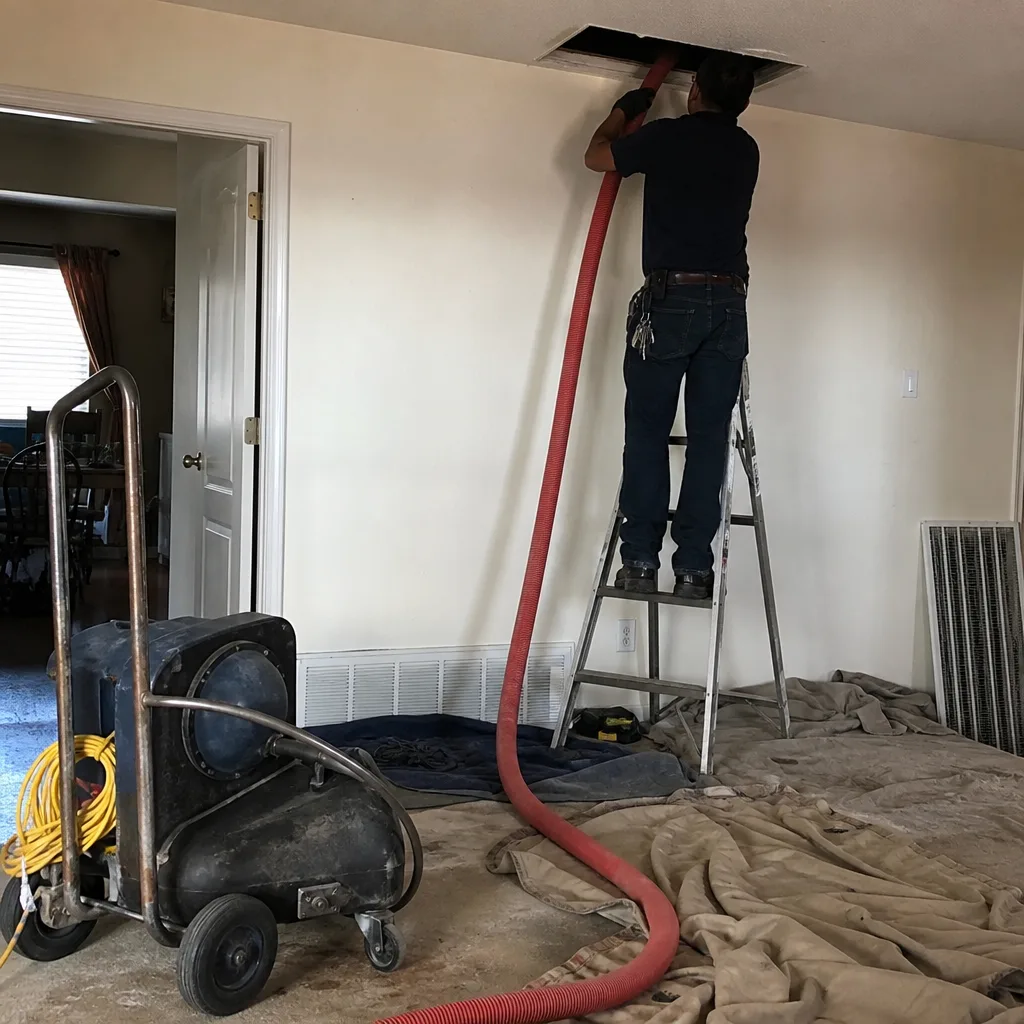 Before
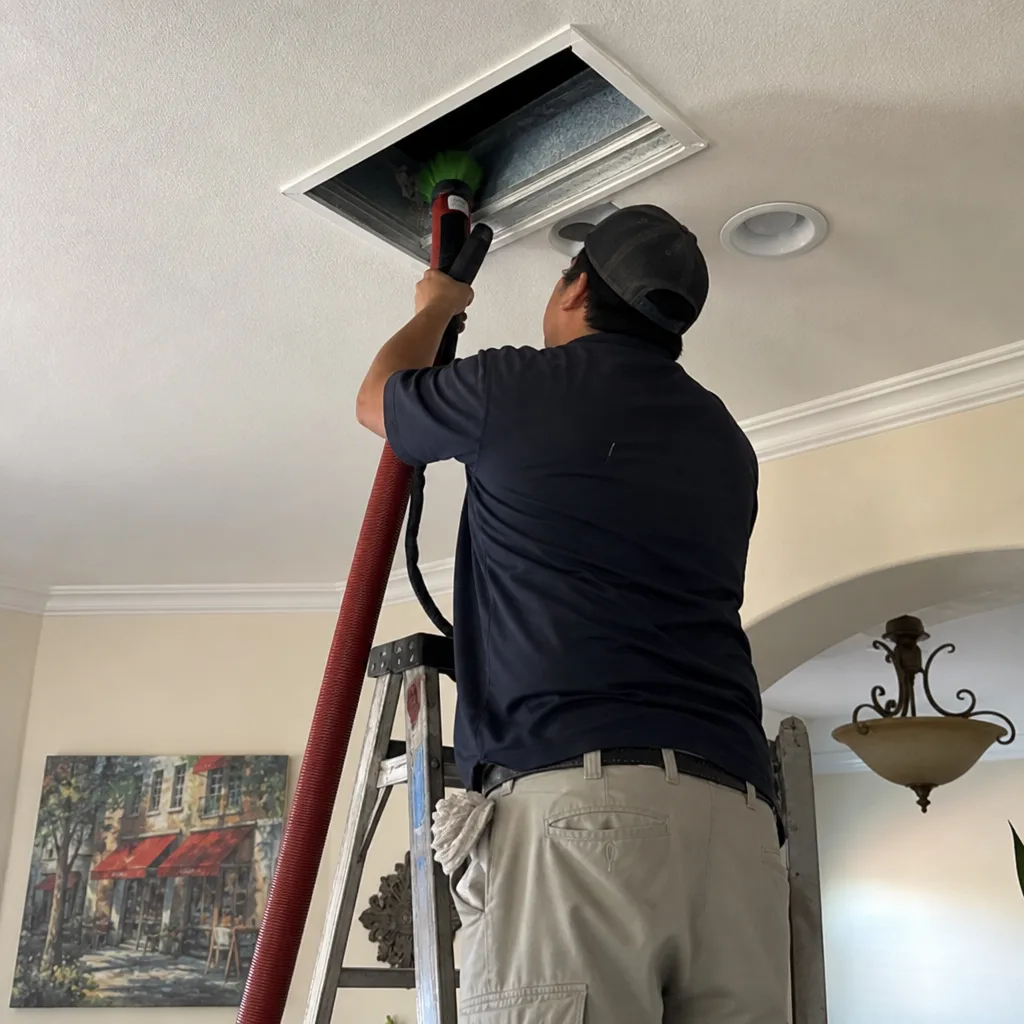 After
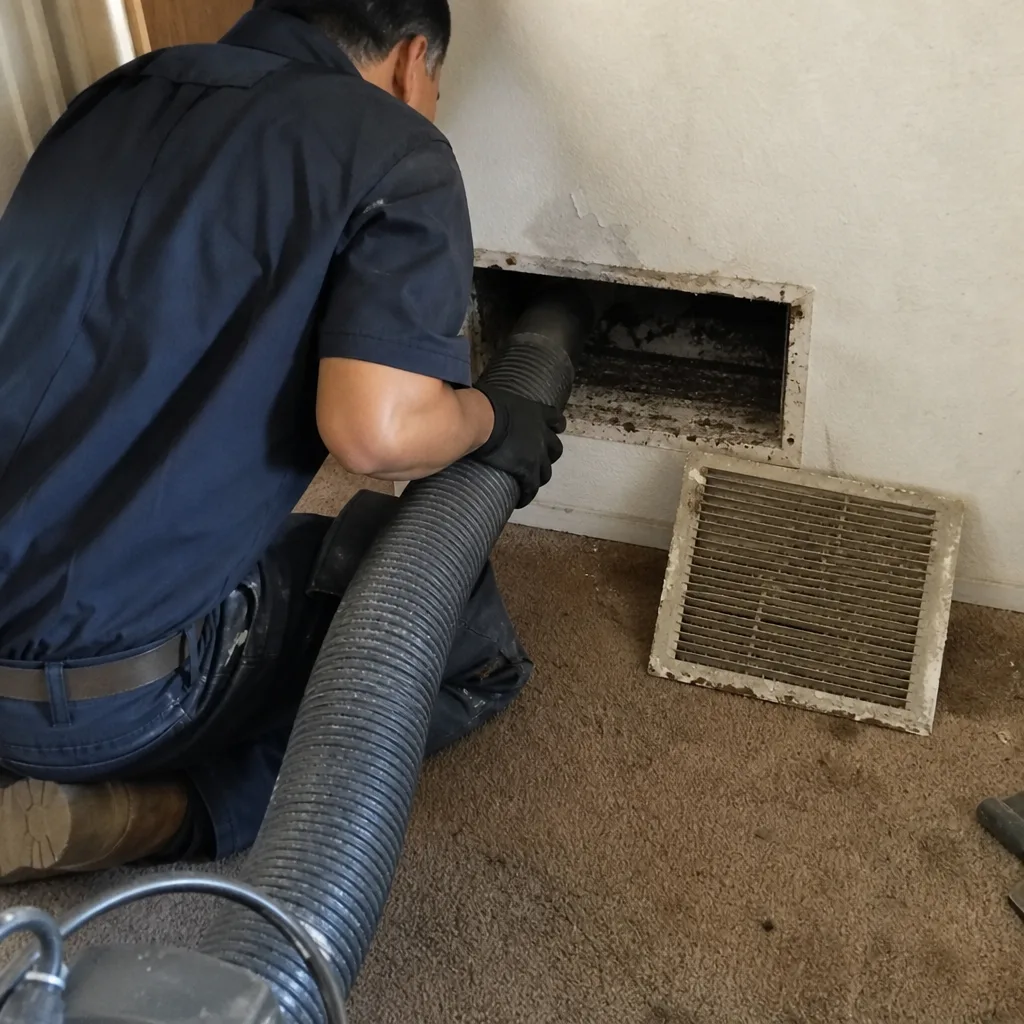 Before
 After
 Before
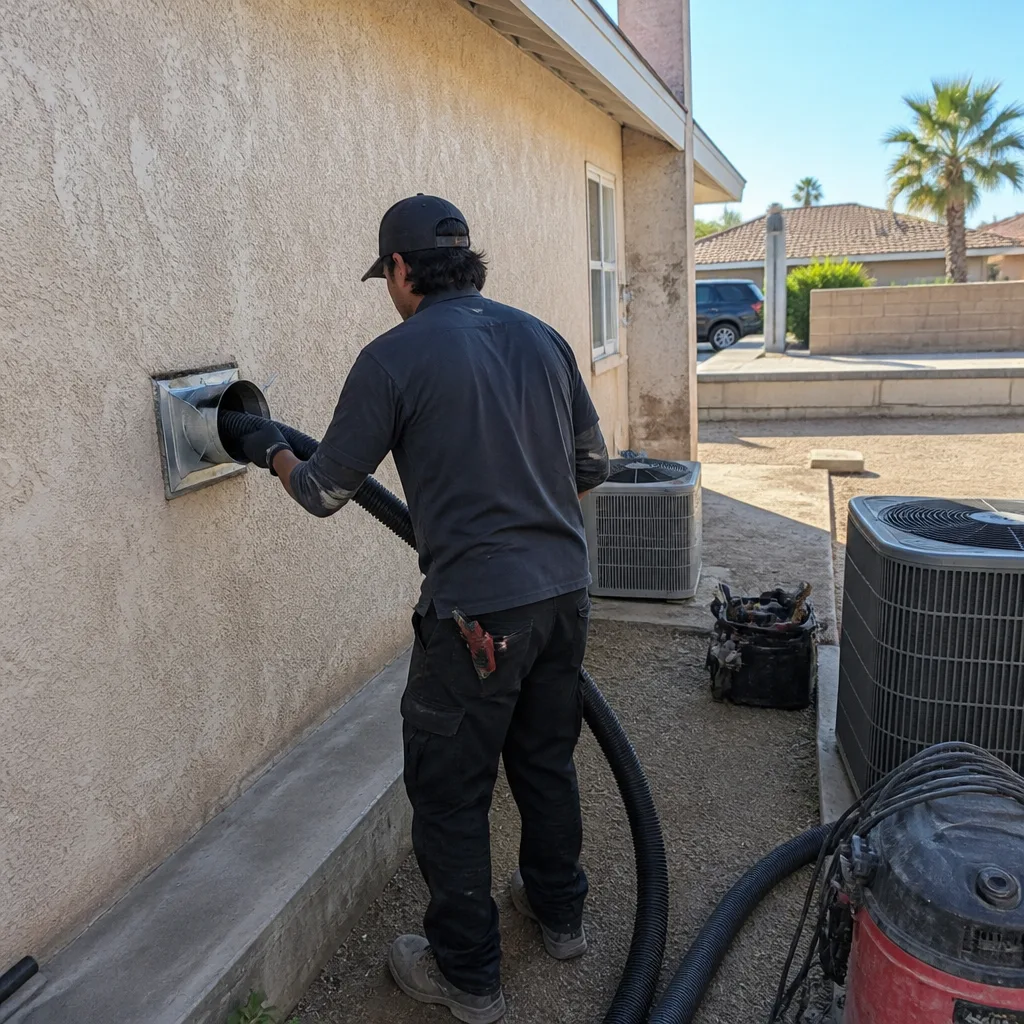 After
Common Mistakes to Avoid
- Choosing by price alone. The $99 coupon and the $450 itemized quote are not bidding on the same job. The coupon covers surface cleaning and sets up upsell opportunities. The itemized quote covers actual work. In Hesperia, where dust loads are heavy, surface cleaning means the problem returns within months.
- Skipping the equipment conversation. “Do you have the tools?” is not an insult. It’s the most important question you can ask. A contractor who is offended by the question is revealing something about their operation.
- Accepting remote quotes. A contractor who quotes without seeing your system is guessing. System configuration, access difficulty, and existing damage all change the scope. A phone quote is a marketing number, not an estimate.
- Ignoring the repair question. If you don’t ask about repair capability before booking, you forfeit your position when damage is found. The contractor has no obligation to fix what they didn’t agree to address.
- Believing mold scare language. Duct cleaning technicians are not mold inspectors. Visual observations are not diagnoses. If someone starts talking about health hazards without proper testing protocols, they’re using fear to inflate the invoice.
- Waiting until visible dust appears at registers. By the time you see accumulation at the register face, the duct interior is heavily loaded. Hesperia’s dust environment means systems reach problem status before homeowners notice, which is why periodic professional inspection matters.
When to Call a Professional
Some situations don’t require a 10-point evaluation process. If you’re seeing visible dust collecting at supply registers within days of cleaning your home, if airflow feels weak in rooms that used to breathe properly, if you smell musty or stale odors when the system runs, or if you’ve recently completed construction or renovation work, the time to call is now. Hesperia’s dust load doesn’t improve on its own, and systems deteriorate faster when they’re operating against restriction. Duct Cleaning Hesperia offers free estimates in Hesperia. Call (877) 331-2951 to schedule an inspection and get an itemized quote for your system.
Frequently Asked Questions
Professional air duct cleaning in Hesperia typically ranges from $350 to $650 for a whole-home system, depending on the number of registers, system configuration, access difficulty, and the level of contamination present. This range assumes true whole-system cleaning with professional equipment, not a surface treatment. Homes with 20+ registers, extensive attic ductwork, or unusually heavy dust loads can exceed this range. The lowest quotes in the market usually represent partial cleaning or an upsell strategy. Call (877) 331-2951 for an exact quote based on your system.
Air duct cleaning is a legitimate service that produces measurable results when performed with proper equipment, but the industry does have a disproportionate number of low-capability operators using aggressive sales tactics. The key distinction is equipment: a system cleaning with 2,000+ CFM of negative pressure and mechanical agitation removes meaningful dust and debris. A portable vacuum producing 400 CFM moves dust around without extracting it. Your ducts need cleaning if they contain visible accumulation, if you’ve had construction work, if airflow is restricted, or if occupants have unexplained respiratory symptoms that improve away from home.
Some can, most cannot. Duct cleaning and duct repair are different skill sets that many companies don’t offer together. At Duct Cleaning Hesperia, we handle both in the same visit: if we find damaged ductwork during cleaning, we can repair it on the spot rather than referring you to another company and leaving the system compromised. Before you hire any contractor, ask specifically whether they handle repair in-house. If the answer is no, you’ll need to budget for a separate service call if damage is found.
NADCA certification verifies that an individual has demonstrated knowledge of proper HVAC cleaning procedures, safety protocols, and industry standards by passing a comprehensive exam. It does not verify that the contractor uses adequate equipment in the field, that their quoting practices are honest, or that they have repair capability. Certification confirms baseline competence in the principles of duct cleaning. It’s a prerequisite for serious consideration, not a full evaluation. Pair certification verification with equipment questions to get a complete picture.
A proper whole-home air duct cleaning for an average Hesperia house (1,500-2,500 square feet, 12-16 registers) typically takes 3-5 hours with a technician crew. Anything significantly faster indicates corners are being cut. The process includes setup, register sealing, agitation and extraction of every duct run, plenum cleaning, register cleaning, and final inspection. Companies that advertise “60-minute whole-home service” are not cleaning in any meaningful sense. They’re performing a visual service that will leave your system dirty beneath the surface.
Air duct cleaning addresses the HVAC distribution system that moves heated and cooled air through your home. Dryer vent cleaning addresses the separate exhaust duct that carries hot, lint-laden air from your dryer to the outdoors. They’re different systems with different purposes and different safety profiles. Dryer vent cleaning prevents lint buildup that causes approximately 15,000 residential fires annually in the United States. Many duct cleaning companies don’t offer dryer vent service, but both are important for Hesperia homes where dust loads are high and fire risk from accumulated lint is a real concern. Duct Cleaning Hesperia provides both services along with duct repair.
The Bottom Line
Hiring an air duct cleaning contractor in Hesperia comes down to three evaluations: equipment, honesty, and scope. Equipment determines whether the work is real or cosmetic. Honesty determines whether the price you’re quoted is the price you’ll pay. Scope determines whether you’re getting true whole-system cleaning or a surface treatment that leaves the problem in place. Ask hard questions before booking. A legitimate contractor answers them confidently because the answers demonstrate capability. A cut-corner operator deflects because the answers expose the gap between what they charge and what they can actually deliver. For more guides & resources on protecting your home, explore our blog. In the High Desert, where dust is constant and systems work hard, hiring well isn’t a luxury. It’s the difference between solving the problem and paying for the appearance of a solution.
Written by the team at Duct Cleaning Hesperia, serving Hesperia since 2014.