
Last updated November 2, 2026
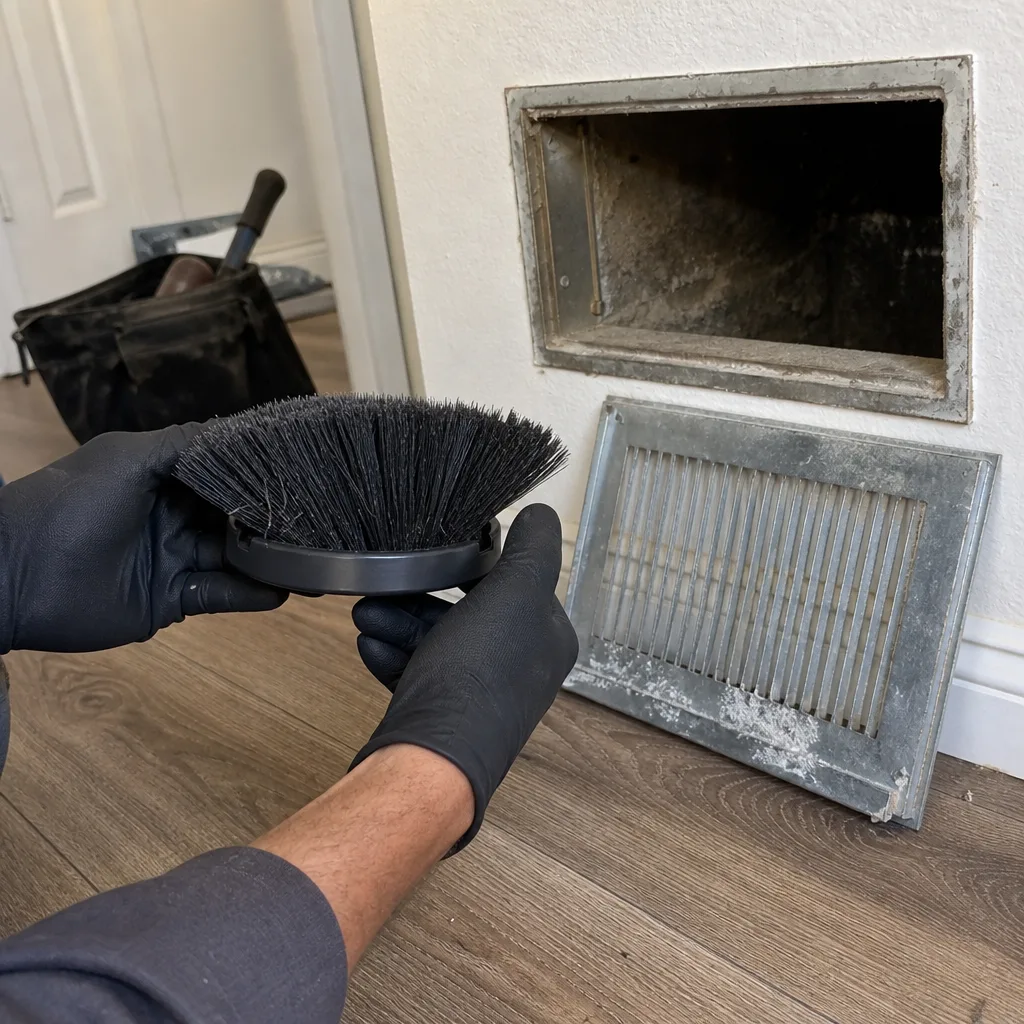
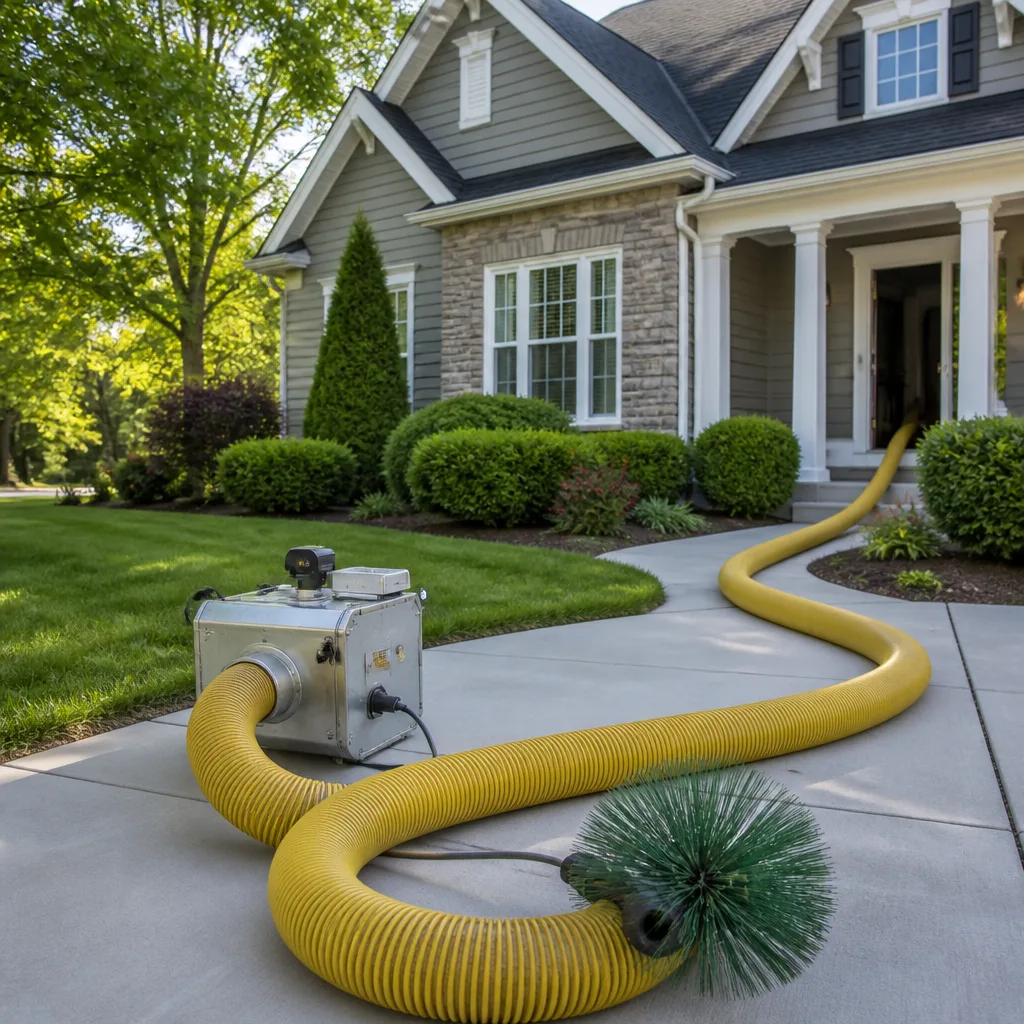 Whole-home duct cleaning
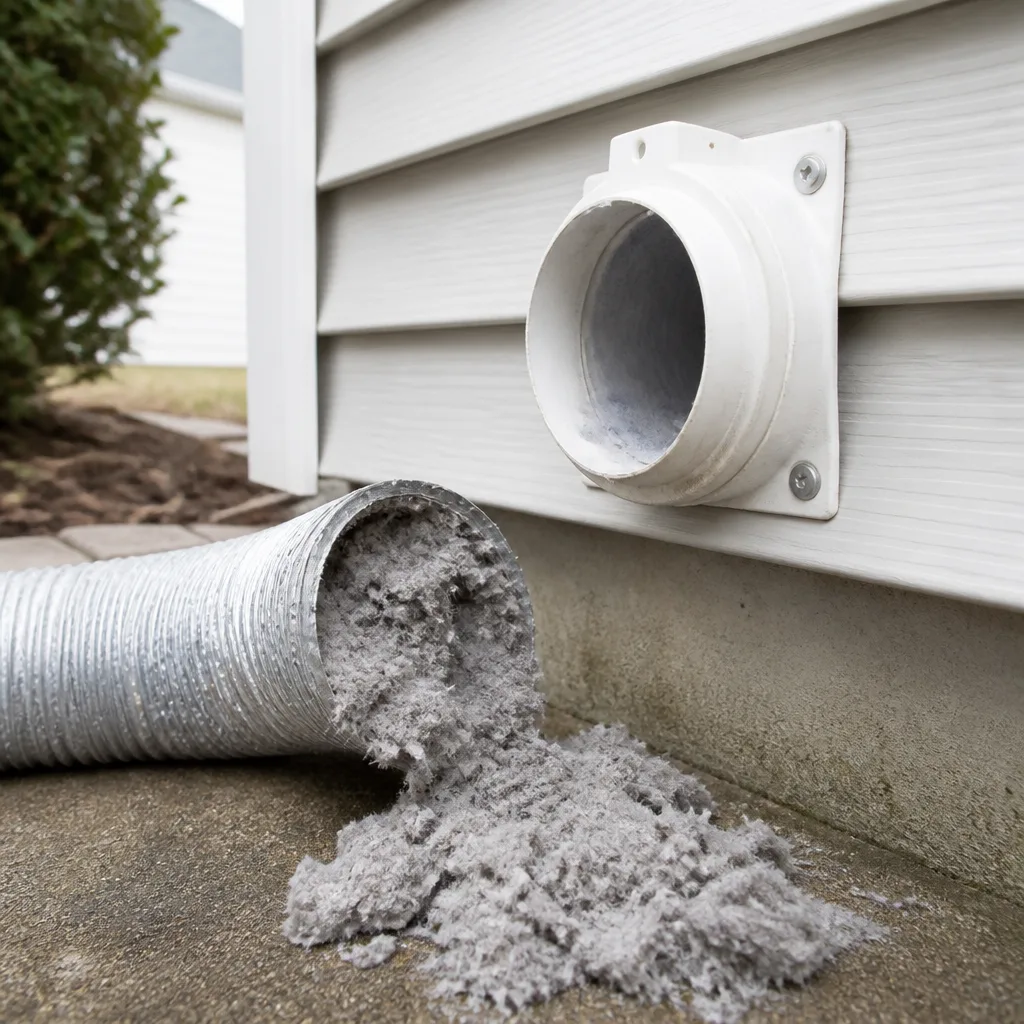 Dryer vent cleaning
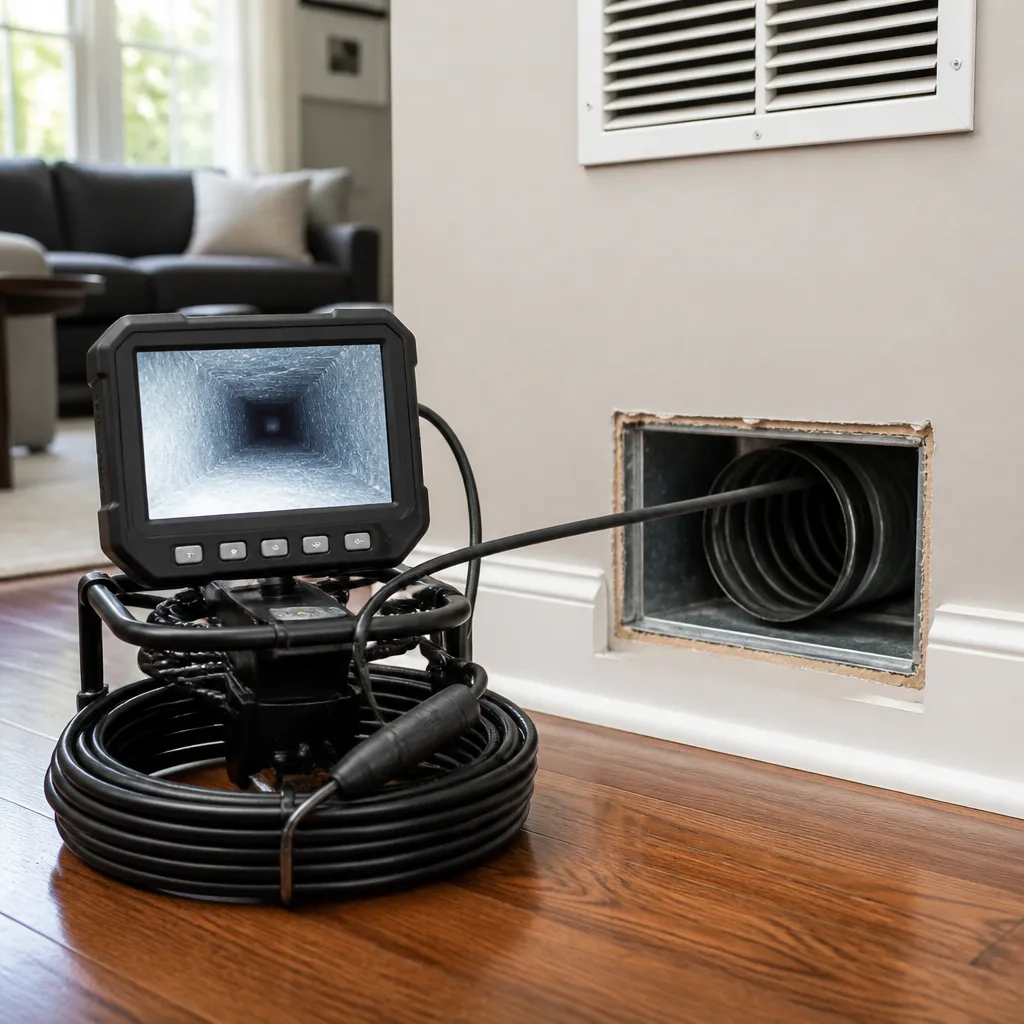 Camera inspection
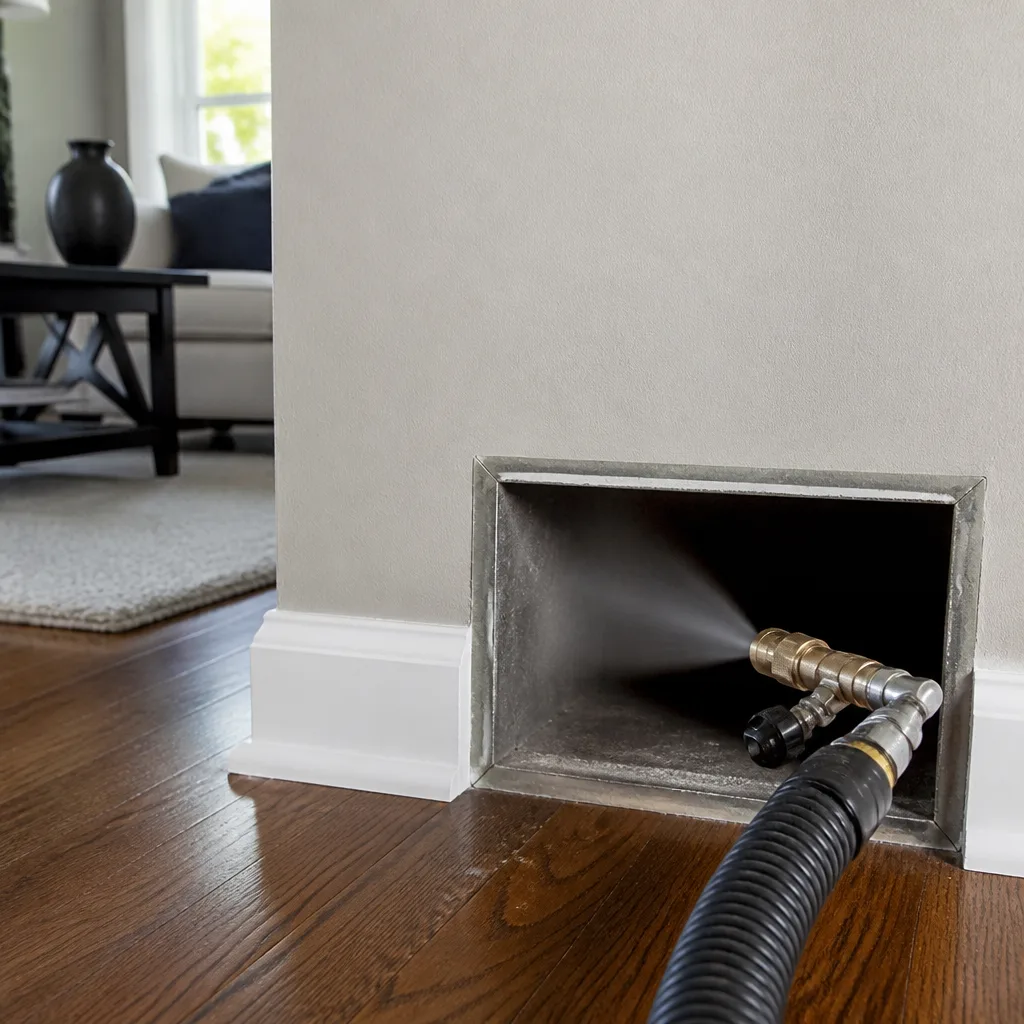 Sanitizing & deodorizing
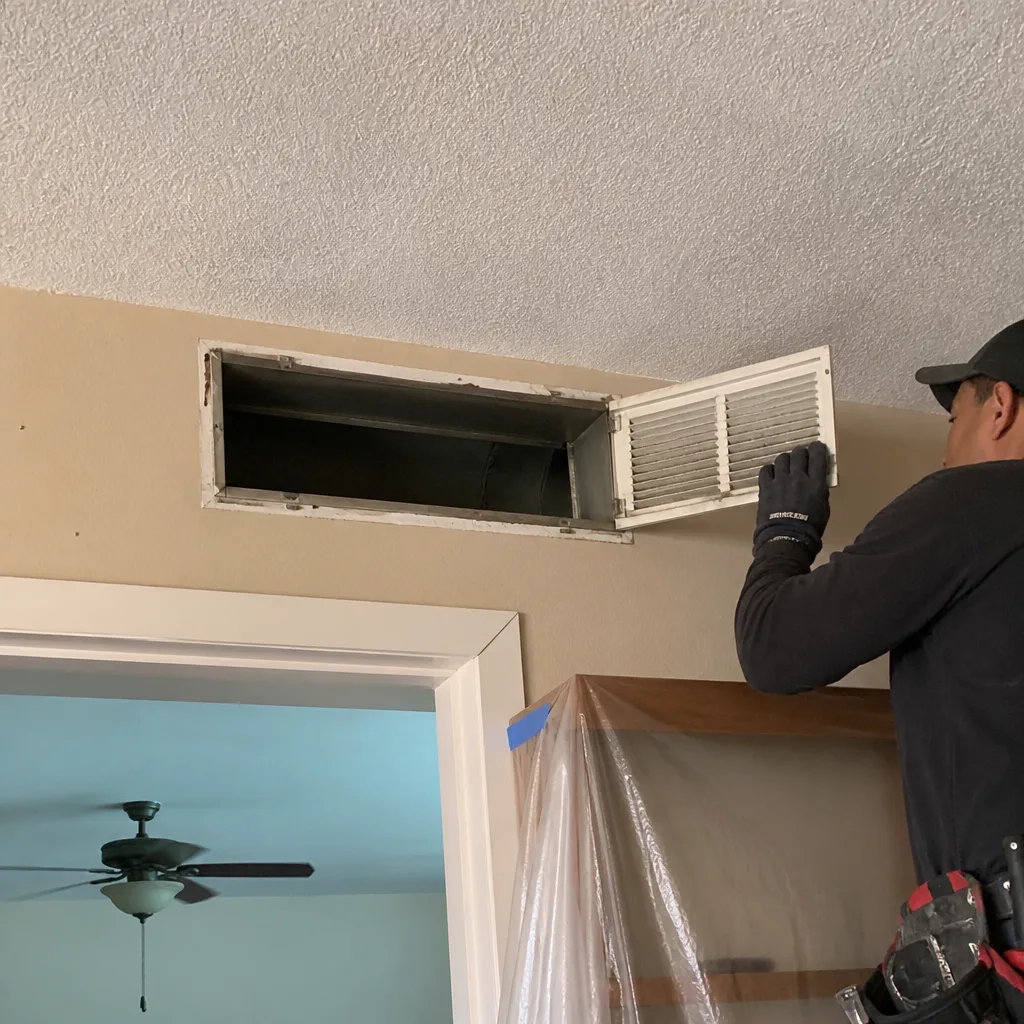
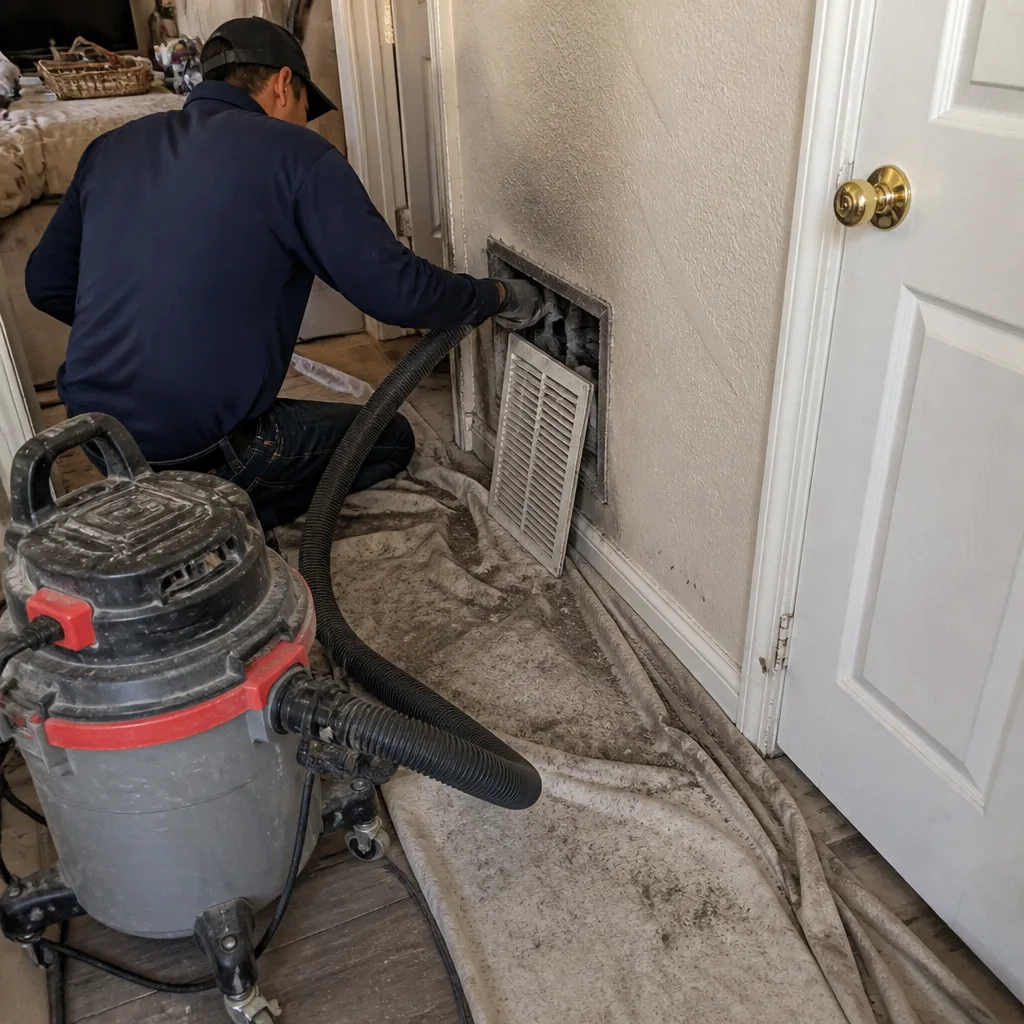
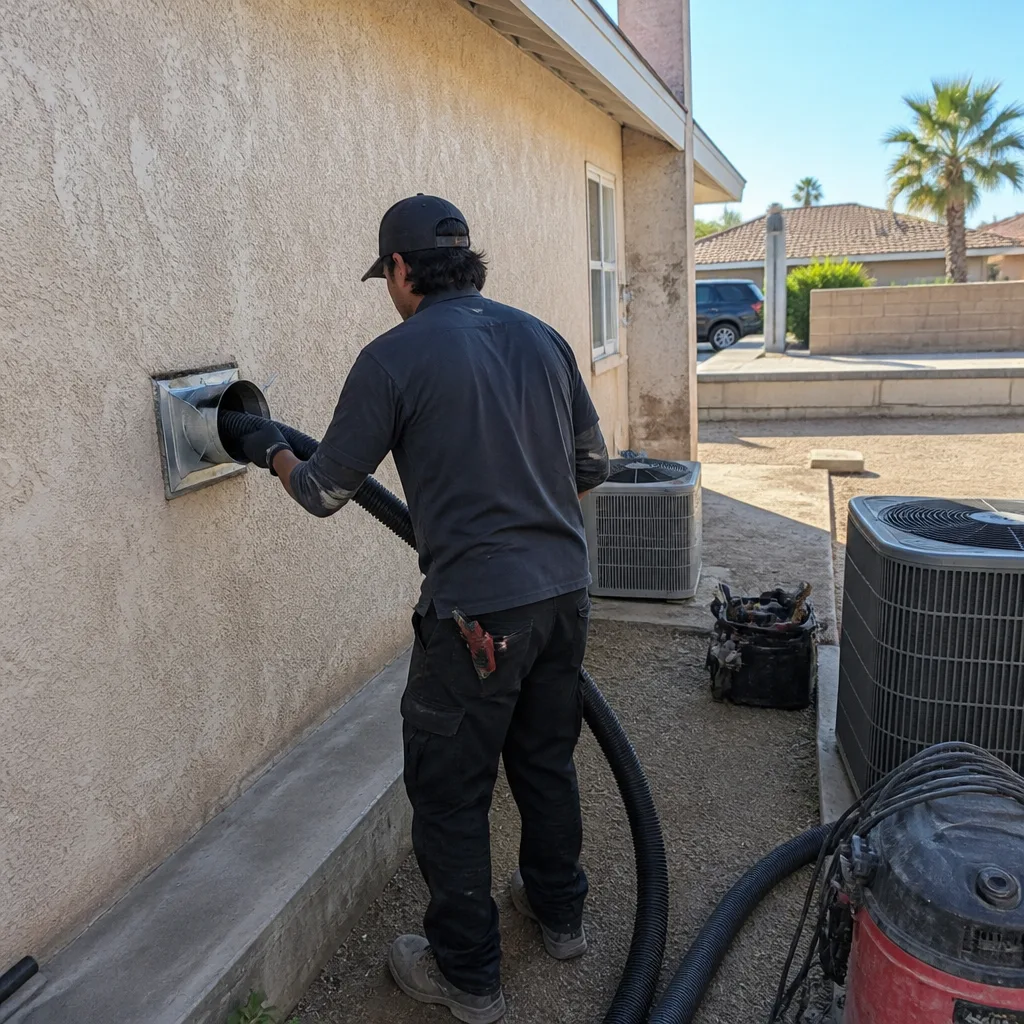
Whole-system duct and dryer vent check with before-and-after photos - you see exactly what came out of your vents
That "$99 whole-house special" is a bait ad - the real number appears once they are in your hallway, or the "clean" is a shop-vac at the register. We photograph the inside of your ducts before and after instead.
Air Duct Cleaning Permits, Codes & Inspections in CA: What You Need to Know
Most homeowners in Hesperia assume any work on their HVAC system pulls a permit. The reality is more interesting: Air Duct Cleaning services like ours – where we run Rotobrush or Nikro agitation tools through your existing ductwork and remove accumulated debris – require no permit anywhere in California. But the line gets crossed quietly. When a technician cuts out a crushed duct section, patches a disconnected boot, or reseals a joint during what was billed as a “cleaning,” that work may now fall under the California Mechanical Code and San Bernardino County Building and Safety jurisdiction. This guide draws that line precisely, because the homeowners left holding liability are almost always the ones who never knew the line existed.
Styles & brands we work with
- Whole-home duct cleaning
- Dryer vent cleaning
- Camera inspection
- Sanitizing & deodorizing
Quick Answer
Air duct cleaning itself does not require a permit in California. Permits become necessary only when work crosses from cleaning into duct modification, replacement, or new installation, which is governed by the California Mechanical Code and enforced locally in Hesperia by San Bernardino County Building and Safety. Any repair that alters the duct system’s physical structure or connections typically requires a mechanical permit and a licensed contractor.
Table of Contents
- The Legal Line: Cleaning vs. Modification
- What the California Mechanical Code Actually Says
- San Bernardino County Building and Safety: Hesperia Jurisdiction
- Title 24 Energy Compliance and Duct Sealing
- How to Verify Contractor Licensing Through CSLB
- Where the Boundary Gets Crossed in Real Hesperia Homes
- Common Mistakes to Avoid
- When to Call a Professional
- Frequently Asked Questions
- The Bottom Line
The Legal Line: Cleaning vs. Modification
California treats duct cleaning as maintenance, not construction. Running agitation equipment through ducts, vacuuming return and supply lines, and sanitizing interior surfaces leaves the physical system unchanged. No permit, no inspection, no CSLB mechanical classification required. That is why a homeowner in Hesperia can hire an air duct cleaning company and have the work completed the same afternoon without ever contacting the county.
Modification is different. The moment a contractor cuts into ductwork, replaces a section, reconnects a separated boot, fabricates a new transition, or otherwise alters the physical configuration of the system, that work becomes mechanical contracting under California law. The California Mechanical Code section covering duct systems (Chapter 6, which incorporates the Uniform Mechanical Code) addresses duct construction, support, insulation, and connection standards. Alterations to these elements require permits in most jurisdictions, and San Bernardino County enforces this through its Building and Safety division for unincorporated areas and contracted cities, including Hesperia.
We have walked into Hesperia homes where a previous “cleaning” visit left behind a patch job: foil tape over a disconnected boot, a crudely spliced section of flex duct, a return can that was never properly reseated. None of it permitted. None of it inspected. The homeowner paid for a cleaning and got an unpermitted repair, and the liability for that now sits inside their walls. That is precisely why we make the distinction explicit in every estimate we provide. Our air duct repair work, when it involves structural changes, follows proper permitting channels through the county. A cleaning never does, because a cleaning never should.
What the California Mechanical Code Actually Says
The California Mechanical Code (CMC) adopts the Uniform Mechanical Code with state-specific amendments. It governs the installation, alteration, and repair of mechanical systems, including ductwork, in residential and commercial buildings throughout the state. Here is what matters for a Hesperia homeowner deciding whether their project needs a permit:
- Duct installation and replacement: Any new duct run, full replacement, or significant reconfiguration requires a mechanical permit. The CMC specifies minimum material standards, support intervals, and connection methods for all duct installations.
- Duct modification: Cutting into existing ductwork to add a supply or return, relocating a boot, or resizing a trunk line falls under alteration. Permits apply.
- Section repairs: Replacing a damaged length of duct where the existing run is disconnected and a new section is fastened in place is repair work requiring a permit in most county interpretations. The key distinction is whether the system’s physical structure changed.
- Cleaning and maintenance: The CMC does not regulate cleaning activities. No permit section covers the act of removing dust and debris from existing, unmodified ducts.
The threshold question we tell every Hesperia homeowner to ask is simple: “Did the physical structure of my duct system change?” If the answer is no, permits are not in play. If the answer is yes, someone needed to pull a mechanical permit through San Bernardino County before the work started. Contractors who skip this step save time and money, but the homeowner inherits the risk: unpermitted work can surface during a future property sale inspection, complicate insurance claims, or fail when the county requires retroactive permitting at higher cost.
San Bernardino County Building and Safety: Hesperia Jurisdiction
Hesperia operates under San Bernardino County Building and Safety for construction permitting. The county issues mechanical permits for HVAC and duct work through its permitting system, with plan review required for larger projects and over-the-counter permits available for straightforward replacements and repairs. For a Hesperia homeowner, this means any duct modification project starts with a permit application, a modest fee based on project valuation, and an inspection after the work is complete.
County inspectors in this region are familiar with the specific conditions that affect High Desert homes. Hesperia’s temperature swings, from summer highs above 100 degrees to winter nights below freezing, put real stress on duct systems. Flex duct in attics degrades faster here than in coastal climates. Metal duct joints separate as the house expands and contracts. Inspectors look for proper support spacing, sealed connections at boots and plenums, and insulation that meets the climate zone requirements for San Bernardino County.
We have handled repair jobs in Hesperia where the county inspection caught exactly what we flagged during our initial assessment: a return duct that had separated inside a wall cavity, pulling attic air into the conditioned space. The permit process existed for precisely that reason. A cleaning-only visit would have missed the separation entirely, because cleaning equipment does not locate structural failures. That is why a full-scope provider matters. We do not just clean the system. We find what is broken and address it through proper channels, as outlined in our Air Duct Cleaning Troubleshooting: Common Problems and How to Fix Them.
For homeowners wondering whether their specific project needs a permit, San Bernardino County Building and Safety maintains a public counter and phone line for permit questions. Asking before work starts costs nothing and prevents a discovery problem later.
Title 24 Energy Compliance and Duct Sealing
California’s Title 24 Building Energy Efficiency Standards create a second regulatory layer that intersects with duct work in ways most Hesperia homeowners never expect. When ducts are modified or replaced, the work must comply with Title 24 requirements for duct insulation, sealing, and leakage testing. This is separate from the mechanical permit but often enforced alongside it.
For a cleaning visit that stays purely within the existing, unmodified system, Title 24 does not apply. The standards regulate new installations, alterations, and additions. But here is the subtle part: sealing duct leaks with mastic or foil tape during a cleaning visit, while not requiring a permit on its own, becomes part of a regulated alteration when combined with other structural changes. A contractor who reseals joints as part of a repair that already triggers a mechanical permit must meet Title 24 sealing standards and may need to demonstrate compliance through pressure testing.
The practical takeaway for a Hesperia homeowner is this: if your ducts are leaking badly enough that sealing is discussed, you are likely already in territory where the work could be considered repair or modification. Title 24 compliance means the sealing materials and methods meet state energy standards, and the work survives county inspection. We carry the equipment and materials to do sealing work that meets these standards, and we are direct about when a job has crossed from maintenance into regulated territory. No homeowner should discover through a failed inspection that their contractor used the wrong sealing compound or skipped the required test.
How to Verify Contractor Licensing Through CSLB
The California State License Board (CSLB) regulates contractors who perform work requiring a license. Duct cleaning alone does not require a CSLB license, because it is not classified as construction work. But the moment a project involves duct modification, replacement, or new installation, the person doing the work must hold a C-20 Warm-Air Heating, Ventilating, and Air-Conditioning Contractor license, or a General Building (B) license with appropriate classification coverage.
Here is the step-by-step process for verifying a contractor in Hesperia before they start any work that might cross into mechanical territory:
- Go to CSLB’s license check page at cslb.ca.gov and enter the contractor’s name or license number. If the contractor cannot provide a license number immediately, that is your first red flag.
- Confirm the classification. Look for C-20 (HVAC) or B (General Building). A C-61/D-34 license (limited specialty in central vacuum systems) does not authorize duct modification. A D-35 license covers limited sheet metal work only.
- Check the license status. Active is what you want. Suspended, expired, or revoked means the contractor cannot legally work in California.
- Verify the bond and insurance. CSLB requires contractors to carry a bond and workers’ compensation insurance. The license check page shows bond status. Ask for proof of insurance separately.
- Look for prior discipline. CSLB publishes enforcement actions. A contractor with multiple citations for unpermitted work or code violations should not be near your ducts.
We are direct with Hesperia homeowners about this: if a company offers duct cleaning only, no CSLB license is required, and a license absence is not itself a red flag. But if that same company starts talking about replacing duct sections, relocating vents, or installing new runs, and they do not hold a C-20 or B license, the work cannot legally proceed. We hold the appropriate licensing and pull permits for any of our air duct repair work that crosses into mechanical contracting territory. For cleaning visits, our equipment does the work: Rotobrush and Nikro systems purpose-built for professional duct cleaning, not consumer-grade alternatives. No structural change, no permit required, no regulatory gray area.
Where the Boundary Gets Crossed in Real Hesperia Homes
Here are the realistic scenarios we encounter in Hesperia homes where a cleaning visit turns into regulated work. These are not hypotheticals. Each one describes a specific situation we or county inspectors have seen in this market.
- The crushed flex duct in the attic. A homeowner calls for a cleaning because airflow to one bedroom is weak. During the inspection, we find a section of flex duct crushed by boxes stored in the attic. The fix requires cutting out the damaged section and splicing in a new length. That is duct repair, and it triggers a permit. A cleaning alone cannot fix it.
- The separated boot at the floor register. A register cover lifts off to reveal a gap between the metal boot and the subfloor. Conditioned air is escaping into the crawlspace. Proper repair means reattaching and resealing the boot, which alters the duct connection. Permit territory.
- The disconnected return in the wall cavity. A musty smell persists after cleaning. Inspection reveals a return duct separated inside an interior wall, pulling unfiltered attic and wall-cavity air into the system. Reconnecting it is repair work, not cleaning. This one is dangerous in a different way: it actively degrades indoor air quality while looking normal from the outside.
- The oversized plenum patch. A previous contractor “repaired” a rusted plenum with sheet metal and sheet metal screws, never sealed properly, never permitted. The homeowner now has a leak that fails Title 24 standards if inspected. Proper correction means removing the patch, fabricating a correct replacement, sealing to code, and pulling the permit that should have been pulled the first time.
- The brand-new duct run during a remodel. A Hesperia homeowner renovates a garage into a living space and extends the existing duct system. That is new installation. Mechanical permit, plan review, Title 24 compliance, CSLB-licensed contractor. A cleaning company that offers to “just run a new vent” without mentioning any of this is setting the homeowner up for liability.
Industry data gives the scale: the National Air Duct Cleaners Association estimates that a substantial percentage of homes over 20 years old have duct leakage of 20% or more. The California Energy Commission has identified leaky ducts as one of the largest sources of energy waste in residential HVAC systems. That means in Hesperia, a city where the majority of housing stock was built before 2005, the odds that a routine cleaning uncovers a structural issue are high. The difference between a provider who says “that’s a repair, here’s what it means” – as detailed in our Air Duct Cleaning Warning Signs: A Hesperia Homeowner’s Reference Guide – and one who silently patches it with tape is the difference between protected and exposed.
Common Mistakes to Avoid
- Assuming every HVAC company pulls permits. Ask directly. If a repair involves structural duct changes and the contractor says no permit is needed, get that answer in writing. Contractors who skip permits leave Hesperia homeowners holding liability for unpermitted work.
- Treating cleaning and repair as the same service. They are not. A cleaning removes debris. A repair changes the system. Conflating them is how homeowners end up with a “cleaning” that included an unpermitted splice, and no paperwork proving anything was done.
- Ignoring the duct condition during a cleaning visit. A thorough cleaning in a Hesperia home with degraded ducts will expose damage. If the cleaning company does not mention anything, it either was not thorough or chose not to tell you. Either way, you have not been served.
- Skipping CSLB verification for repair work. Anyone offering to modify or replace ducts in California needs a C-20 or B license. Check it. The CSLB website takes two minutes, and a contractor who cannot give you a license number immediately is not someone you want cutting into your duct system.
- Accepting foil tape as a permanent fix. Foil tape over a separated boot or a crushed section is not repair. It is a temporary patch that will fail. In Hesperia’s temperature extremes, adhesive fails faster. Proper repair means mechanical connection and sealing to code, with a permit when the work alters the system.
- Forgetting about Title 24 during repairs. If duct sealing is being done as part of a repair that triggers a permit, the sealing materials and methods must meet Title 24 standards. A contractor using the wrong compound or skipping pressure testing sets the homeowner up for an inspection failure.
- Waiting until the sale to think about permits. A home inspection during escrow routinely flags unpermitted duct work. The fix usually costs more than the original permit would have, and the deal can fall apart over it. Pull the permit at the time of the work, not at the time of the sale.
When to Call a Professional
Here is the short version: if your ducts are being cleaned, you need a professional with the right equipment and a process that documents the work. If your ducts need repair, you need a professional with the licensing, the permits, and the equipment to do structural work correctly. In Hesperia, where attic heat accelerates duct degradation and older homes hide connection failures, a cleaning visit should always include a condition inspection. We routinely find damaged sections, separated boots, and disconnected returns that the homeowner could not see and a cleaning-only crew either missed or ignored. The work then becomes repair, with permits pulled through San Bernardino County and the work done to code. If you are in Hesperia and want an honest assessment of your duct system, call Duct Cleaning Hesperia at (877) 331-2951 for a free estimate. We will tell you clearly whether you need a cleaning or a repair, and we handle both.
Frequently Asked Questions
No. Air duct cleaning is maintenance work and does not require a permit anywhere in California, including Hesperia. Permits only come into play when the work alters the duct system’s physical structure, such as replacing sections, adding runs, or modifying connections.
Any duct modification, replacement, or new installation requires a mechanical permit through San Bernardino County Building and Safety, which handles Hesperia’s permitting. Simple repairs that restore the system to its original condition without changing structure may also require a permit depending on county interpretation, so ask before work starts.
Only if the repair does not involve structural duct changes. The moment work crosses into modification, replacement, or installation, the person doing the work must hold a C-20 HVAC contractor license or a B General Building license from CSLB. Verify any contractor’s license at cslb.ca.gov before they start.
Title 24 is California’s building energy efficiency standard. It does not apply to duct cleaning alone, but it does apply to duct sealing, modification, and replacement work that triggers a permit. Any repair involving duct sealing must use materials and methods that meet Title 24 standards.
Weak airflow to specific rooms, visible dust around registers despite cleaning, musty odors that persist, and rooms that never reach temperature all suggest duct damage. In Hesperia, where attic heat degrades flex duct quickly, a professional inspection during a cleaning visit is the most reliable way to identify structural issues. Call (877) 331-2951 for a free estimate and an honest assessment of your system.
Unpermitted duct work often surfaces during a buyer’s home inspection and can delay or derail the sale. The homeowner typically pays for retroactive permitting and any corrections the county requires, which costs more than the original permit would have. Pulling permits at the time of the work protects you from this scenario.
The Bottom Line
Duct cleaning is permit-free until it is not. The line sits between maintenance and modification: cleaning the inside of existing, unmodified ducts requires no permit, no CSLB license, and no county involvement. Cutting, replacing, relocating, or structurally repairing ducts triggers California Mechanical Code requirements, San Bernardino County permits, Title 24 compliance, and CSLB licensing. In Hesperia, where aging homes and extreme attic heat make duct damage common, a cleaning visit often reveals repair needs. Knowing where the line is means knowing when to insist on a permit, when to verify a license, and when a “cleaning” is quietly becoming something else. If you want a provider who will tell you the difference plainly and handle either side of the line professionally, call Duct Cleaning Hesperia at (877) 331-2951.
Written by the team at Duct Cleaning Hesperia, serving Hesperia since 2014. Explore more guides & resources on our blog.
See the difference
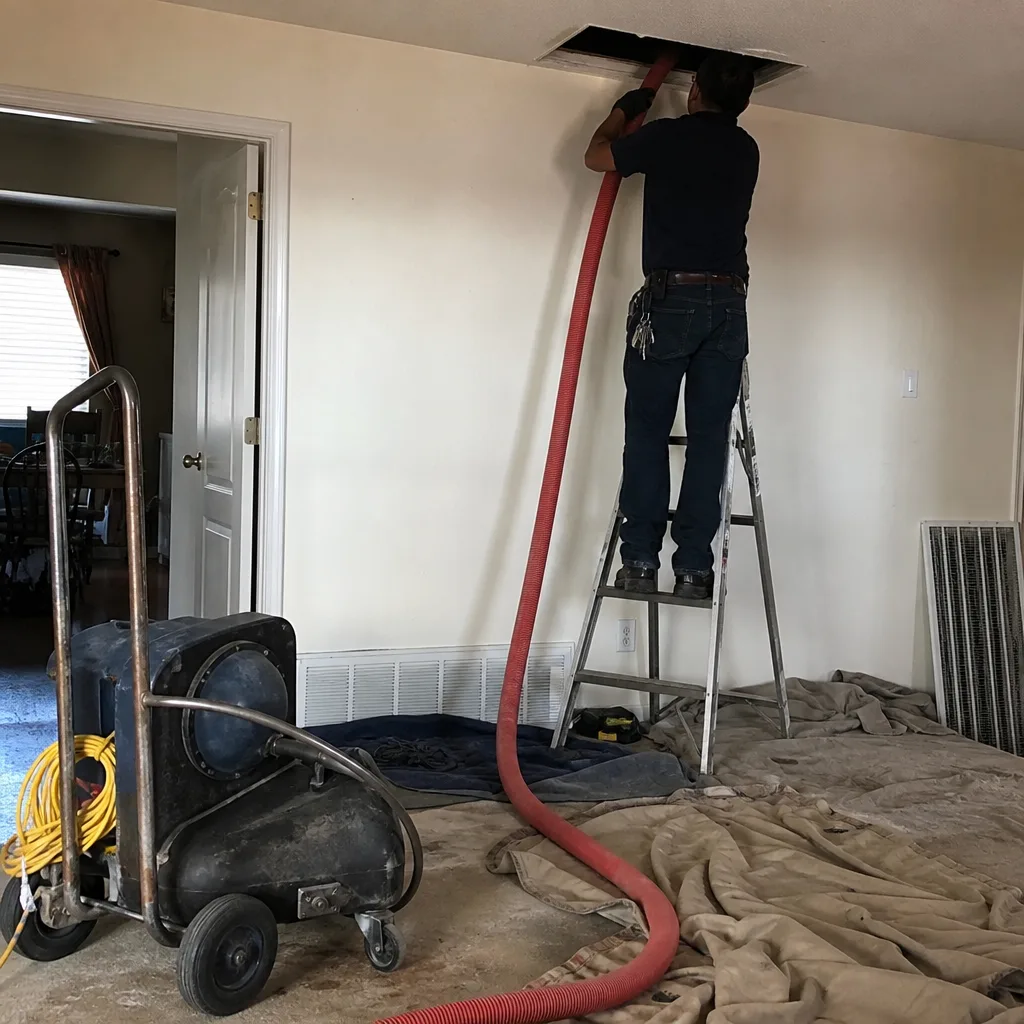 Before
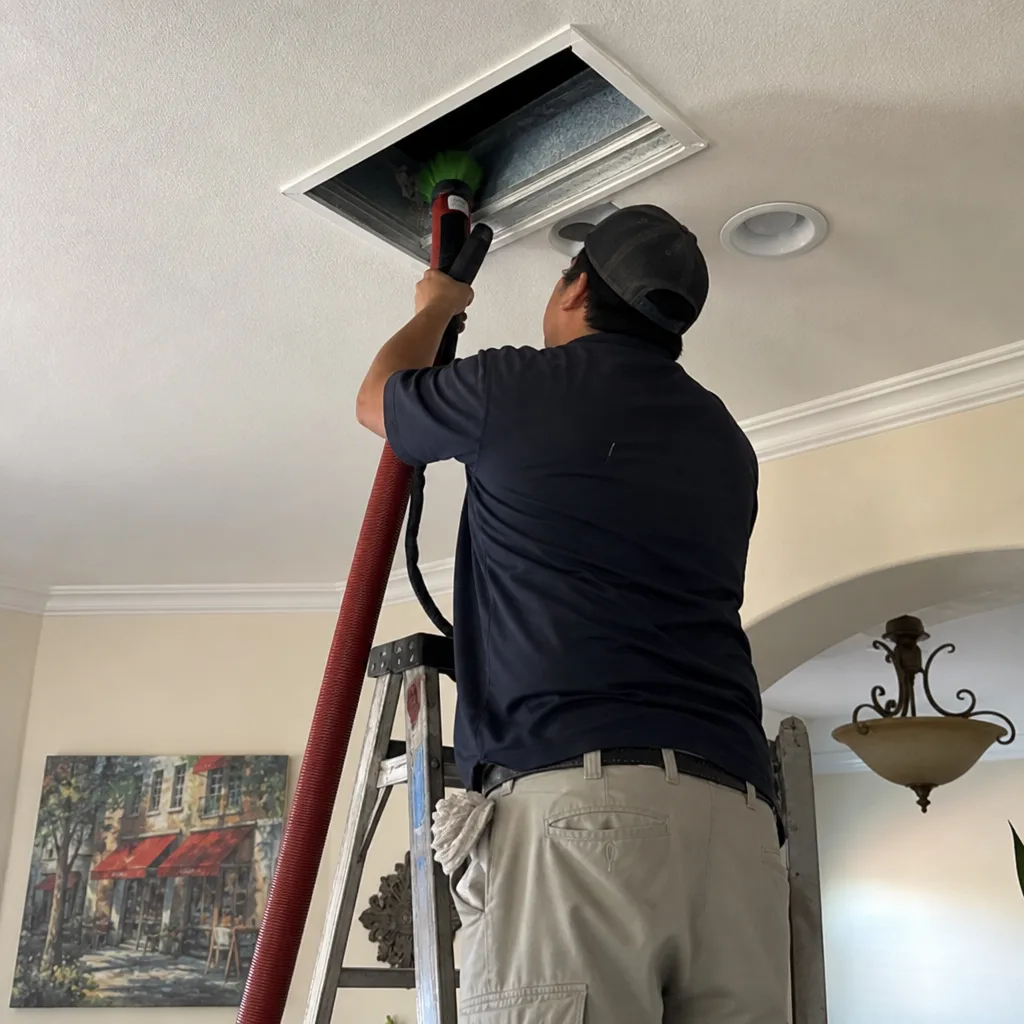 After
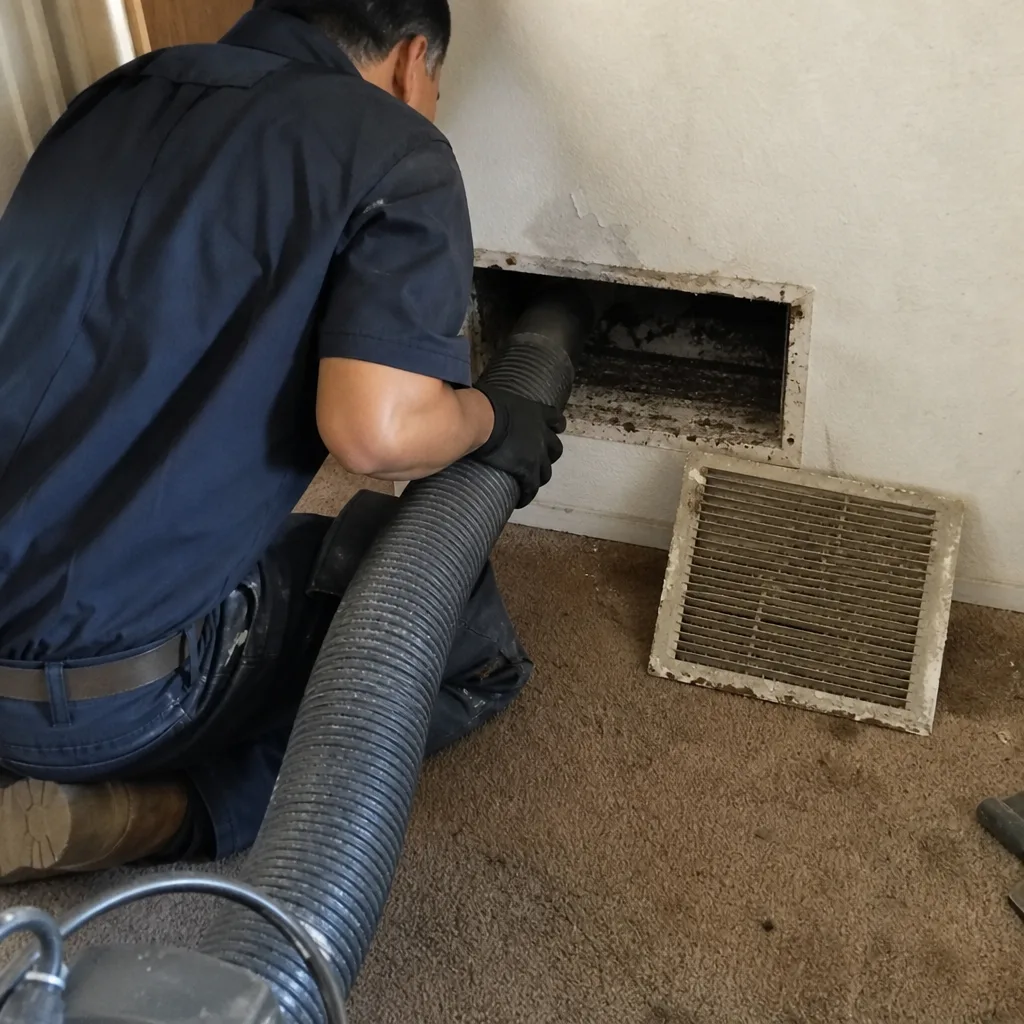 Before
 After
 Before
 After