
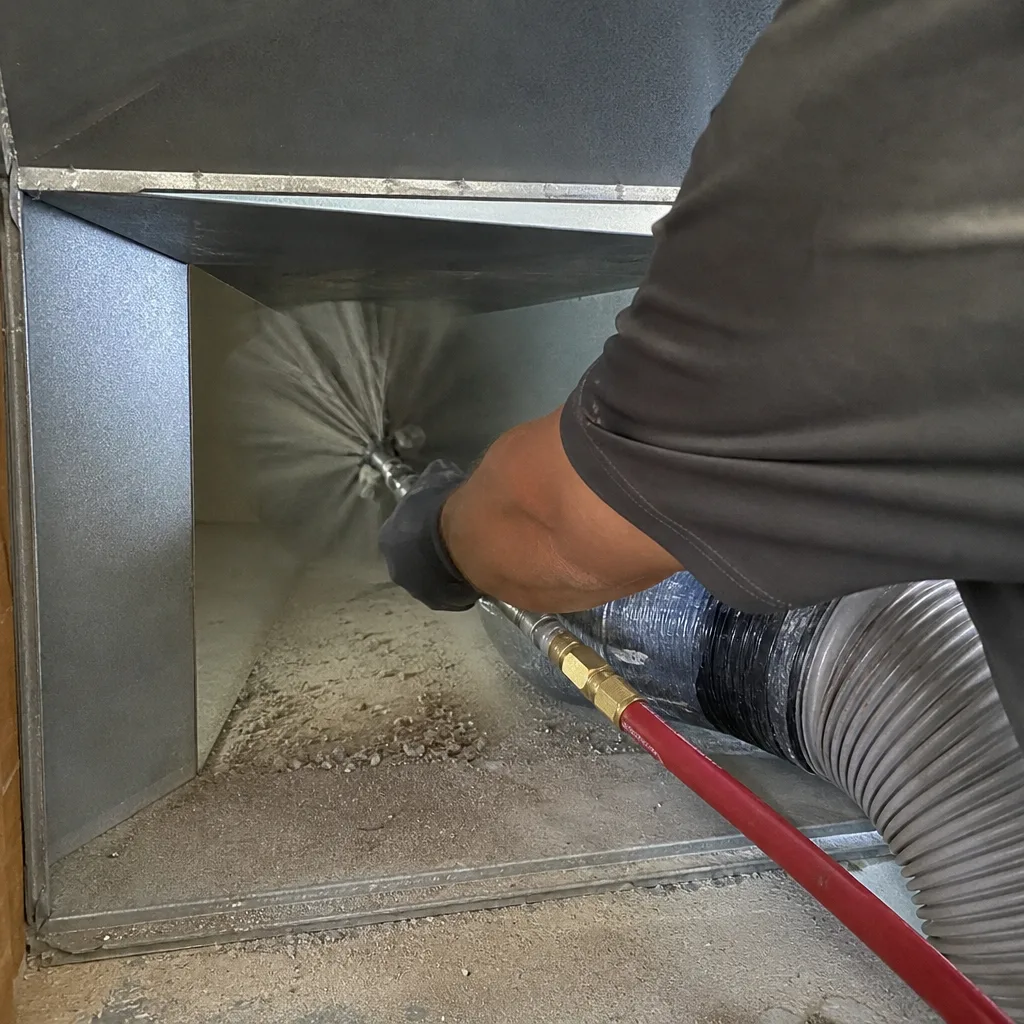
Last updated November 2, 2026
 Whole-home duct cleaning
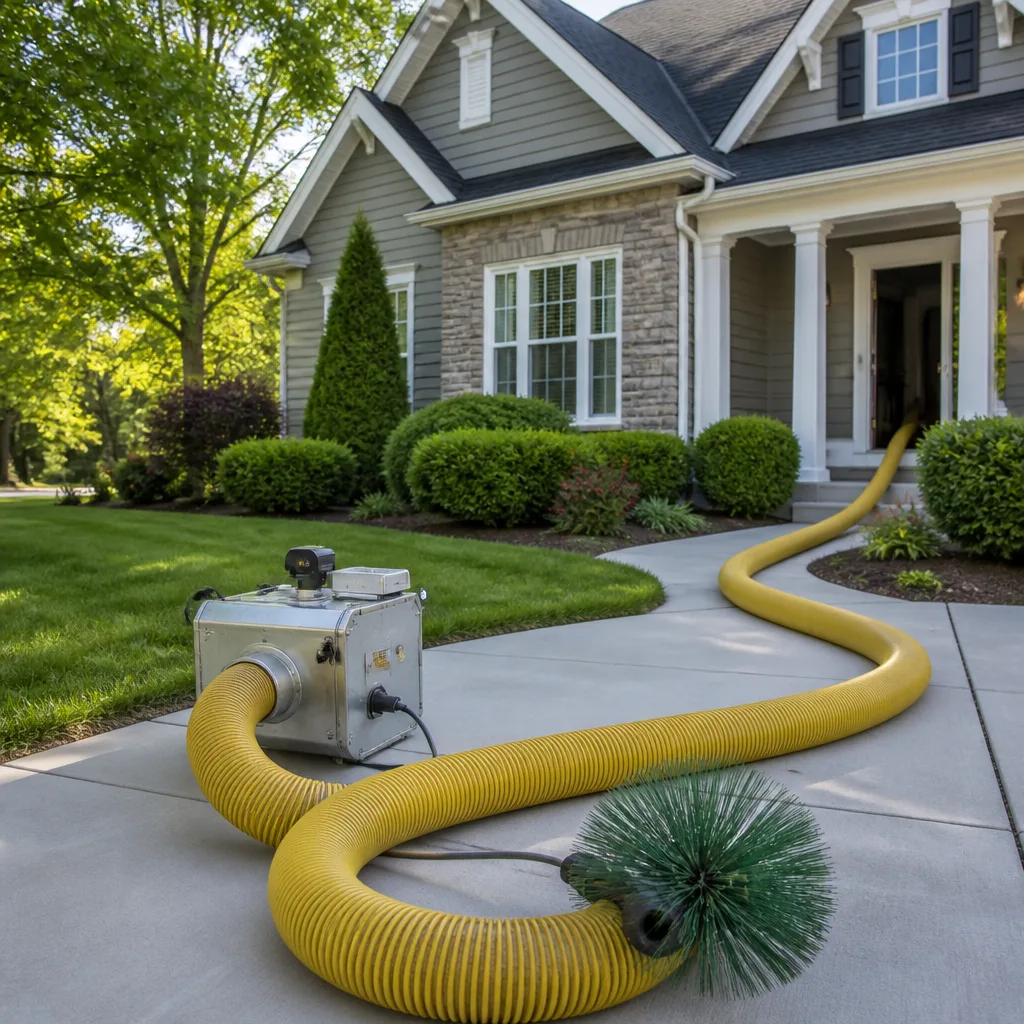
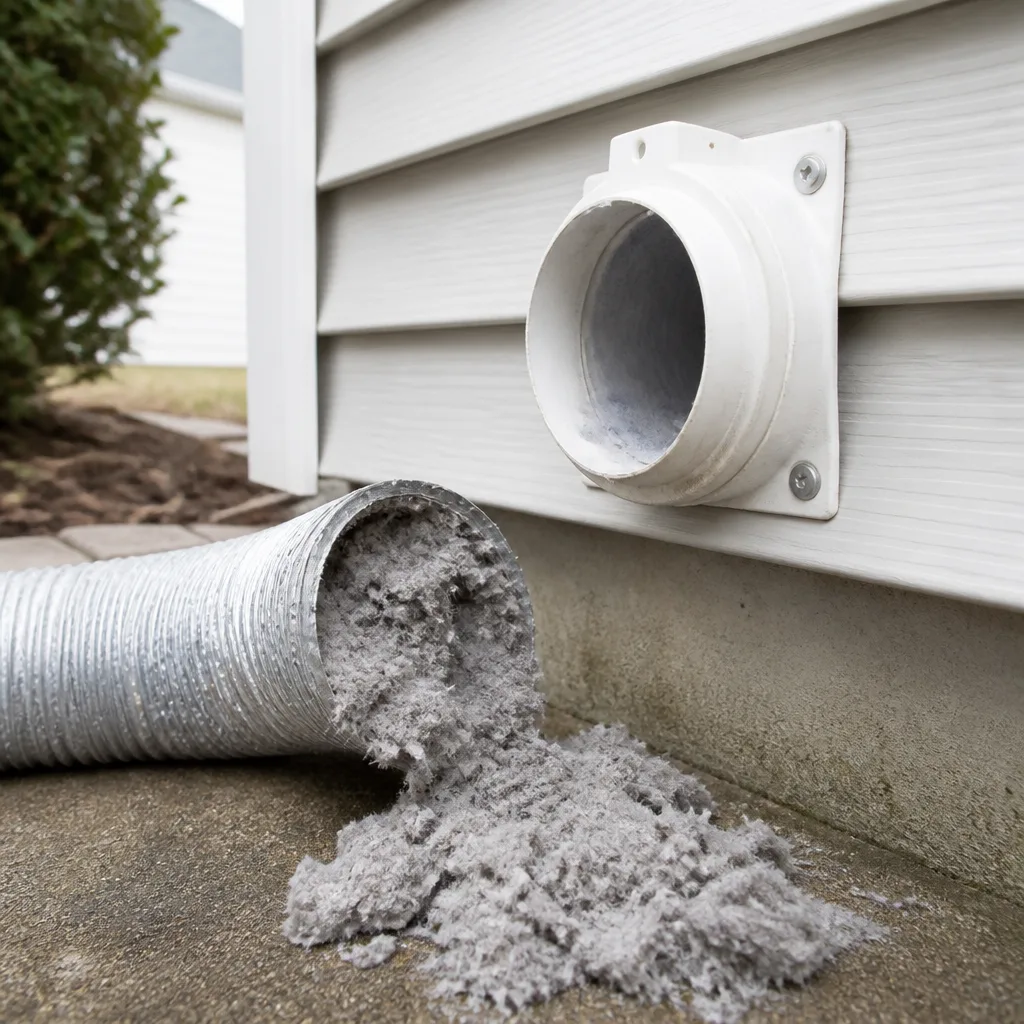 Dryer vent cleaning
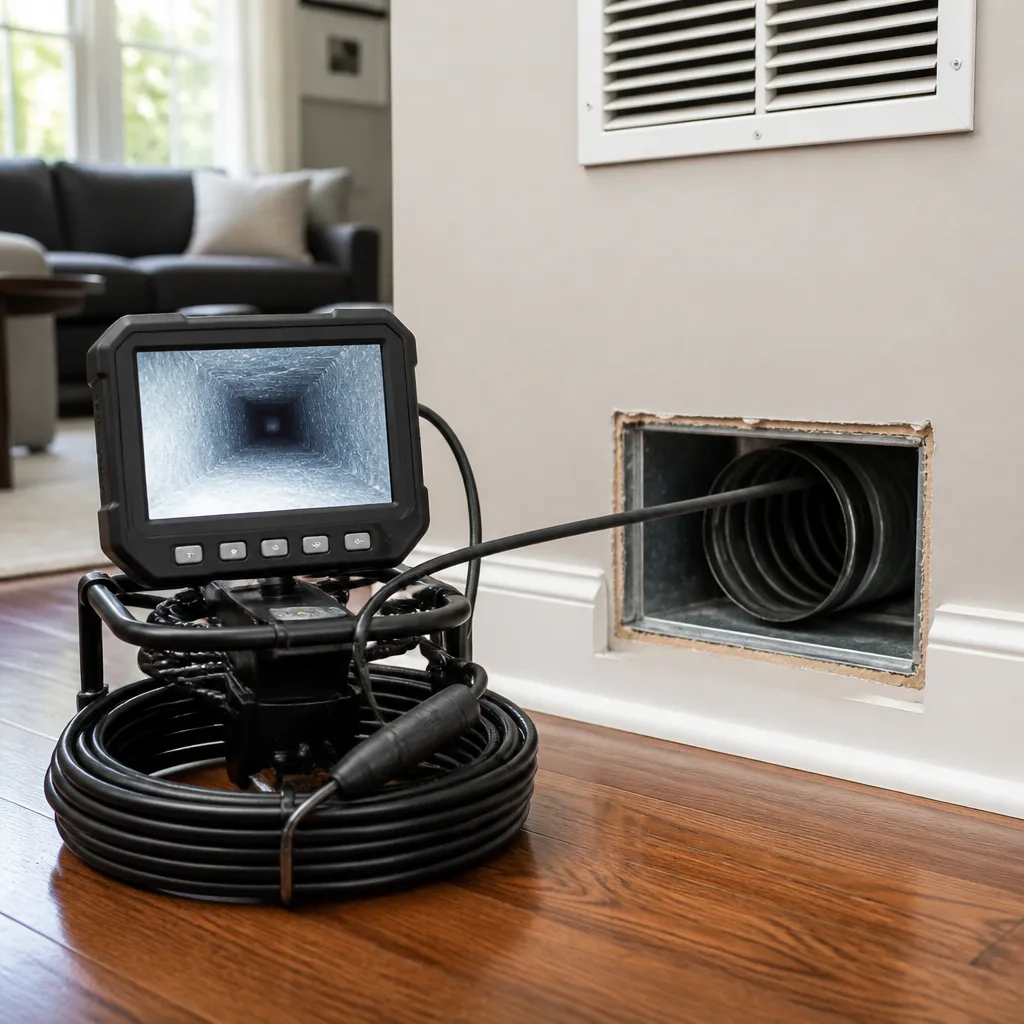 Camera inspection
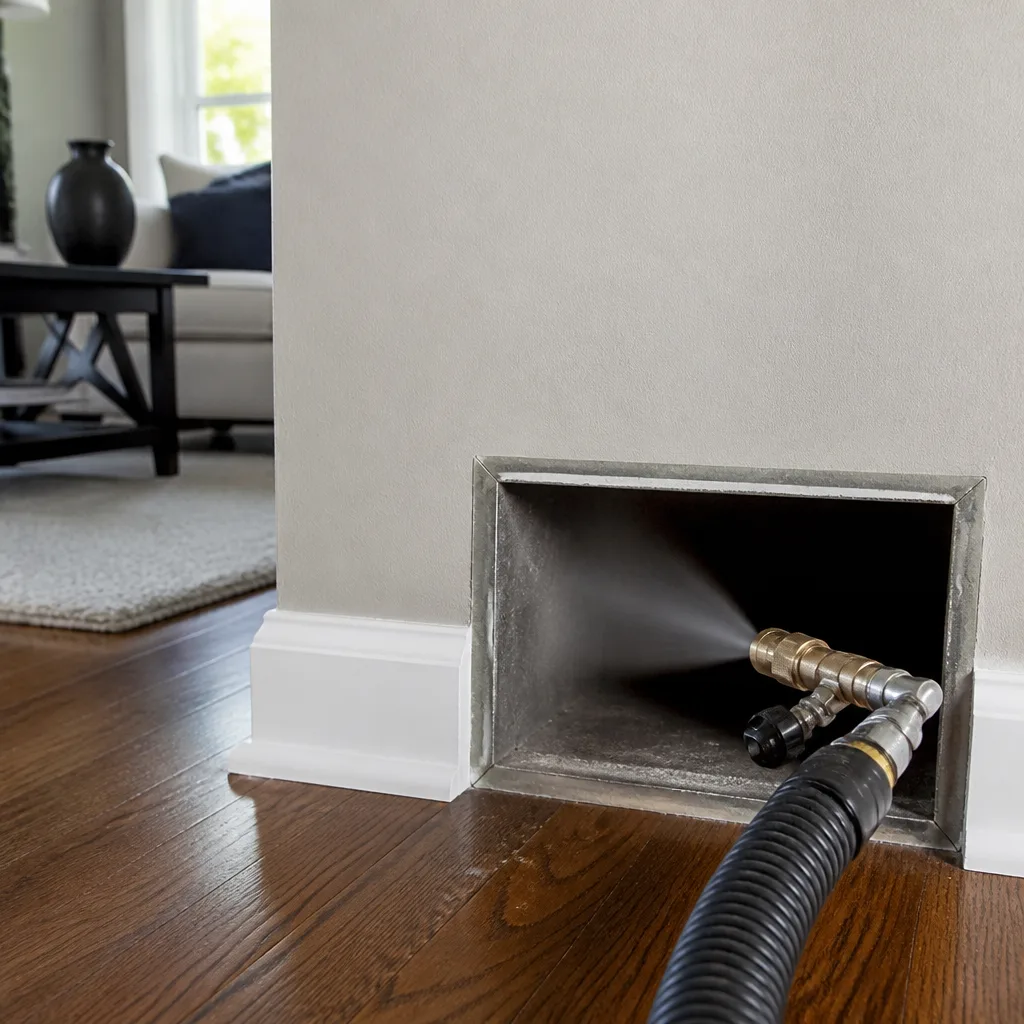 Sanitizing & deodorizing
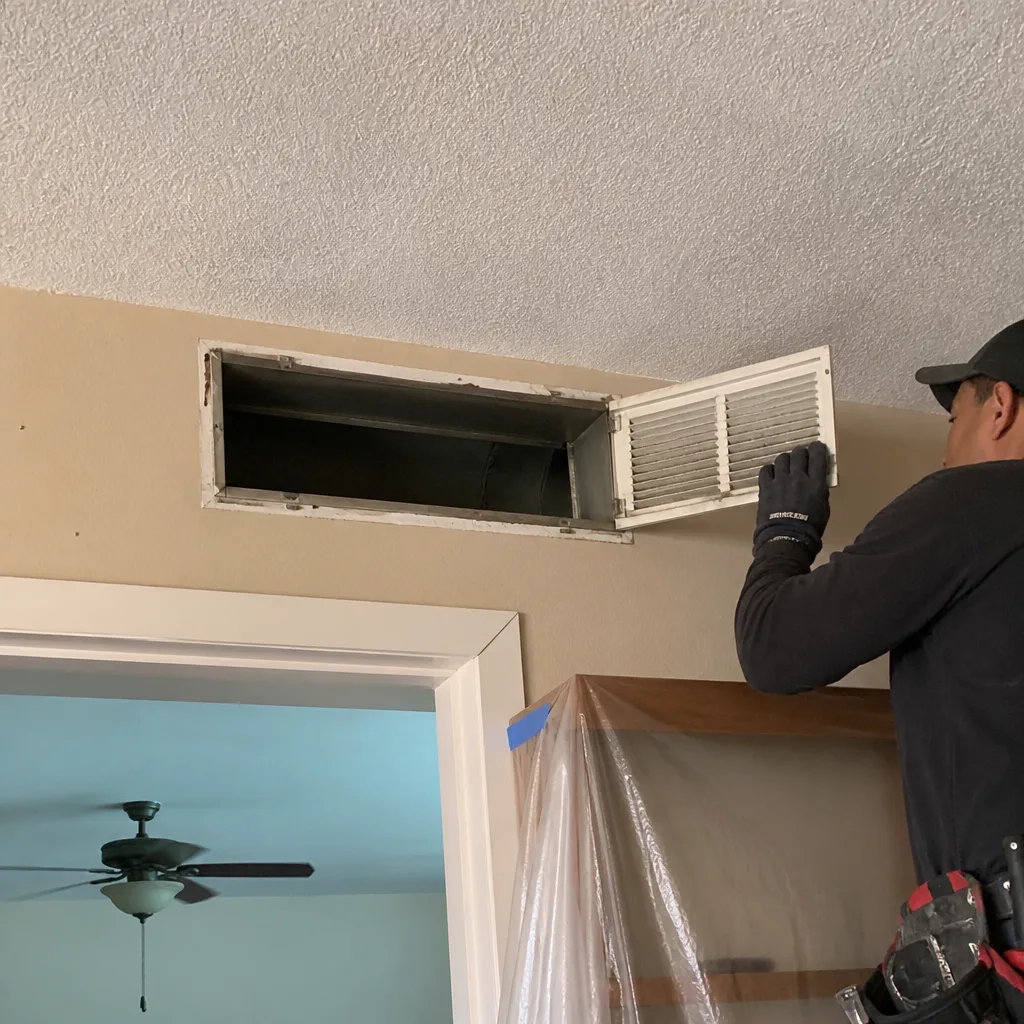
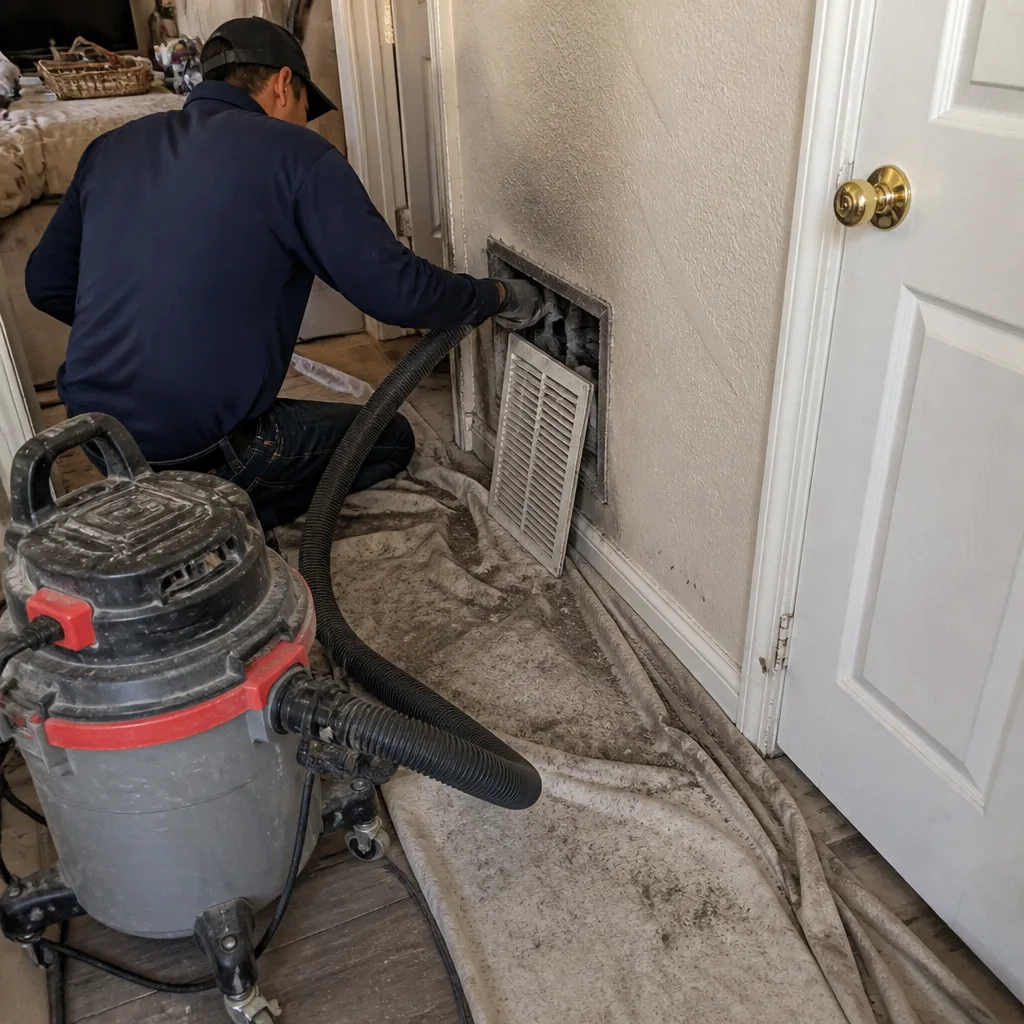
Whole-system duct and dryer vent check with before-and-after photos - you see exactly what came out of your vents
That "$99 whole-house special" is a bait ad - the real number appears once they are in your hallway, or the "clean" is a shop-vac at the register. We photograph the inside of your ducts before and after instead.
DIY vs Professional Air Duct Cleaning: The Hesperia Homeowner’s Decision Guide
Here’s a fact most duct cleaning websites won’t tell you: a homeowner with a shop-vac and a dryer vent brush can legitimately clean the register grilles and the first 18 inches of visible ductwork. Most of the dust you can see from your living room floor sits right there. What happens beyond that 18-inch mark, especially in a Hesperia home where summer attic temperatures push 140°F and flex duct bakes for four months straight, is a different problem entirely. This guide draws the exact line between what makes sense to do yourself and what requires equipment that doesn’t exist in any consumer product category. You’ll learn where DIY money is well spent, where it’s wasted, and when calling a professional for Air Duct Cleaning is the only decision that protects both your air quality and your HVAC system.
Styles & brands we work with
- Whole-home duct cleaning
- Dryer vent cleaning
- Camera inspection
- Sanitizing & deodorizing
Quick Answer
DIY air duct cleaning in Hesperia is legitimate and useful for register grilles, return covers, and the first visible foot or two of duct interior, but it cannot touch the main trunk lines where most embedded dust, pet dander, and construction debris actually accumulate. Consumer vacuums simply cannot generate the negative pressure required to dislodge and extract particulate from deep ductwork. For anything beyond surface-level grille cleaning, professional equipment like Rotobrush and Nikro systems is the only honest answer, as detailed in our guide on How to Hire an Air Duct Cleaning Contractor in Hesperia: A Step-by-Step Guide.
Table of Contents
- The Physics Problem: Why Your Shop-Vac Stops Working at 18 Inches
- What DIY Can Actually Accomplish (And What It’s Worth)
- When DIY Attempts Create New Problems
- Hesperia-Specific Factors That Change the Equation
- How to Inspect Your Own Ducts Before Calling Anyone
- Professional Equipment Explained: What You’re Actually Paying For
- DIY vs Professional: A Real Cost Comparison for Hesperia Homes
- Common Mistakes to Avoid
- When to Call a Professional
- Frequently Asked Questions
- The Bottom Line
The Physics Problem: Why Your Shop-Vac Stops Working at 18 Inches
Dust doesn’t sit in ductwork the way sand sits on a beach. It bonds. Over years of heating and cooling cycles, fine particulate becomes electrostatically charged and physically pressed into duct surfaces by air pressure fluctuations. It embeds into the fiberglass lining of flexible ducts. It cakes in corners where airflow drops. The cleaning force required to break that bond is measured in cubic feet per minute of airflow, known as CFM, and the number is not small.
A professional Rotobrush or Nikro system moves between 2,000 and 4,000 CFM of negative air pressure through the duct system. A consumer shop-vac, even a good one rated for 150 CFM at the hose opening, delivers a fraction of that at the end of a 25-foot duct run. The math isn’t close. What this means in practice is that a shop-vac can pick up loose dust sitting within arm’s reach of the register, but it cannot create the column of moving air needed to strip embedded particulate from the walls of a main trunk line that runs across the length of your Hesperia attic.
There’s a second problem: containment. When you vacuum a duct opening without sealing the rest of the system, you’re not removing dust so much as repositioning it. Dislodged particulate that doesn’t make it into the vacuum hose goes airborne, and in a Hesperia home with a central return system, airborne dust gets pulled directly into the air handler and redistributed through every register in the house. Professional duct cleaning works on a closed-loop negative pressure principle: the system is sealed, a vacuum manifold is attached at the plenum, and all debris travels in one direction only. No consumer tool creates that condition.
The third issue is access. The ducts that matter most, the trunk lines and plenum boxes, live in your attic or crawlspace. In Hesperia, where most homes built since the 1980s use flexible ductwork routed through unconditioned attic spaces, those lines are buried under insulation and stapled to framing members. You can’t reach them from a floor register. A shop-vac hose inserted into a vent opening travels a few feet before it hits the first bend, and every bend after that reduces the already-inadequate suction further. The tool simply can’t reach the work.
What DIY Can Actually Accomplish (And What It’s Worth)
This is not an argument against DIY. Some duct maintenance tasks are not only reasonable to do yourself, they’re things every homeowner should be doing routinely. The line is drawn by access and tooling, not by effort or willingness. Here’s what the honest DIY scope looks like in a Hesperia home.
Register grilles and return covers
Removing, washing, and vacuuming register grilles is genuinely useful work. These surfaces collect hair, dust, and pet dander where the air enters your living space, and cleaning them improves immediate air quality and airflow. Soap and water for grilles, a damp cloth for the well behind them, and a vacuum attachment to remove loose debris from the first few inches of visible duct. This is a task worth doing every three to six months in Hesperia, where dust from the Mojave Desert floor circulates constantly.
Filter replacement and upgrade
The single highest-impact DIY action in any forced-air home is filter replacement, and the second highest is filter upgrade. Moving from a basic fiberglass MERV 2 filter to a pleated MERV 8 or MERV 11 filter changes what reaches your air handler and your lungs. In Hesperia, where fine desert silt and seasonal wildfire smoke both move through the air, a MERV 11 pleated filter is a reasonable minimum. Change it every 60 to 90 days during peak cooling season. Aprilaire makes media filters that fit many residential air handlers and hold more surface area than standard one-inch slots, which means longer service intervals and better capture. This is DIY work: slide old out, slide new in, done.
Accessible flex duct inspection
Not every duct is buried. In some Hesperia homes, flex runs are visible in the garage or a utility closet where they connect to the main plenum. If you can see the duct, you can inspect it: look for crushed sections, loose connections, tears in the outer jacket, and kinks created by tight turns. A disconnected flex duct is a DIY-reachable problem, though properly reconnecting and sealing it requires mastic or UL-listed tape, not duct tape, and if the connection point is at the plenum in the attic, you’re back to professional territory. For Air Duct Repair in Hesperia, visible damage spotted during a DIY inspection is exactly the kind of thing a professional can fix in a single visit.
Return air chamber vacuuming
The return air chamber, the cavity behind the return grille where the filter sits, is often accessible and often filthy. Because it’s upstream of the filter, everything it collects is whatever your filter isn’t catching. Vacuuming this chamber with a shop-vac is legitimate DIY work with real benefit. Just make sure the system is off, the filter is removed, and you’re not pushing debris toward the blower motor.
When DIY Attempts Create New Problems
In our experience, roughly half the DIY duct cleaning calls we respond to in Hesperia involve fixing something the cleaning attempt caused. The problems cluster into predictable patterns.
The most common is dislodged debris finding its way to the air handler. A homeowner inserts a vacuum hose or, worse, a brush, into a supply register and works it around. Debris breaks loose from the duct wall. The system is off, so there’s no negative pressure pulling it outward. Later, when the system kicks on, that loosened dust gets drawn straight through the duct, past the filter if there are gaps around it, and into the blower motor and evaporator coil. A blower motor packed with DIY-displaced dust runs hotter and fails sooner. In Hesperia, where air handlers sit in unconditioned attics already running hot, the extra strain matters.
The second pattern is disconnected flex duct. Flex duct connects to register boots with a zip tie or metal clamp, and it connects to plenum boxes the same way. These connections were made during initial installation, and after a decade of thermal cycling in a Hesperia attic, some are barely hanging on. A vacuum hose or brush pushed through a register can knock the flex line off the boot entirely. Now you have a supply duct blowing conditioned air into your attic instead of your bedroom. This is the kind of problem a professional with a full-scope Air Duct Cleaning service catches and repairs during a normal cleaning visit.
The third pattern is missed indicators. When a professional inspects a duct system during cleaning, the work includes looking for things that aren’t dust: rodent droppings, drywall dust suggesting a past renovation, mold indicators from moisture intrusion, and tears caused by pest activity. A homeowner focused on vacuuming dust out of a register will often miss, or misinterpret, these signals. For homes in Hesperia where attics host rodents during the cooler months, and where the dessert-to-winter temperature swings create condensation cycles inside ducts, these indicators matter.
Finally, there’s the ladder-in-the-attic problem. Many Hesperia homes have attic access in the garage or a hallway ceiling. Climbing up there with a shop-vac to clean what you can see seems like a reasonable extension of DIY, but unconditioned Hesperia attics run 130 to 150°F from May through September. Heat exhaustion is real. And moving around in a dark attic over blown insulation risks a misstep through the ceiling drywall. The repair from that misstep costs more than a professional duct cleaning ever would.
Hesperia-Specific Factors That Change the Equation
The DIY-versus-professional decision doesn’t happen in a vacuum. Hesperia’s specific environment changes what accumulates in ducts, how fast it accumulates, and how badly a duct system needs professional equipment. Here’s what we’re talking about.
Wildfire smoke events
Hesperia sits downwind of fire zones in the San Bernardino Mountains and the broader Inland Empire. When fires burn, smoke event particulate moves through the high desert and settles into homes. Duct systems that haven’t been cleaned in years absorb that fine particulate, and it doesn’t behave like ordinary household dust. Smoke particulate is sub-micron, it’s acidic, and it penetrates deeper into duct surfaces, especially fiberglass-lined flex duct. A shop-vac does nothing against this material. Homes in Hesperia that went through the 2024 Line Fire smoke or any significant fire season event have duct contamination that requires professional, high-CFM extraction and HEPA filtration during the cleaning process. Abatement Technologies filtration equipment exists for exactly this scenario: air contamination events where standard cleaning isn’t enough.
120°F attic flex duct degradation
Flex duct has a rated service life of roughly 15 to 20 years. That rating assumes peak attic temperatures in the 120 to 130°F range. Hesperia attics exceed that for weeks at a time in summer, and the elevated temperature accelerates the breakdown of the inner liner and outer vapor barrier. Aged flex duct sheds fiberglass particles, collapses under its own weight where the inner coil fatigues, and develops pinhole leaks at connection points. A DIY inspection can spot the obvious damage from below; a professional cleaning reveals the hidden degradation because the agitation of the cleaning process exposes weak spots that would fail on their own within a season or two anyway. This is why our cleaning service includes a duct integrity assessment: Hesperia’s heat is hard on ductwork, and Duct Cleaning Hesperia’s home service area has no shortage of homes where the flex duct is the limiting factor on air quality, not the dust inside it.
Desert dust composition
The dust in Hesperia ducts isn’t just human-generated. It’s Mojave Desert silt: fine, abrasive silica-based particulate that rides in on shoes and through open windows and then circulates through the air system. This material is denser than household dust. It packs into duct corners and plenum boxes. It’s abrasive against blower motor components. It’s also, ironically, one of the reasons a professional cleaning costs what it does: dense, packed desert dust requires more agitation and more CFM to remove than the lighter, fluffier dust you’d find in a coastal or humid-climate home.
Post-construction contamination
Hesperia has grown constantly since the 1990s, and many homes have seen renovations, additions, or repairs that occurred after the original construction. Every renovation that involved drywall sanding, painting, flooring, or texture work deposited fine particulate into the duct system. That construction dust compounds over time. If your Hesperia home has ever had a renovation done, even one completed by a previous owner, the odds are high that construction dust still sits in your ducts, and there’s no consumer tool that removes drywall sanding dust from a trunk line. This is a hard line: post-construction duct contamination requires professional cleaning, no exceptions.
How to Inspect Your Own Ducts Before Calling Anyone
Here’s the useful middle path: DIY inspection is real, valuable work that improves what the professional does. If you can describe what you see in your duct system before the truck arrives, you help the technician scope the job accurately. You also give yourself the information you need to compare quotes honestly. Here’s a step-by-step process for Hesperia homeowners. This is safe, tool-light work you can do in an afternoon.
Step 1: Kill power to the air handler. Find the breaker for your HVAC system and switch it off. The blower must not turn on while you have registers removed and hands or tools inside the system.
Step 2: Remove and inspect every register grille in the house. Unscrew or unclip each one, and look at both sides. Heavy dust accumulation with visible density means the duct behind it is likely worse. Also check where the boot meets the floor opening: gaps mean dust has been pulling in from unconditioned space, not just from inside the home.
Step 3: Look down each accessible duct run with a flashlight. From the register opening, shine a bright light into the duct. What you’re looking for is not just dust: look for disconnected flex, crushed sections visible from below, and signs of pest activity like droppings or nesting material. Take photos with your phone. These help a technician understand what they’re dealing with before they even climb into the attic.
Step 4: Inspect the return side and filter slot. Remove the filter, inspect the slot, and vacuum the return chamber if it’s accessible. Check the filter’s condition: a filter that’s bowed, wet, or covered in dense gray material suggests high particulate load and possible bypass around the filter edges.
Step 5: Check flex duct you can see. In the garage or utility areas, flex ducts are often visible. Squeeze them gently along their length. Flex duct that’s lost its internal spring feels soft and spongy rather than firm. That’s a sign the coil has fatigued and the duct is nearing failure.
Step 6: Document everything. Write down what you found, room by room. Count the registers. Note the filter size. Note any visible damage. This documentation is what you bring to the professional, and it enables a more accurate phone estimate. It also protects you from the kind of vague, pressure-based upselling that plagues this industry.
This inspection protocol takes an hour and requires no special tools. It doesn’t clean the deep ducts, but it makes every dollar you spend on professional cleaning smarter. If what you find concerns you, call us at (877) 331-2951 and describe it. We’ll tell you honestly what it indicates and whether a visit is warranted.
Professional Equipment Explained: What You’re Actually Paying For
One of the quieter benefits of hiring a professional in Hesperia is that the equipment itself does work no consumer tool can replicate. Understanding what professional equipment does removes the mystery from the invoice, and helps you evaluate whether a given company is actually equipped or just roughing it with a vacuum and a story. Here’s what we run.
Rotobrush systems are self-contained duct cleaning machines that combine a rotating brush head with a high-CFM vacuum capture system. The brush agitates dust loose from duct surfaces; the vacuum removes it simultaneously. It’s a one-person system that works on both sides of the duct, flex and rigid. The key thing about Rotobrush equipment is the combination of agitation and extraction in a single pass. A homeowner can agitate with a brush, but has no meaningful extraction. A homeowner with a shop-vac has weak extraction, but no meaningful agitation. The combination is what does the work.
Nikro systems are another class of professional air duct cleaning equipment, often used in commercial and industrial ductwork. They’re designed for long runs, heavy contamination, and extended duty cycles. In a Hesperia home with a long trunk line running through an attic, a Nikro machine provides the sustained negative pressure that pulls debris from deep inside the duct system to the collection point. These are not tools you can rent, and they’re not tools that make sense to own for a single home.
For duct systems with compressed airflow problems, pinhole leaks, or major debris deposits, agitation and vacuum alone are sometimes not enough. The equipment that supports the cleaning process matters as much as the cleaning machine itself. Aprilaire and Honeywell product lines matter here too, though for a different reason: after any professional cleaning, the next most effective air quality upgrade in a Hesperia home is improved filtration. A Honeywell media cabinet or Aprilaire filter upgrade captures the airborne material that a basic one-inch filter misses. If you’re going to have the ducts cleaned professionally, it’s the right time to consider whether the filter holding that clean air in place is up to the job, since the cleaning has eliminated the reservoir of dust that would have ended up in your filter in a few months anyway.
The short answer on equipment: you’re paying for CFM, agitation, containment, and access. All four. If a Hesperia duct cleaning quote doesn’t describe how they’ll create negative pressure, what agitation method they use, and how they’ll access the trunk line, the equipment is probably not what you think it is.
DIY vs Professional: A Real Cost Comparison for Hesperia Homes
Here’s the money question, answered clearly. DIY duct cleaning is not free, despite how it’s usually framed. You’re spending time, tools, and in some cases creating repair costs. Professional cleaning is not a flat market price, despite what search ads suggest. Here’s the honest, market-grounded comparison for Hesperia.
| Item | DIY Approach | Professional (Hesperia Market Range) |
|---|---|---|
| Register and grille cleaning | $0 in materials, 1-2 hours labor | Included in full-system cleaning |
| Filter upgrade (1″ pleated, MERV 8-11) | $12-$25 per filter, 5 minutes | Offered, but you can buy the same filter yourself |
| Media filter cabinet (AprilAire/Honeywell) | Not DIY (requires duct modification) | $350-$700 installed, including filter |
| Full system air duct cleaning | Not achievable with consumer tools | $350-$600 for typical 2,500 sq ft Hesperia home |
| Duct repair (flex replacement, boot reseal) | Not DIY (attic access, HVAC sealants required) | $150-$450 depending on scope discovered during cleaning |
| Dryer vent cleaning | Limited: brush kit, $25-$40 | $125-$200, with full-length brush and vacuum capture |
The numbers tell a clear story. The DIY math works for grille cleaning and filter replacement. The professional math is the only number that exists for actual duct cleaning and repair. For a Hesperia home, the full professional scope, cleaning plus any needed minor repairs, typically lands in the $400 to $800 range. The highest-value DIY action, a $20 filter upgrade, delivers more air quality benefit per dollar than anything else in either column. The most common waste we see is homeowners spending $60 on specialized duct-cleaning attachment kits sold online as “as seen on TV” style consumer solutions. These kits reach no deeper than a standard shop-vac hose and provide a false sense of completion. Save the money for the professional cleaning you’ll end up calling for anyway.
Common Mistakes to Avoid
- Believing a shop-vac can clean trunk lines. It can’t. Consumer vacuums don’t generate enough CFM to dislodge or extract embedded particulate from main ducts, and a Hesperia attic’s heat only makes the dust pack harder.
- Using a brush aggressively through a register. Aggressive bristle work through a floor register without system sealing dislodges debris into the air column, and much of it ends up in the air handler and evaporator coil, not the vacuum hose.
- Ignoring the filter slot after cleaning. Cleaning registers while leaving a clogged MERV 2 fiberglass filter in place means all the airborne dust you stirred up just recirculates through the house. Filter upgrade is the first DIY step, not the last.
- Attempting attic work in summer. Hesperia attics hit 130°F and above from May through September. Heat illness and ceiling damage are real risks, and neither is worth saving a few hundred dollars.
- Misdiagnosing the problem as dirty ducts. Restricted airflow, whistle sounds, and uneven room temperatures are often unsealed duct connections or collapsed flex duct, not accumulations that need cleaning. A professional inspection finds and fixes the actual problem rather than cleaning around it.
- Skipping the post-renovation cleaning. Every drywall sanding job or texture spray in Hesperia deposits fine particulate in the duct system. If a renovation ever happened in the home, a professional cleaning is not optional.
- Choosing a duct cleaner on price alone. The Hesperia market has low-price operators who run a “basic clean” with residential vacuum equipment and then upsell aggressively once in the home. Ask what equipment they run and how they’ll access the trunk line. If the answer is vague, keep calling.
When to Call a Professional
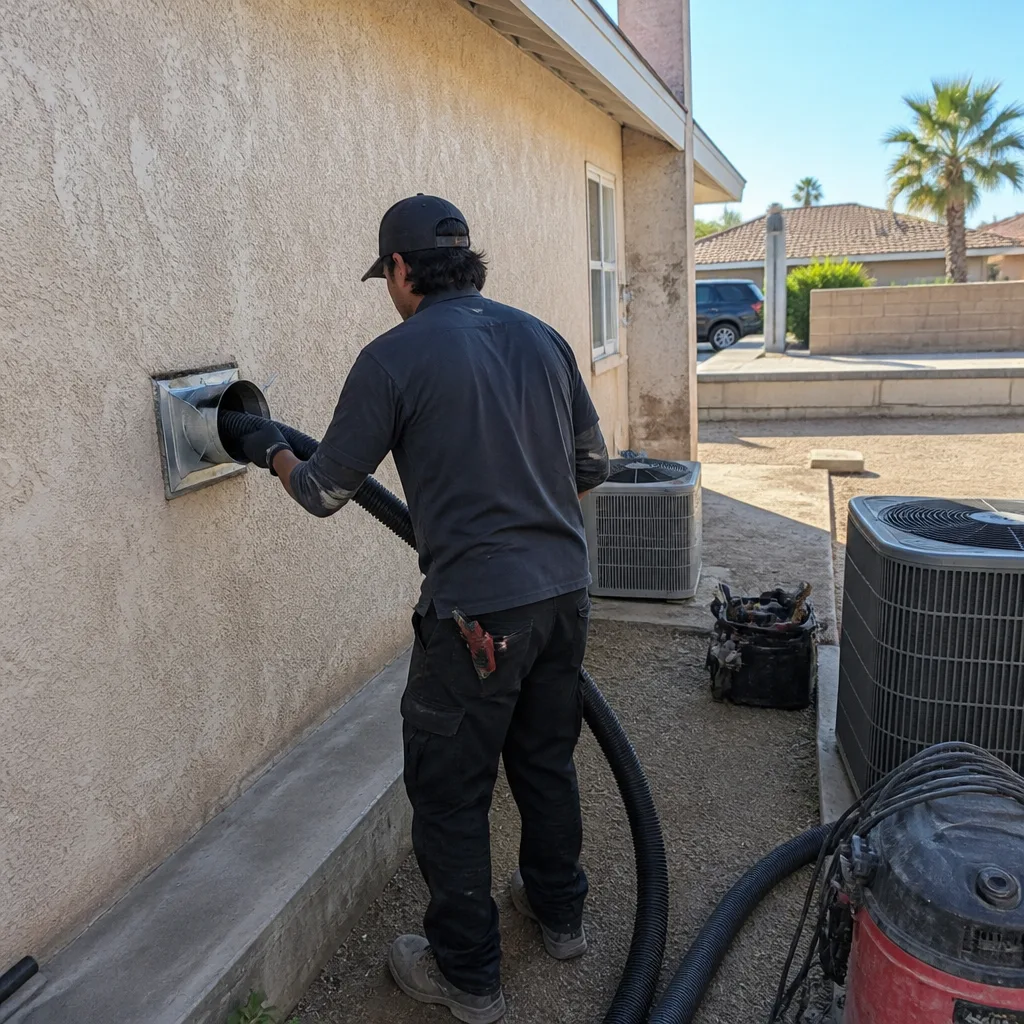
Call a professional when the work involves the main trunk line, the plenum, or the air handler; when you’ve had a renovation, wildfire smoke event, or pest activity in the home; when airflow from certain registers has dropped noticeably; or when your DIY inspection finds disconnected or collapsed flex duct. These are the scenarios where consumer equipment cannot reach the problem, and where Hesperia’s specific environmental conditions make the contamination meaningfully worse than what a shop-vac can address. Our Dryer Vent Cleaning in Hesperia service falls into the same professional category: dryer vent clogs require full-length brush extraction from the roof or exterior wall, and they’re the leading cause of residential dryer fires. Duct Cleaning Hesperia offers free estimates in Hesperia. Call (877) 331-2951 and describe what you’re seeing. We’ll tell you honestly if the job is necessary, and if it is, we’ll bring equipment that actually does the work.
Frequently Asked Questions
You can clean the register grilles, return covers, and the visible first 12 to 18 inches of duct from a register opening using a shop-vac and basic household tools. What you cannot reach is the main trunk line, the plenum, and the majority of the run length, which is where most embedded dust and debris accumulate. A professional cleaning with a Rotobrush or Nikro system handles that remaining 90% of the duct system. For the accessible 10%, a free estimate call to (877) 331-2951 is entirely reasonable if you want an honest scope assessment.
For most Hesperia homes, yes, especially homes older than five years, homes with pets, homes that have undergone renovations, or homes that have been exposed to wildfire smoke. The desert dust load, combined with high attic temperatures that degrade flex duct, means the contamination accumulates faster and binds harder here than in many other climates. A professional cleaning also includes a duct integrity assessment that catches failing flex runs and loose connections before they become airflow failures. Call (877) 331-2951 for a free estimate specific to your home.
Reputable Hesperia duct cleaning companies use purpose-built equipment like Rotobrush and Nikro systems. Rotobrush machines combine a rotating agitation brush with high-CFM vacuum capture in a single self-contained unit. Nikro equipment provides the sustained negative pressure needed for longer trunk line runs and heavier debris loads. We also carry Abatement Technologies filtration equipment for Hesperia homes dealing with wildfire smoke particulate or other air contamination events where HEPA filtration during the cleaning process matters.
Lower quotes in this market usually reflect lower equipment, meaning the company is running a residential vacuum or an underpowered portable unit that can’t create adequate negative pressure. Some low-price operators also price only for “register cleaning” and then attempt to sell the actual service as an upgrade once they’re in the home. An honest whole-system price for a typical Hesperia home lands between $350 and $600. Air Duct Repair in Hesperia adds to that only if repair is actually needed, and it’s quoted and approved before work begins.
For most Hesperia homes, every five to seven years is a reasonable interval, with shorter intervals for homes with multiple pets, residents with respiratory conditions, or a recent wildfire event that drove smoke into the area. Homes that have never been cleaned and are more than a decade old should move to the top of the priority list. This isn’t an annual maintenance item, but it’s also not a once-in-a-lifetime event. If you’re not sure where your home falls on that timeline, call (877) 331-2951 and describe your home’s age, pet situation, and renovation history. We’ll give you an honest recommendation without pushing the work.
They’re entirely different systems with entirely different tools. Air duct cleaning addresses the heating and cooling ductwork that carries conditioned air from your furnace or air handler through the home. It requires high-CFM negative pressure equipment and agitation. The payoff is cleaner air and better airflow. Dryer vent cleaning addresses the exhaust duct that carries hot, lint-laden air from your dryer to the exterior. It requires a long brush and vacuum capture from the roof or wall exit. The payoff is fire risk reduction and faster drying. Both are services we provide, and both are typically done on the same visit for Hesperia homeowners who want a complete air system service. Call (877) 331-2951 to schedule either one.
The Bottom Line
The DIY-versus-professional question in Hesperia resolves to one simple test: can your tool reach the problem? For register grilles, return chambers, and visible duct openings, the answer is yes, and every Hesperia homeowner should do that work regularly. For trunk lines, plenum boxes, and the deep flex runs that carry conditioned air across your attic, the answer is no, not with any consumer equipment that exists. The most useful DIY investment is a filter upgrade. The most useful paid investment is a professional cleaning from a company that runs genuine Rotobrush or Nikro equipment and can also spot and fix damaged ductwork in the same visit. Hesperia’s desert dust, summer attic heat, and wildfire exposure put real stress on duct systems. Know where your line is, spend money where it works, stop where it doesn’t, and call (877) 331-2951 when you need equipment that can actually do the job.
Written by the team at Duct Cleaning Hesperia, serving Hesperia since 2014.
See the difference
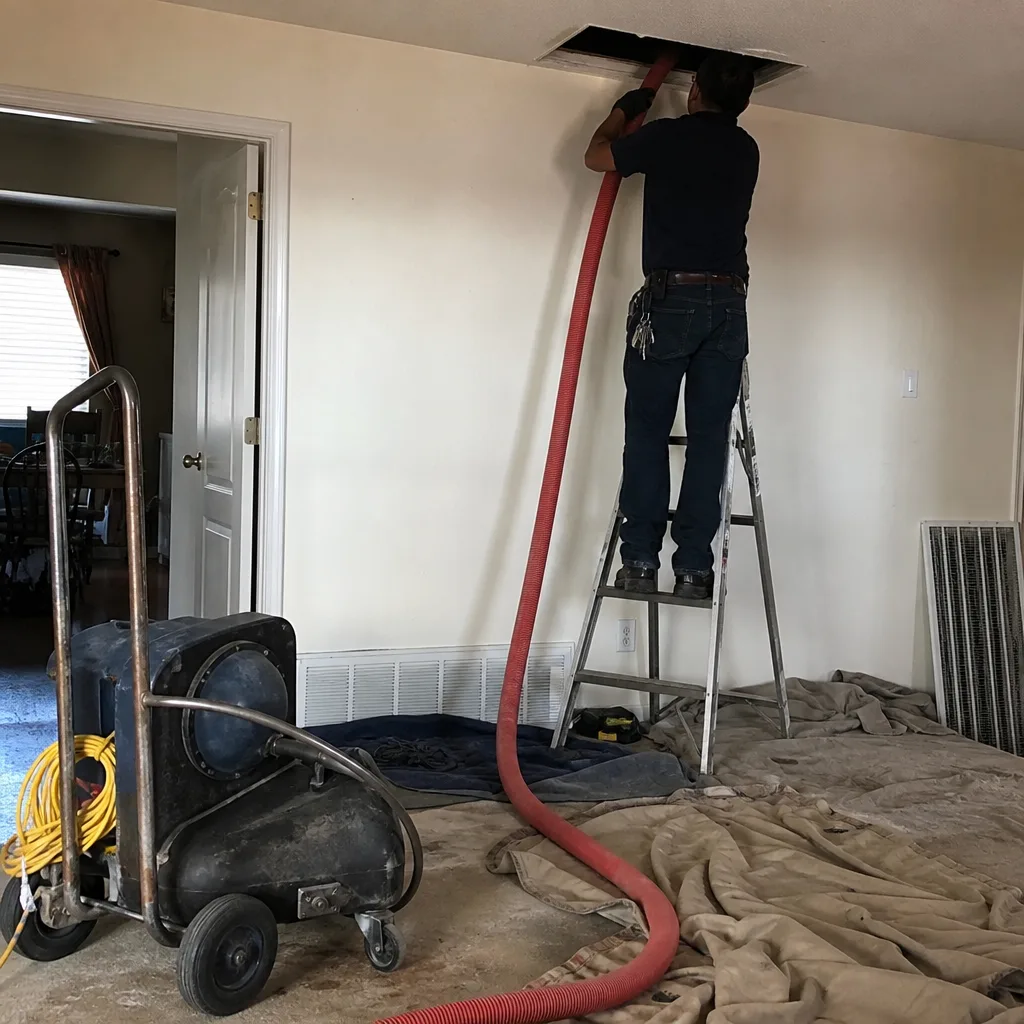 Before
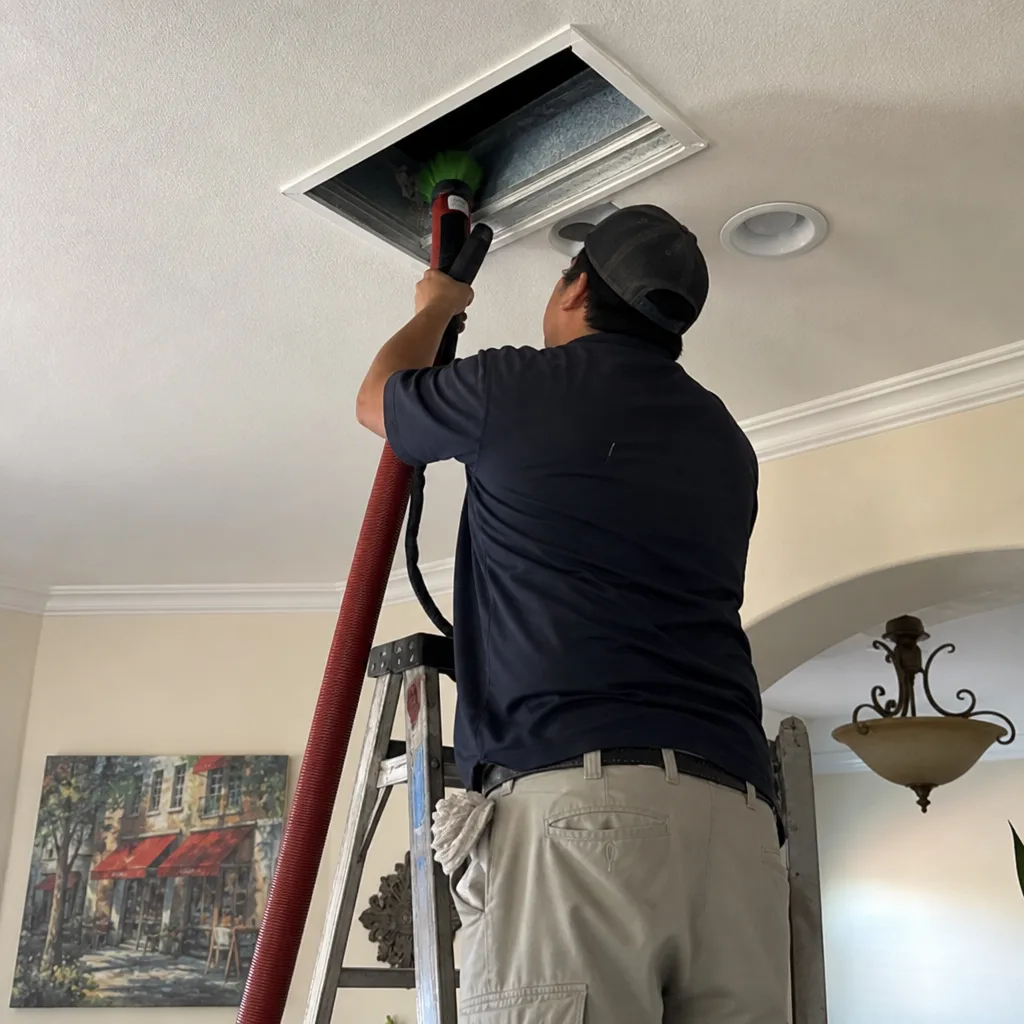 After
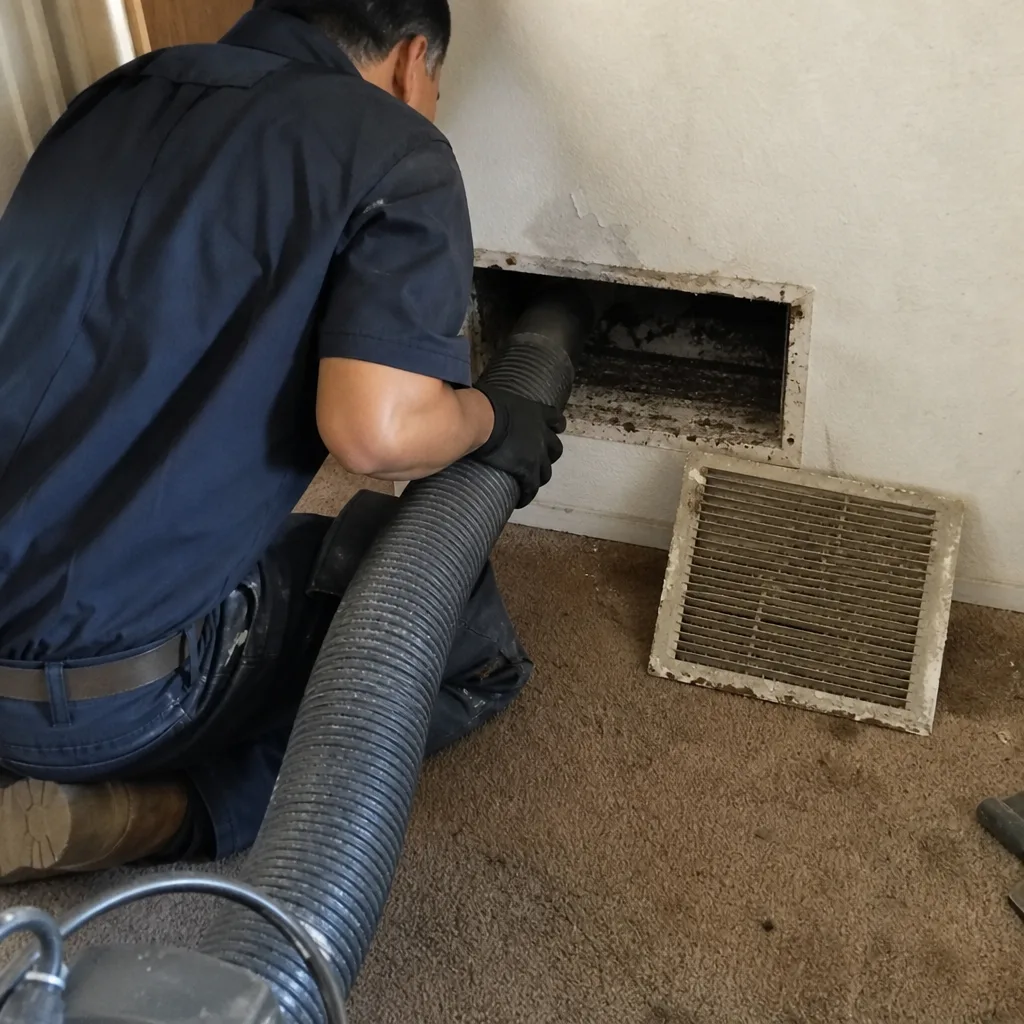 Before
 After
 Before
 After