
Last updated November 2, 2026
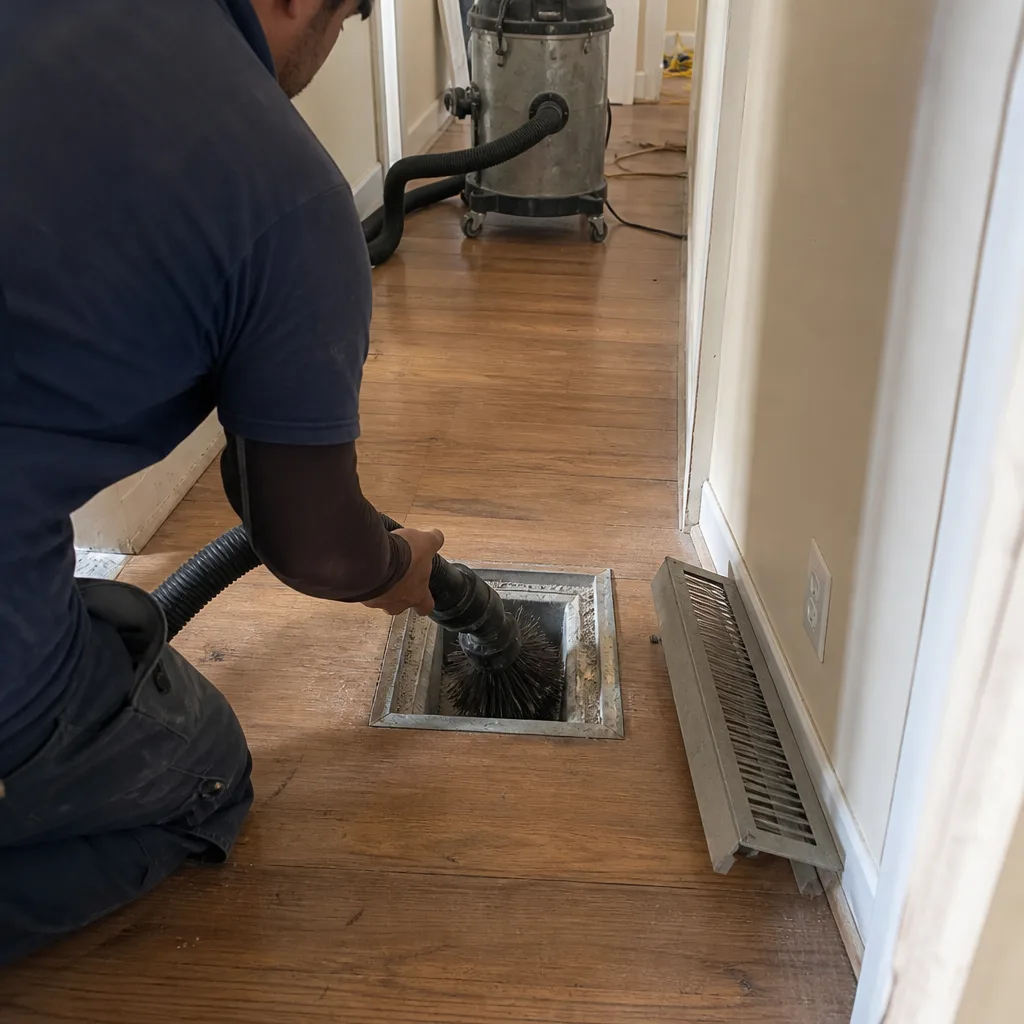
 Whole-home duct cleaning
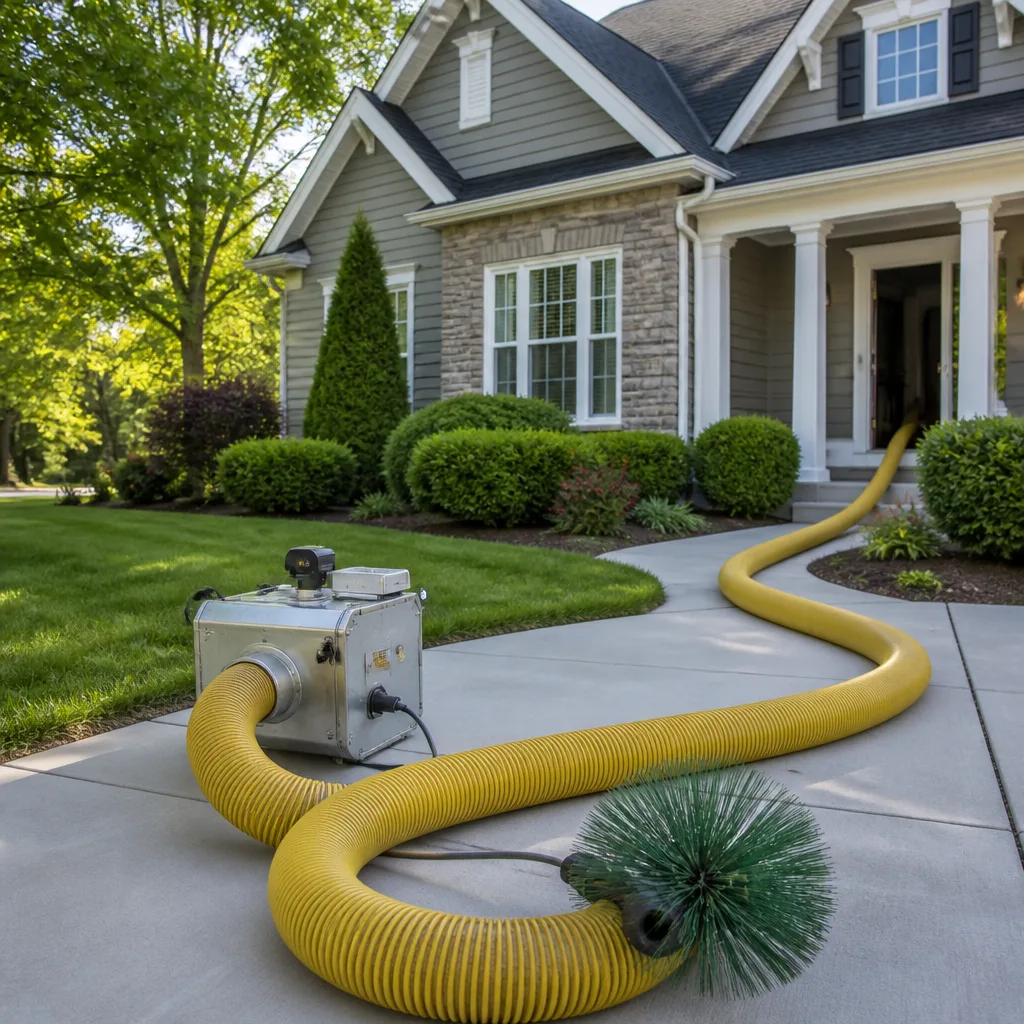
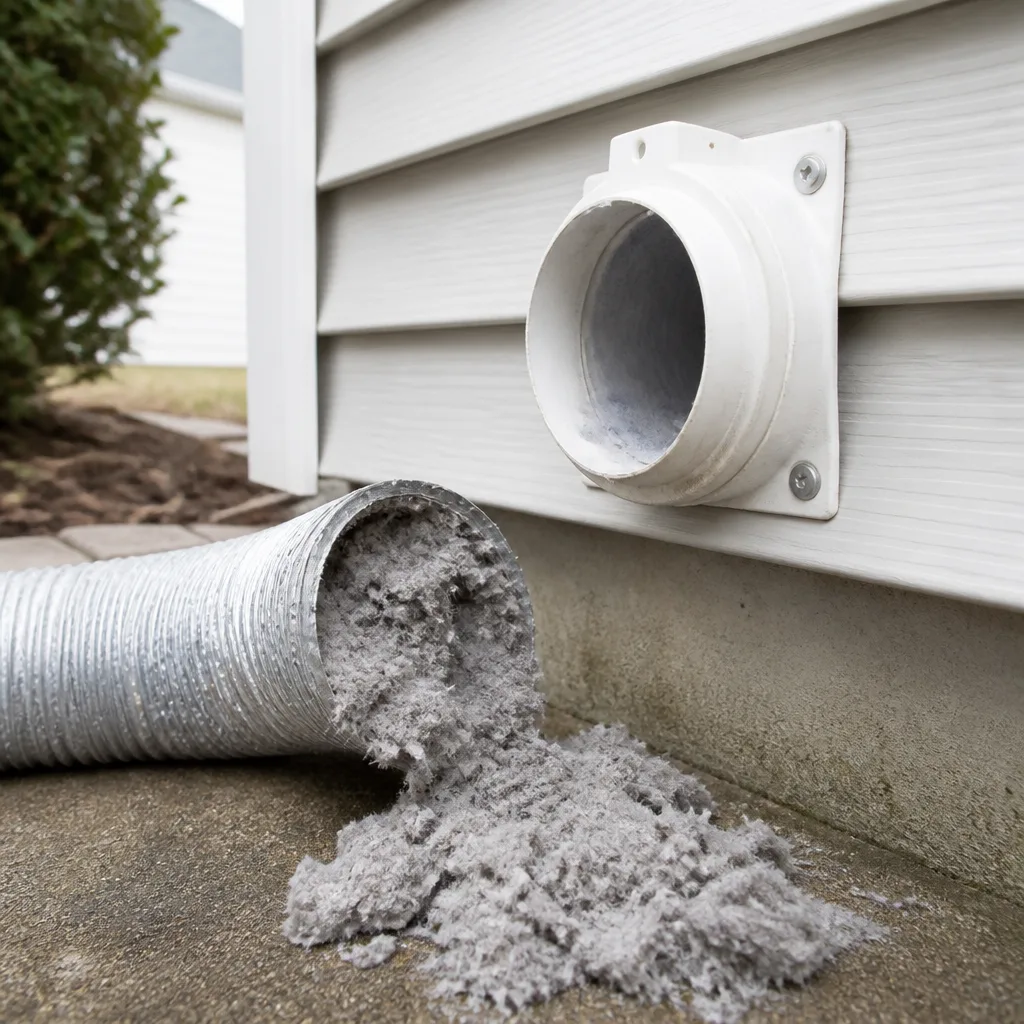 Dryer vent cleaning
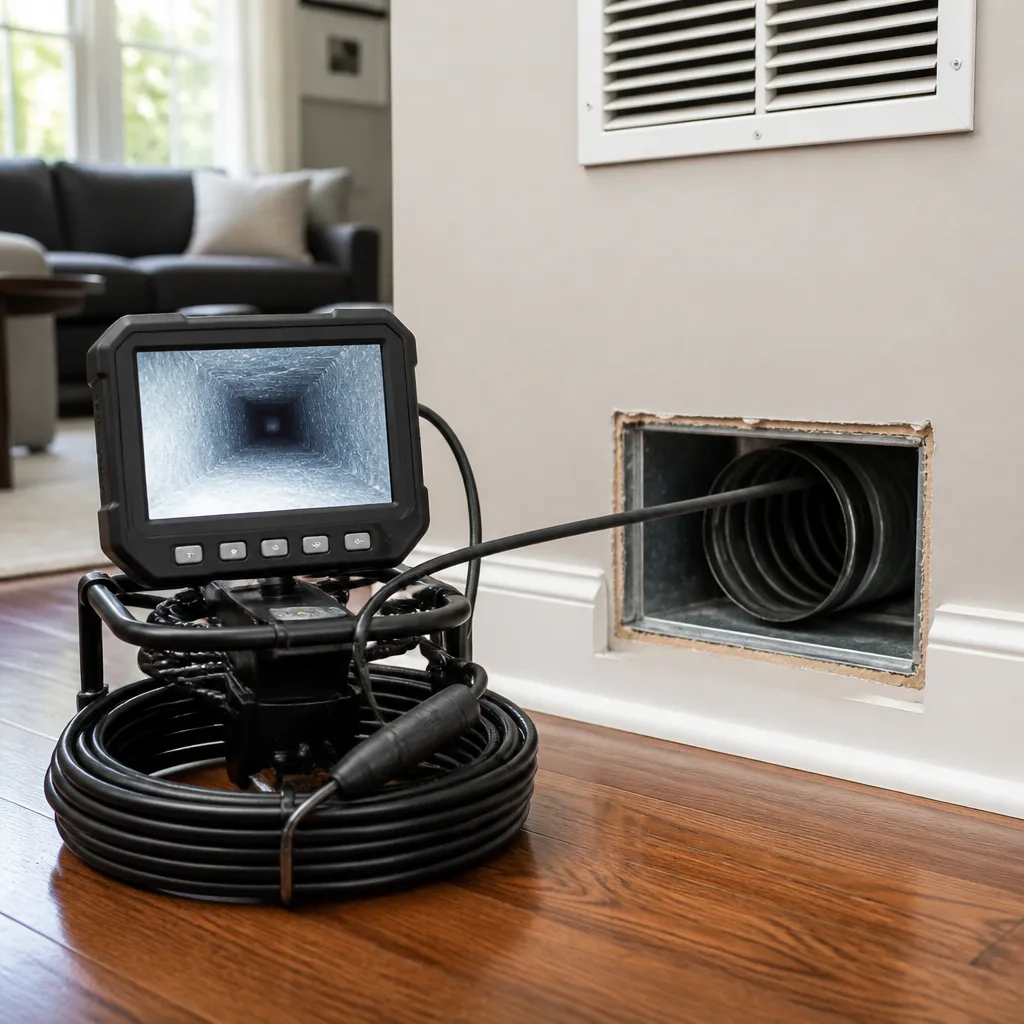 Camera inspection
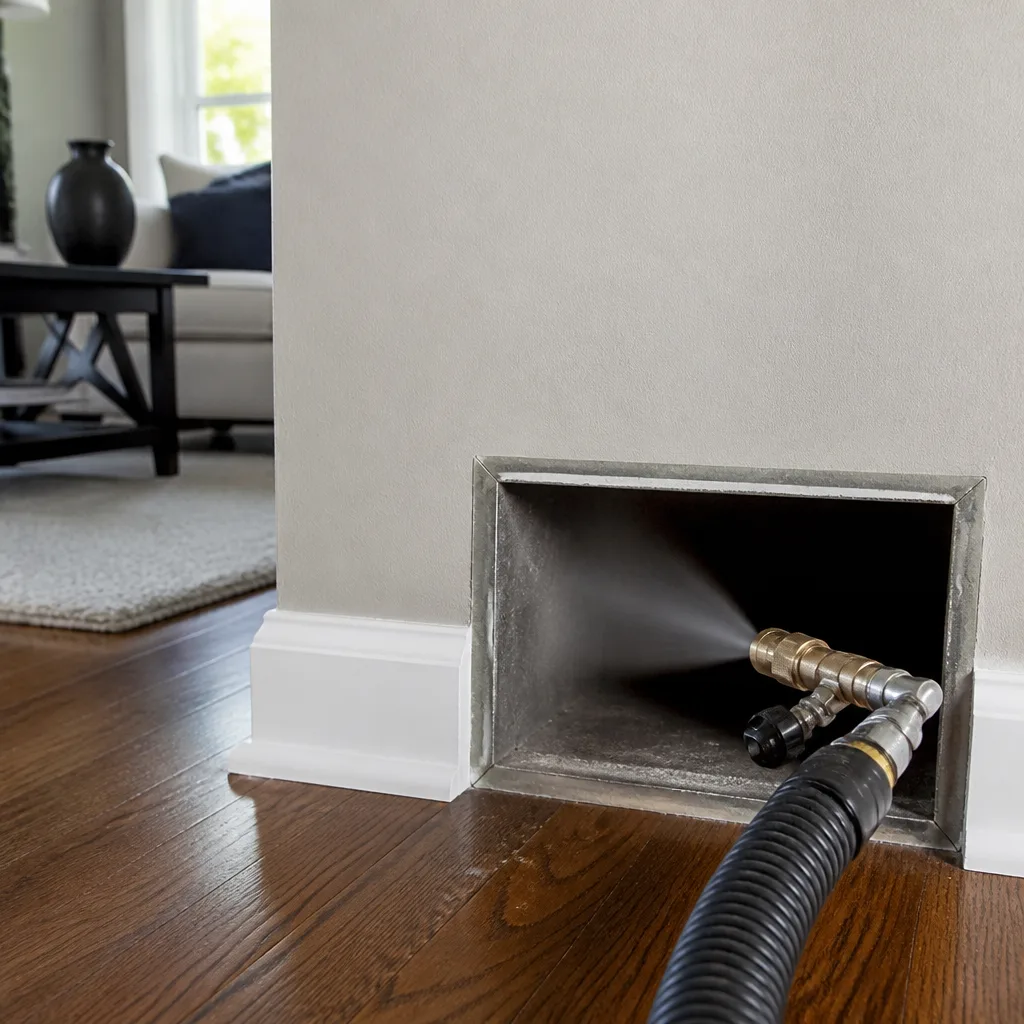 Sanitizing & deodorizing
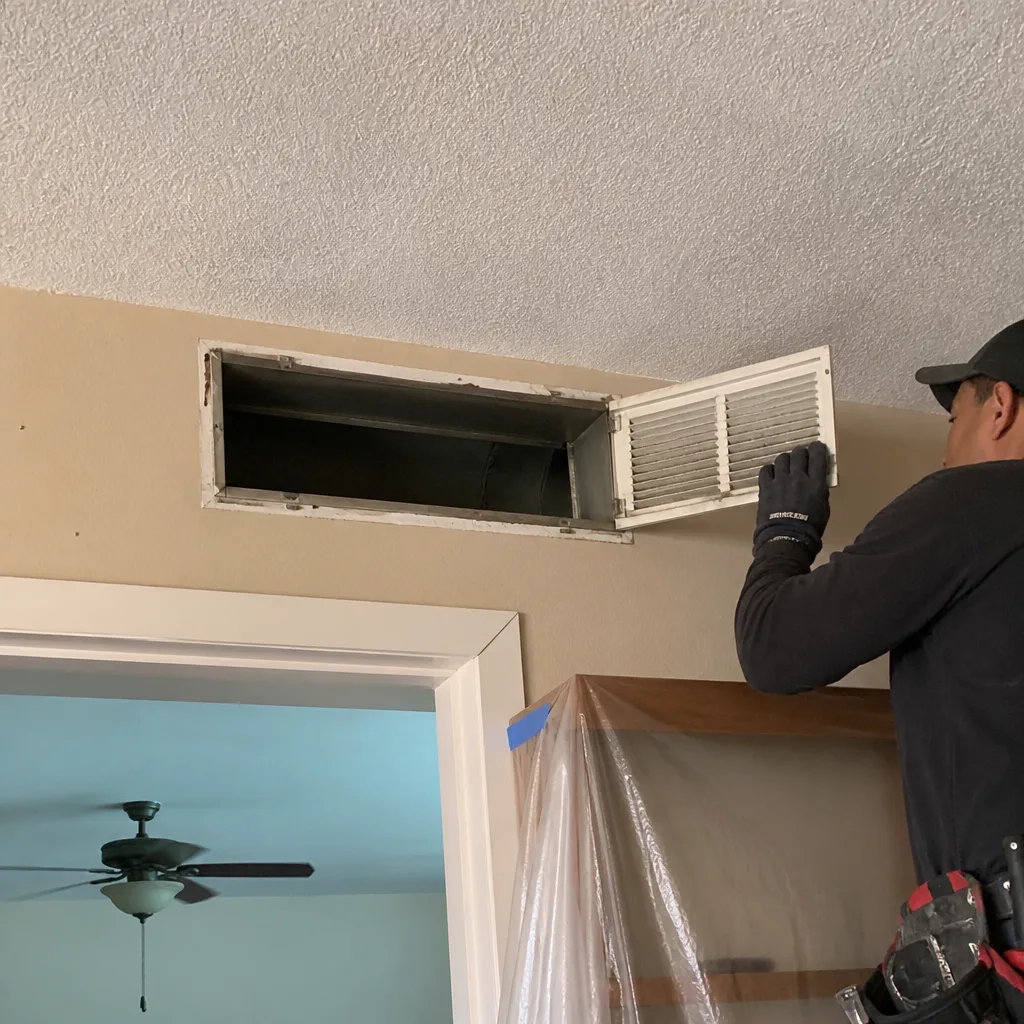
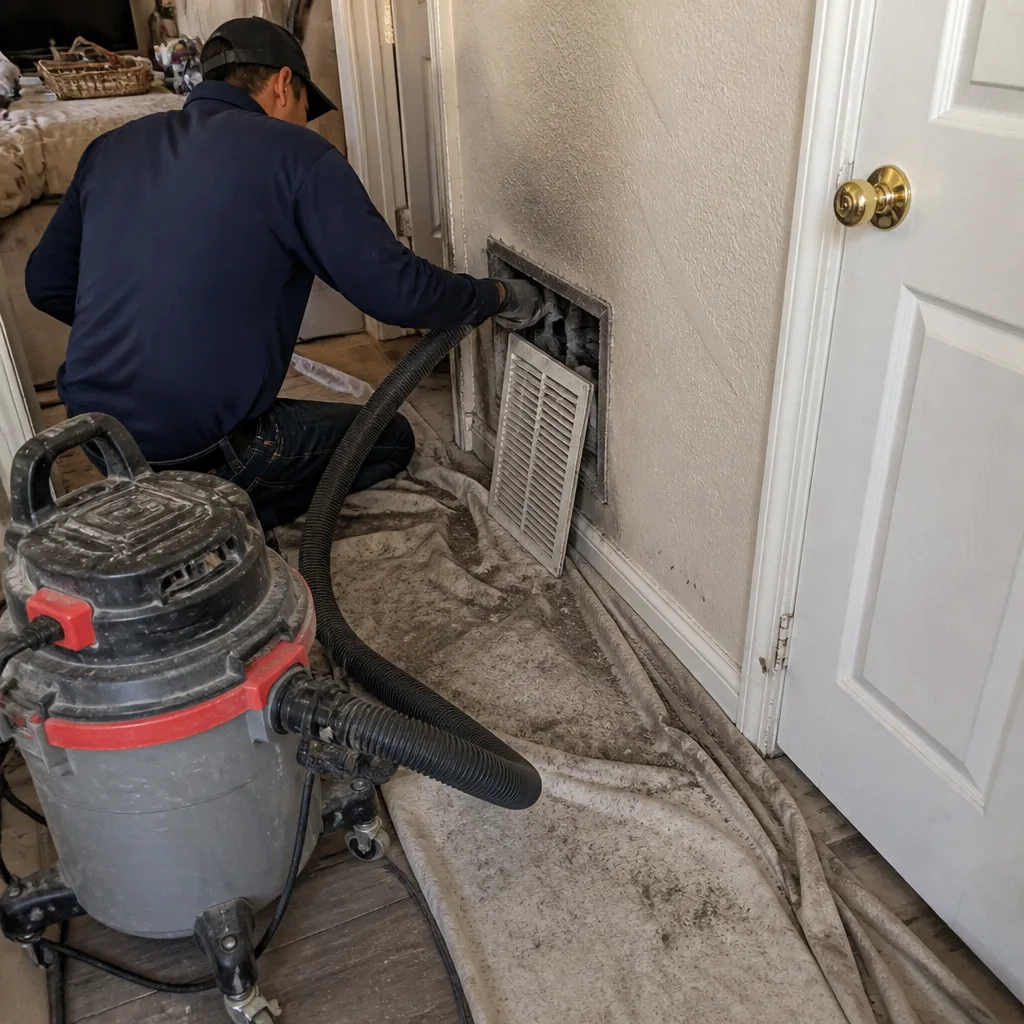
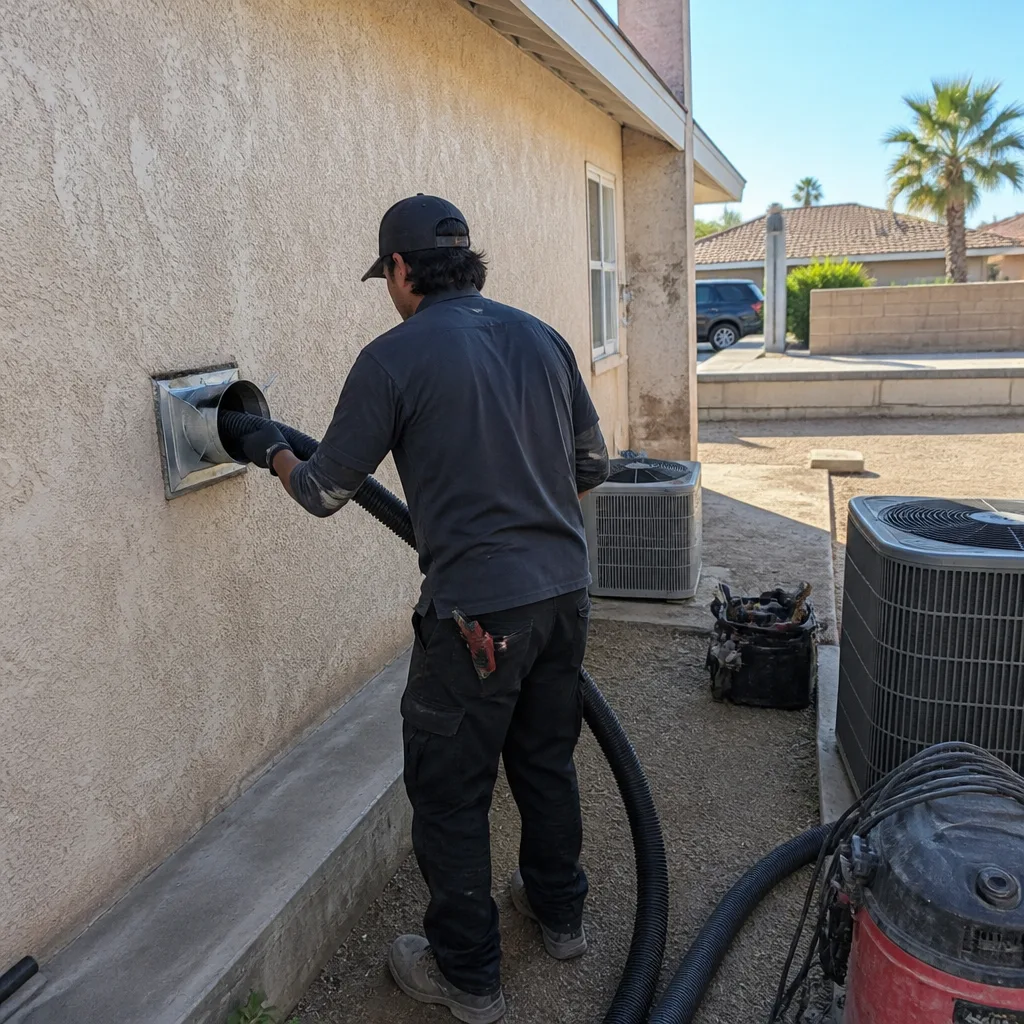
Whole-system duct and dryer vent check with before-and-after photos - you see exactly what came out of your vents
That "$99 whole-house special" is a bait ad - the real number appears once they are in your hallway, or the "clean" is a shop-vac at the register. We photograph the inside of your ducts before and after instead.
Air Duct Cleaning Troubleshooting: Common Problems and How to Fix Them
If your ducts were cleaned six months ago and the vents are already coated in gray fuzz, the cleaning probably wasn’t the problem – your duct system is telling you something else is wrong upstream. We’ve watched this scenario play out across Hesperia homes for years: a homeowner pays for a cleaning, sees improvement for a few weeks, then watches dust return, odors linger, and airflow sag back to where it was. Most people call the same company and ask for a redo. The smarter move is understanding that your ducts are a diagnostic instrument. What comes out of them, what you smell, and how air moves through them are all data points. This guide covers the most common post-cleaning complaints, what each one actually means mechanically, and what fixes look like when a second cleaning isn’t the answer.
Quick Answer
Most air duct cleaning “failures” aren’t cleaning failures at all – they’re undiagnosed system problems that no cleaning could ever fix: a leaking return pulling attic or crawlspace air, a failed filter rack, standing moisture in the plenum, or dampers that shifted during cleaning. In Hesperia’s high-desert climate, where dust intrusion is constant and evaporative cooling adds moisture complexity, the most common culprits are filter bypass, disconnected return runs, and unsealed supply boots. Start by checking your filter fit and visible connections before assuming the cleaning itself was ineffective.
Styles & brands we work with
- Whole-home duct cleaning
- Dryer vent cleaning
- Camera inspection
- Sanitizing & deodorizing
Table of Contents
- Recontamination vs. Incomplete Cleaning: How to Tell the Difference
- Persistent Musty Odors After Cleaning: Why It’s Usually Not the Ducts
- Uneven Room Temperatures Post-Cleaning: Duct Leaks, Dampers, and Airflow Balance
- Blowback at Registers: What It Actually Means Mechanically
- How to Document and Communicate Symptoms So You Get a Real Diagnosis
- Dust Returning Within Weeks: The Filter and Sealing Connection
- Airflow Still Weak After Cleaning: Restriction Points Most Companies Miss
- New Noises After Duct Cleaning: What Changed and What to Check
Recontamination vs. Incomplete Cleaning: How to Tell the Difference
This is the single most useful distinction you can make when trying to figure out why a duct cleaning didn’t stick. Recontamination means new dust is entering the system after the cleaning was done correctly. Incomplete cleaning means old debris never left. They look similar at the register but point to completely different fixes.
Signs of recontamination: dust returns evenly across all rooms, it’s fine and gray rather than chunky or black, and it accumulates on the supply registers first. This pattern says the duct interior was actually cleaned, but something is feeding new particulate into the airstream. The usual suspects are a filter that doesn’t seal in its slot, a return plenum drawing from a dirty attic or crawlspace, or supply boots that were never sealed to the drywall at installation.
Signs of incomplete cleaning: debris is chunkier, darker, or concentrated in the rooms farthest from the air handler. You may see visible clumps of material sitting inside the register when you remove the cover. The return side looks clean while supplies stay dirty. This pattern says the cleaning crew either underpowered the job or missed sections entirely. Professional equipment matters here. We run Rotobrush and Nikro systems on every residential job in Hesperia because these tools deliver the agitation and vacuum power needed to actually remove caked material – consumer-grade shop vacuums and brushed drills can’t get there.
Quick way to check at home: remove a supply register in a room close to the air handler and one in the farthest room. Wipe the inside of the boot with a white cloth. If both come back gray and powdery, you’re likely looking at recontamination. If the far room comes back chunky and the near room is clean, the cleaning never reached the far end.
Persistent Musty Odors After Cleaning: Why It’s Usually Not the Ducts
Musty smells that survive a thorough duct cleaning are, in our experience across Hesperia, almost never coming from the duct interior. They’re coming from the plenum, the evaporator coil, or the insulation liner inside the air handler cabinet. Here’s the mechanical reality: when a cleaning crew runs agitation tools through your supply and return runs, those surfaces end up dry and clean. But the plenum – the large box sitting directly on top of or below your furnace or air handler – often holds standing water from condensate or, in evaporative-cooled Hesperia homes, from humidity carried into the system during monsoon season.
That standing moisture soaks into the fiberglass liner, and the liner grows the musty smell. No amount of duct brushing fixes liner that’s wet or contaminated. The fix is liner replacement or cleaning with appropriate antimicrobial treatment, not another pass through the duct runs.
Another common source: a drain pan that isn’t draining. If your condensate line is partially clogged, water pools, the pan stagnates, and the blower pushes that smell through the entire house. Check for water stains around the air handler base. If the pan holds water for more than a day after the system runs, the drain needs attention before anything else.
If you’re in Hesperia and smelling must every time the blower kicks on, have someone inspect the plenum and coil area specifically. This is where the smell lives. Duct cleaning companies that don’t open the plenum aren’t addressing the problem at all.
Uneven Room Temperatures Post-Cleaning: Duct Leaks, Dampers, and Airflow Balance
Uneven temperatures after a cleaning often get blamed on the cleaning itself, but the cleaning only exposed what was already there. Three mechanical causes account for most cases, and each requires a different fix.
- Duct leaks. If a supply run has separated at a joint or the boot has pulled away from the floor, conditioned air dumps into the wall cavity or crawlspace instead of the room. The room downstream runs warm in summer and cold in winter. In Hesperia’s high-desert climate, where summer temperature swings are extreme, this shows up fast. A pressure test or a visual inspection with the blower running will find it. Our Air Duct Repair in Hesperia service handles exactly this – resealing and reconnecting runs so air goes where it’s supposed to.
- Dampers that shifted. Many homes have manual balancing dampers inside the supply runs. Cleaning tools can knock a damper partially closed, reducing flow to one branch while over-conditioning another. Remove the register in the problem room, reach in with a flashlight, and look for a metal lever or wing nut inside the run. If it’s angled across the duct, someone moved it. Adjusting it back to fully open often restores balance within minutes.
- Airflow imbalance from oversized equipment. If your system was oversized at installation, some rooms get blasted while others starve no matter how clean the ducts are. Cleaning reveals the imbalance because debris was partially restricting flow before – a dirty duct is a semi-balanced duct, in a backwards sort of way. Once cleaned, the restriction is gone and the imbalance shows. This is a duct design or equipment sizing issue, not a cleaning issue.
The takeaway: if temperatures were uneven before the cleaning and stayed uneven after, the cleaning was never going to fix it. The system needs diagnosis, not another pass through the vents.
Blowback at Registers: What It Actually Means Mechanically
Blowback – air pushing back out of a supply register when the blower isn’t running, or visible dust puffing from the register when the system starts – is a pressure symptom. It tells you the duct system is fighting itself. Two causes account for almost every case we see in Hesperia homes.
Cause one: an unbalanced return. If your system pulls more air into the return side than the supply side can comfortably push out, positive pressure builds in the supply plenum. When the blower cycles off, that pressure equalizes by pushing air back through the registers. You feel it as a reverse puff. The common culprits are a return that’s oversized relative to the supply runs, a filter that’s too restrictive and causing the blower to cavitate, or return grilles that have been added over the years without balancing the supply side to match.
Cause two: disconnected or crushed supply runs. If a supply run has separated in a wall or attic, the blower pushes air into a dead-end cavity. Pressure builds, finds the path of least resistance, and you feel it at the nearest intact register. Crushed flex duct does the same thing. The fix here is physical repair, which is exactly what our Air Duct Repair in Hesperia team handles – locating the failed section, reconnecting or replacing it, and sealing the joint properly.
Blowback is not a cleaning defect. It’s a system integrity issue, and it tends to get worse after cleaning because the reduced resistance in clean ducts lets pressure differentials express more obviously. If you feel air moving the wrong way through a register, the ducts are talking. Listen.
How to Document and Communicate Symptoms So You Get a Real Diagnosis
When you call a contractor about a duct problem, the quality of the diagnosis depends on the quality of the information you provide. Most homeowners describe the problem as “the ducts are still dirty” or “it smells.” Both descriptions invite a second cleaning quote. Here’s how to get past that.
- Identify which rooms are affected. Walk the house and note which registers show symptoms and which don’t. Specific rooms narrow the diagnostic field. “The two bedrooms on the south side still get dusty” is vastly more useful than “the whole house is dusty.”
- Note when the symptom appears. Does the dust show up within days of cleaning, weeks, or months? Does the odor come only when the system first starts, only in the afternoon, only when the AC runs after being off? Timing tells you whether the issue is continuous or event-driven.
- Describe the material. Is it fine gray powder, chunky dark debris, or fibrous material? Take a photo of a register with the cover removed. A picture of the actual material inside the boot is diagnostic gold.
- Check your filter. Pull the filter and note its size, whether it fits tightly, and whether dust is bypassing around its edges. A filter that’s loose in its slot lets unfiltered air into the system – this single observation rules in or out the most common recontamination cause.
- Ask for a diagnostic visit, not a cleaning quote. When you call, say: “I had the ducts cleaned and the problem is still there. I want someone to diagnose the system, not give me another cleaning quote.” A company that does Air Duct Repair in Hesperia or full-system diagnosis will respond differently than a cleaning-only shop.
In Hesperia, where many homes run both central AC and evaporative cooling depending on the season, the seasonal switchover is a common time for symptoms to appear. Noting what system was running when the problem started adds another diagnostic clue. We’ve walked into homes where the “duct problem” turned out to be a swamp cooler pad disintegrating into the duct run – a finding that only surfaced because the homeowner mentioned the symptom started the week they switched over.
Dust Returning Within Weeks: The Filter and Sealing Connection
If dust returns to clean supply registers within two to four weeks, the single most likely cause is filter bypass. The second most likely is an unsealed return path pulling particulate from an unfiltered space. Both are checkable without special tools.
Filter bypass happens when the filter doesn’t create a seal in its slot. Air, like water, follows the path of least resistance. If the filter is undersized for the rack, air slips around the edges and carries unfiltered dust straight into the blower and through your freshly cleaned ducts. In Hesperia’s dusty environment, where fine high-desert silt hangs in the air during windy periods, a bypass gap as small as an eighth of an inch will visibly contaminate supply registers within a month. Check by removing the filter and examining the slot. Is there a gap on any side? Does the filter rattle or slide? The fix is a correctly sized filter, often with a foam gasket added to the rack. We stock Honeywell filtration products for exactly this upgrade – better fit, better media, fewer bypass problems.
Unsealed return paths are the second big one. In many Hesperia homes, the return side uses wall cavities or floor joist bays as return chases. If those chases aren’t sealed, the return pulls air from the crawlspace, attic, or wall interior – spaces full of dust, insulation fibers, and whatever else lives in there. That air never passes through the filter. Cleaning the supply ducts does nothing because the contamination source is upstream. The fix is sealing the return path, which is a repair task, not a cleaning task. It requires finding the gaps and sealing them with appropriate materials. This is the kind of work our Air Duct Repair in Hesperia service handles routinely.
If you’re not sure which you’re dealing with, hire someone who works with professional diagnostic tools. A pressure measurement across the filter rack and a visual inspection of the return path usually tells the story in under an hour.
Airflow Still Weak After Cleaning: Restriction Points Most Companies Miss
Weak airflow after a cleaning is one of the most frustrating outcomes because the whole point of the service was to restore flow. When it doesn’t improve, the restriction usually lives in a place the cleaning never touched. Three points account for most cases.
The evaporator coil. If your coil was dirty before the cleaning and the crew didn’t clean it, you still have a restriction. A clogged coil blocks airflow at the air handler – the exact point where all air must pass. No amount of duct brushing fixes a matted coil. In Hesperia, where AC runs for months at a stretch, coil fouling is routine. This is a separate service from duct cleaning, and it’s worth asking about specifically.
The blower wheel. A blower wheel caked with dust and debris moves far less air than a clean one, even at full RPM. Cleaning ducts without cleaning the blower wheel is like changing your car’s oil filter while leaving the oil pan filled with sludge. The system still moves air, but not efficiently. Blower wheel cleaning requires opening the air handler cabinet – beyond the scope of duct cleaning, but essential for full airflow restoration.
The return grille and filter rack. Sounds simple, but we’ve seen return grilles so clogged with pet hair and lint that the system starved for air on the intake side. A dirty return grille restricts air before it ever reaches the filter. Clean the grille, check the filter, and retest airflow at the registers before assuming anything more complex.
If airflow is weak in every room, look at the system-level restriction points: coil, blower wheel, return grille. If airflow is weak in only one room, look for a crushed or disconnected run – that’s a repair issue, not a cleaning issue.
New Noises After Duct Cleaning: What Changed and What to Check
Duct cleaning shouldn’t leave new noises behind, but sometimes it does. Here’s what the common ones mean.
A metallic popping or oil-canning sound when the blower starts or stops indicates a flexed duct wall. Cleaning tools can stretch or deform thin-gauge duct, leaving a section that pops as pressure changes. It’s usually harmless but annoying, and it often self-resolves as the metal settles. If it persists, the section may need to be re-supported or replaced.
A rattling near a register usually means debris got pushed up against the register damper or the damper itself was knocked loose. Remove the register, clear any visible debris, and check that the damper mechanism is still seated. A loose damper that rattles every time air moves through it is a two-minute fix.
A whistling or high-pitched sound indicates air moving through a gap that didn’t exist before – a register that isn’t fully seated in its boot, a flex run that pulled slightly loose at a connection, or a filter that shifted and now leaks around an edge. Walk the system while the blower runs and listen for the source. Most whistles trace back to something that can be re-seated or resealed by hand or with basic materials.
In our Hesperia service area, where many homes have duct runs in attics that see extreme temperature swings, we also see seasonal expansion and contraction create new gaps or noises even without a cleaning. A creak or tick that appears months later is usually thermal movement, not a cleaning defect.
Common Mistakes to Avoid
- Calling the same company for a redo without diagnosing first. If the first cleaning was technically competent and the problem returned, a second pass through the same ducts won’t change anything. Diagnose first, clean second.
- Accepting a generic “sometimes it takes two cleanings” explanation. A thorough professional cleaning with proper agitation and negative air pressure removes the debris in one pass. If someone says you need a second cleaning, ask specifically what was missed and why.
- Ignoring the filter. In Hesperia’s dusty climate, the filter is the first line of defense, and the most common point of failure. A $3 fiberglass filter sitting loose in a slot guarantees recontamination no matter how well the ducts are cleaned.
- Sealing registers to “test” airflow. Blocking supply registers raises static pressure and can damage the blower or pop duct connections. Don’t use register closing as a diagnostic tool.
- Treating musty smells with duct deodorizers. Spraying fragrance into the ducts masks the odor for a day and does nothing to the wet liner or standing water causing it. Find the moisture, fix the moisture, then clean the affected material.
- Assuming the cleaning company should have fixed leaks they weren’t asked about. Most cleaning-only companies don’t do repair. If you want a system that’s clean AND sealed AND balanced, hire a company that does Air Duct Cleaning in Hesperia and repair under one roof. Duct Cleaning Hesperia home services are built around exactly that full scope.
- Waiting until symptoms are severe before acting. Dust returning after a month is a diagnostic clue. So is a faint musty smell or a room that’s five degrees warmer. Act on early clues before they become expensive repairs.
See the difference
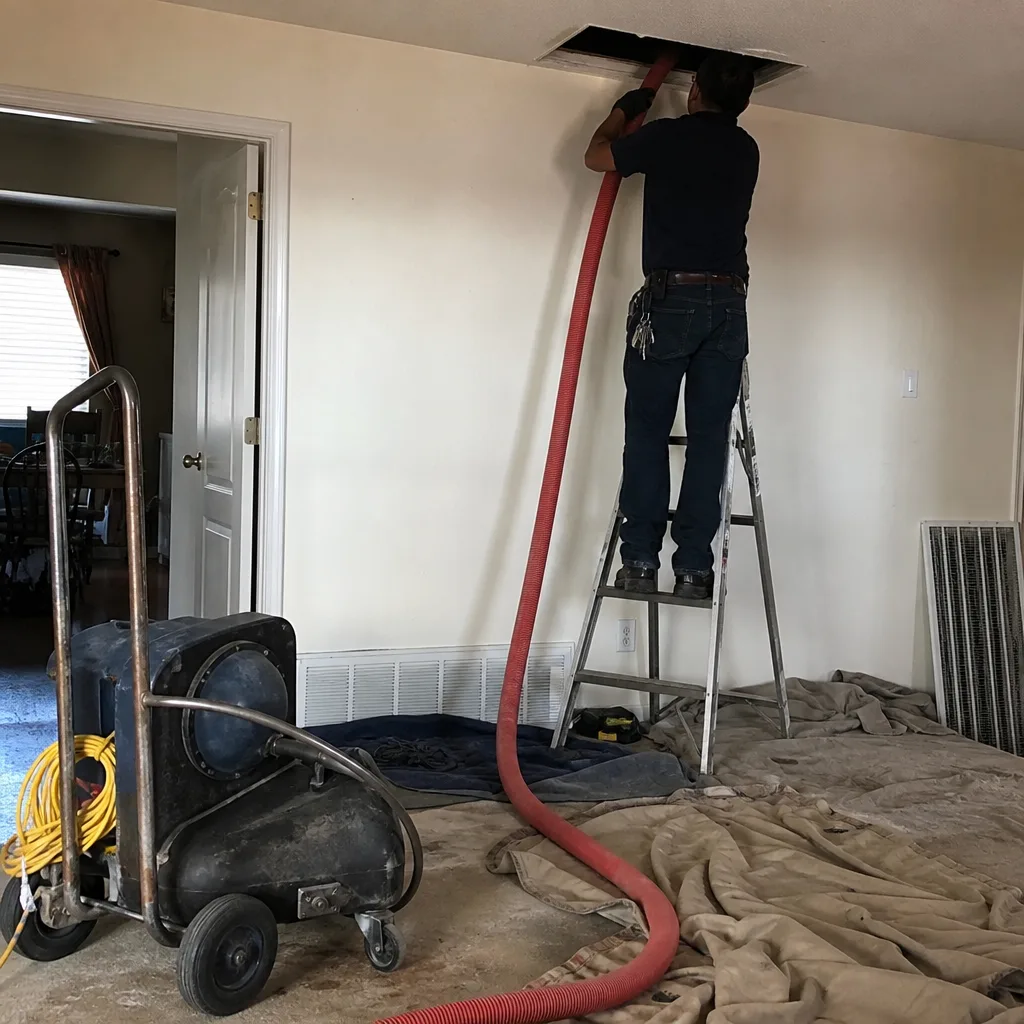 Before
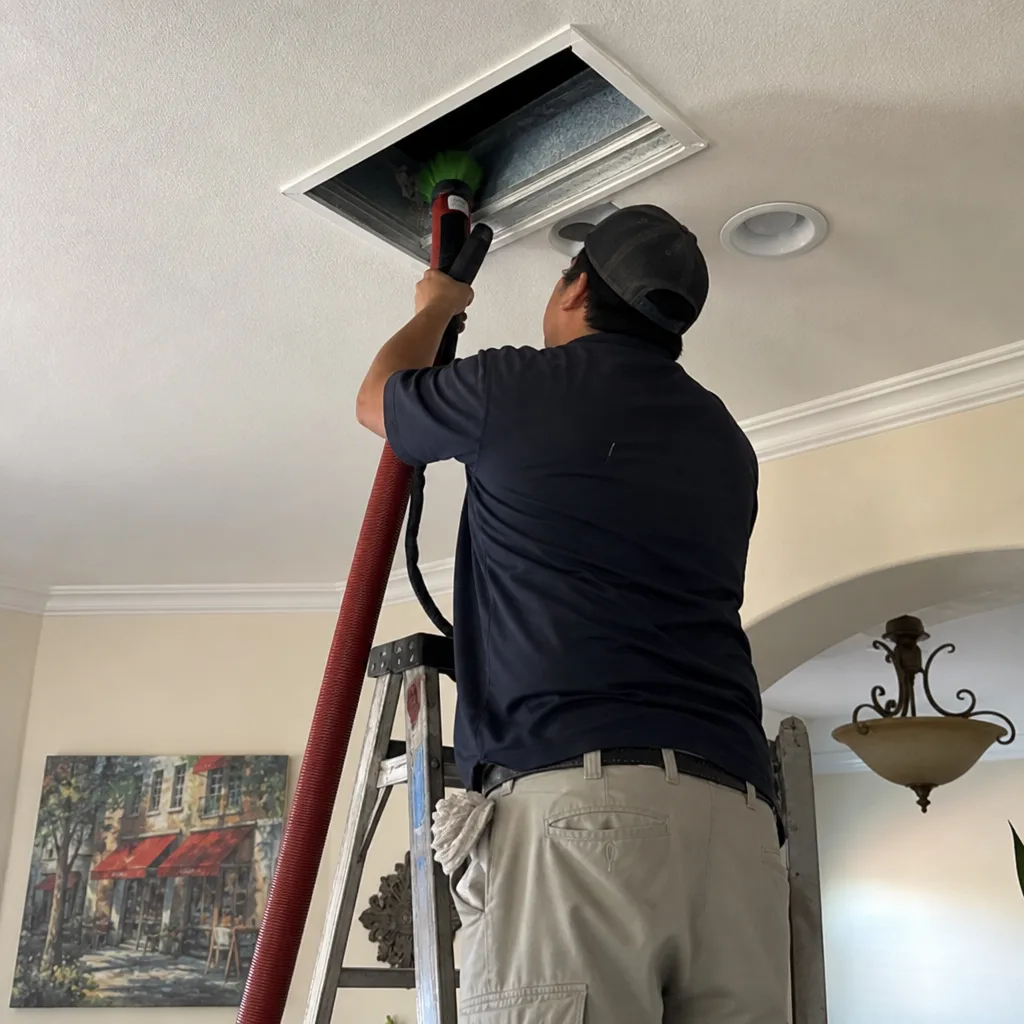 After
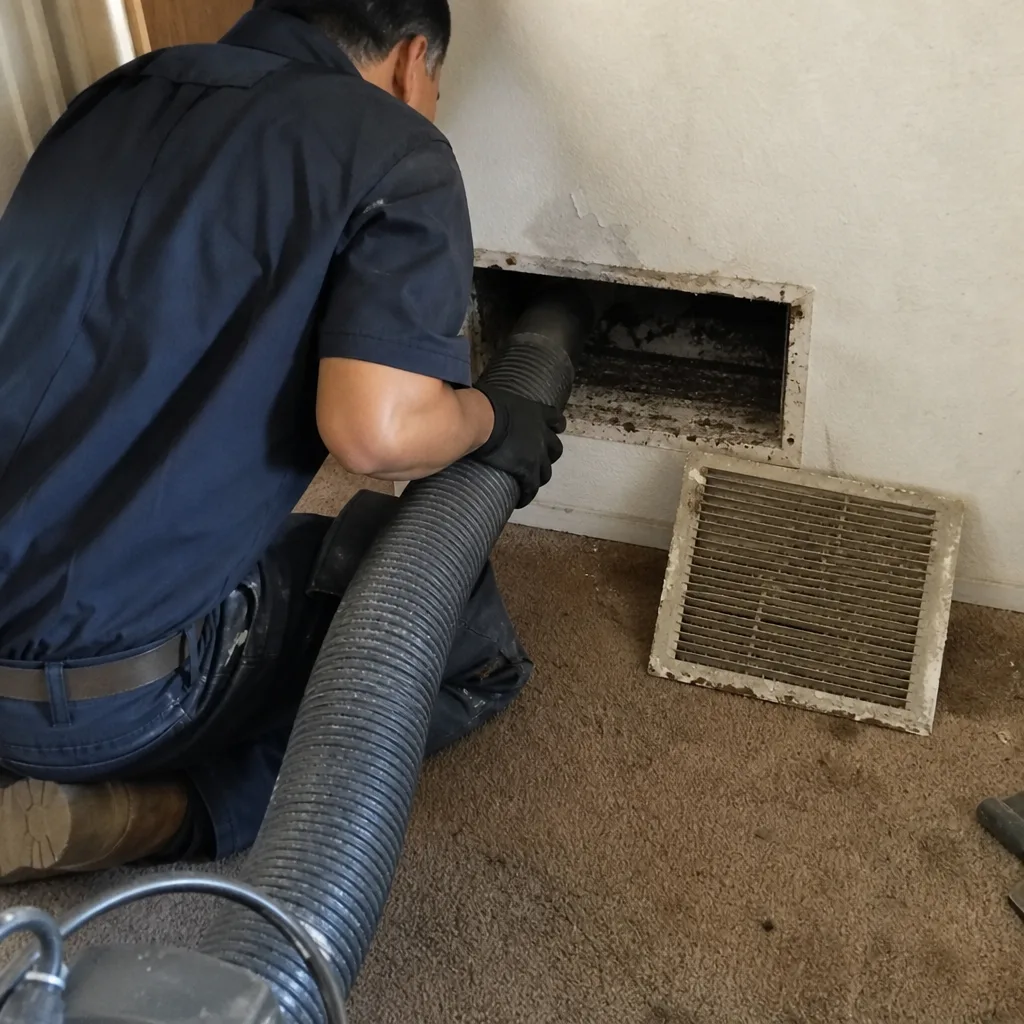 Before
 After
 Before
 After
When to Call a Professional
Call a professional when your diagnostic checks point to something you can’t safely or practically reach: a wet plenum liner, a separated duct run in a wall or crawlspace, a coil that needs cleaning, or a return that’s drawing from an unfiltered space. These are not DIY fixes, and in some cases they involve electrical or structural components that need proper tools and training.
Call also when the symptom pattern doesn’t match anything in this guide. Some duct problems are genuinely odd – intermittent odors, pressure changes that come and go, rooms that alternate between hot and cold with the weather. These need eyes on the system, not more internet reading.
Duct Cleaning Hesperia offers free estimates in Hesperia – call (877) 331-2951 for a diagnostic visit. We’ll tell you honestly whether the problem is cleaning, repair, or something else entirely. If it’s not a duct problem, we’ll say so.
Frequently Asked Questions
A properly cleaned and sealed duct system in Hesperia should stay visibly clean at the registers for one to three years, depending on how well the filter seals and whether you have pets or run evaporative cooling seasonally. Dust returning within weeks means recontamination, not failed cleaning.
Musty odor after cleaning almost always means moisture is present somewhere the cleaning didn’t reach – usually the plenum liner, the evaporator coil area, or a clogged drain pan. The duct runs themselves were cleaned, but the moisture source was upstream or in the air handler. That’s the next place to look.
With the right equipment, no. Professional Rotobrush and Nikro systems apply controlled agitation and negative pressure that cleans without deforming duct runs. Damaged ducts after cleaning usually mean the equipment was wrong for the job, the duct was already brittle or poorly installed, or a run was already disconnected before the cleaning started.
Look for these signals: air pushing back through registers when the blower is off, specific rooms staying hot or cold no matter what, dust accumulating faster near certain registers, or visible gaps at connections in exposed ductwork. These point to leakage or separation, and Air Duct Repair in Hesperia is the fix. Cleaning won’t repair a leak.
It’s a good idea. The dryer vent is a separate system from your HVAC ducts, but both collect lint and dust over time, and both affect airflow and safety. We offer Dryer Vent Cleaning in Hesperia as a standalone service. If your dryer takes longer than 45 minutes to dry a load, the vent needs attention.
More dust after cleaning usually means the agitation loosened debris that had been stuck to the duct walls, and that debris was either not fully extracted or is being pushed out through registers as the system cycles. It should settle within a few days. If it continues beyond a week, call the cleaning company back. If it continues beyond a month, you have a recontamination source that needs finding.
The Bottom Line
Your duct system communicates. Dust patterns, odors, airflow changes, and noises are all diagnostic information. The key distinction is between a cleaning that failed and a system that was never going to be fixed by cleaning alone. Most post-cleaning complaint calls in Hesperia trace back to filter bypass, unsealed returns, wet plenum liners, or separated runs – all mechanical issues, all fixable, none of them solved by running a brush through the ducts a second time. When you understand what the symptom means, you can call the right professional for the right fix, whether that’s cleaning, repair, or air quality equipment. And when you call, describe the symptom, not the solution. You’ll get a diagnosis instead of a sales pitch.
Written by the team at Duct Cleaning Hesperia, serving Hesperia since 2014.