
Last updated November 2, 2026
 Whole-home duct cleaning
 Dryer vent cleaning
 Camera inspection
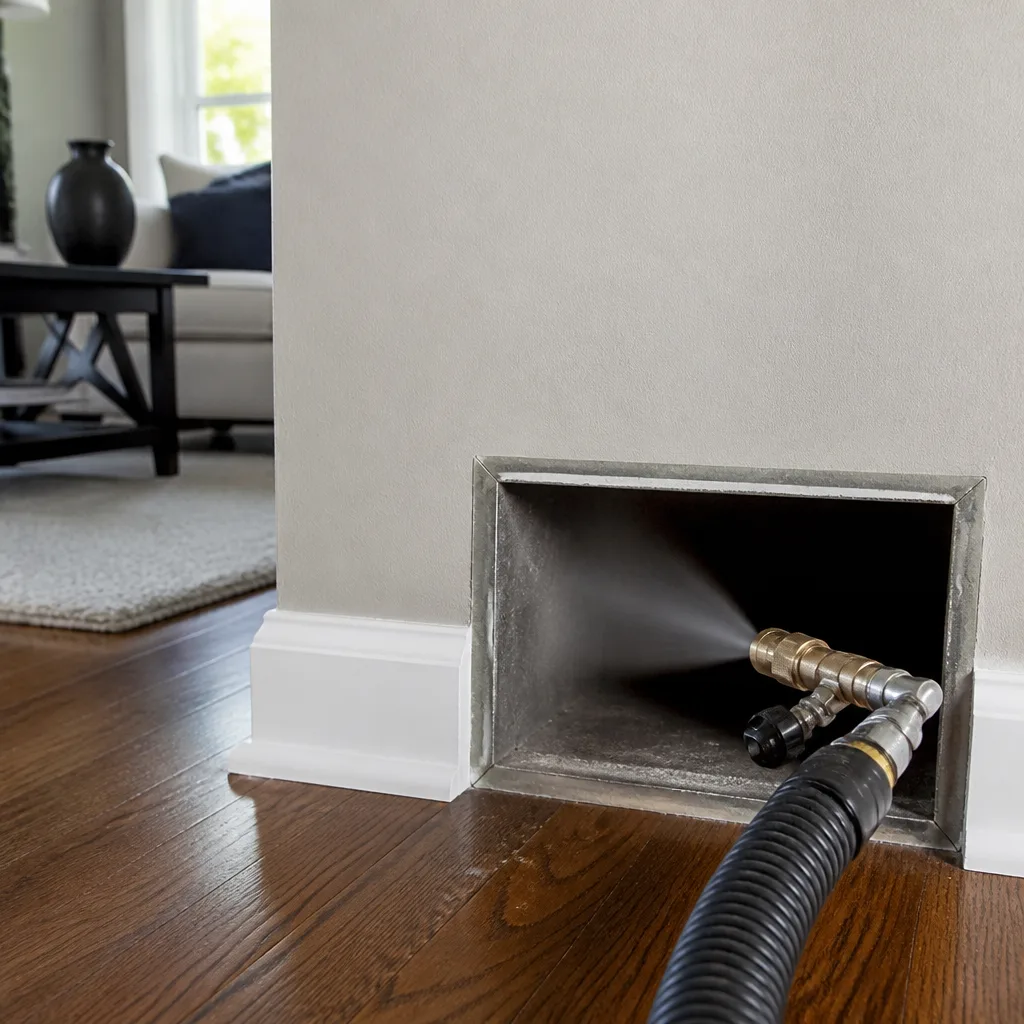 Sanitizing & deodorizing
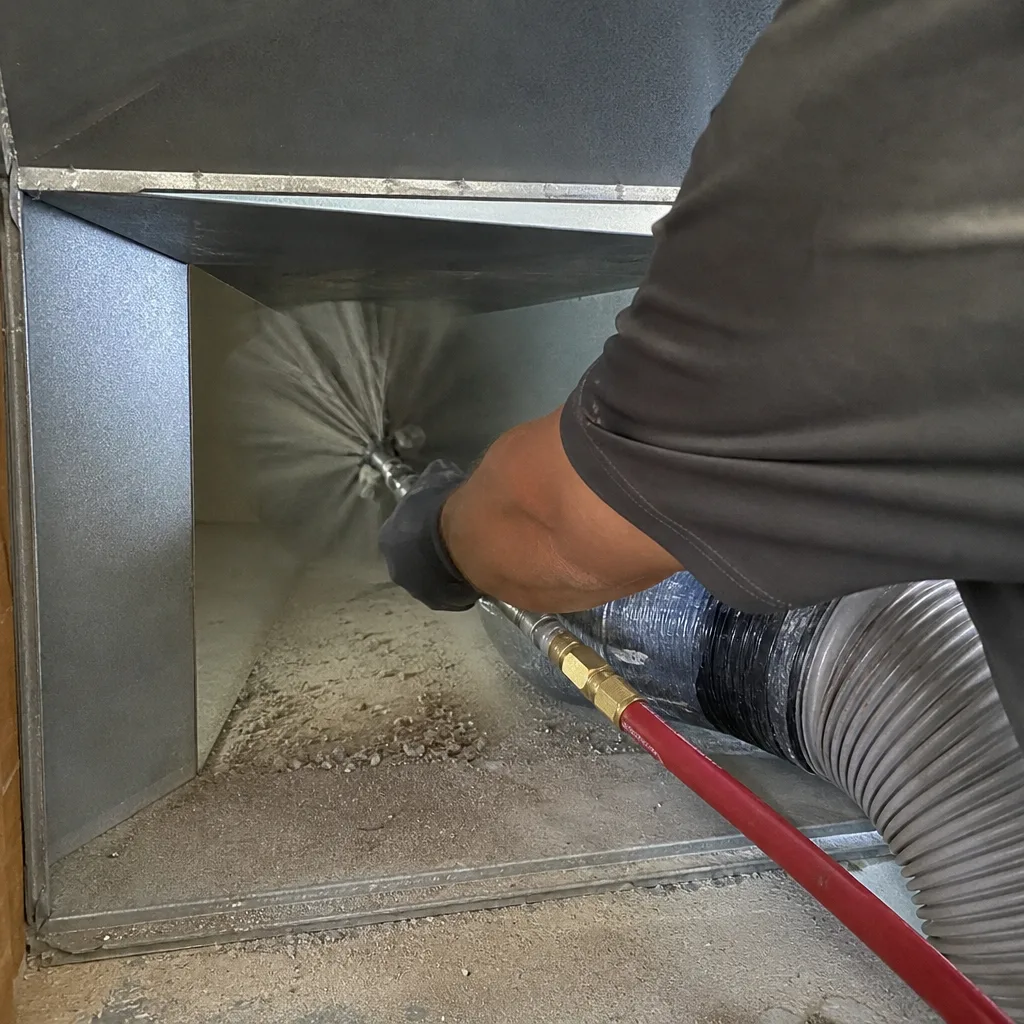
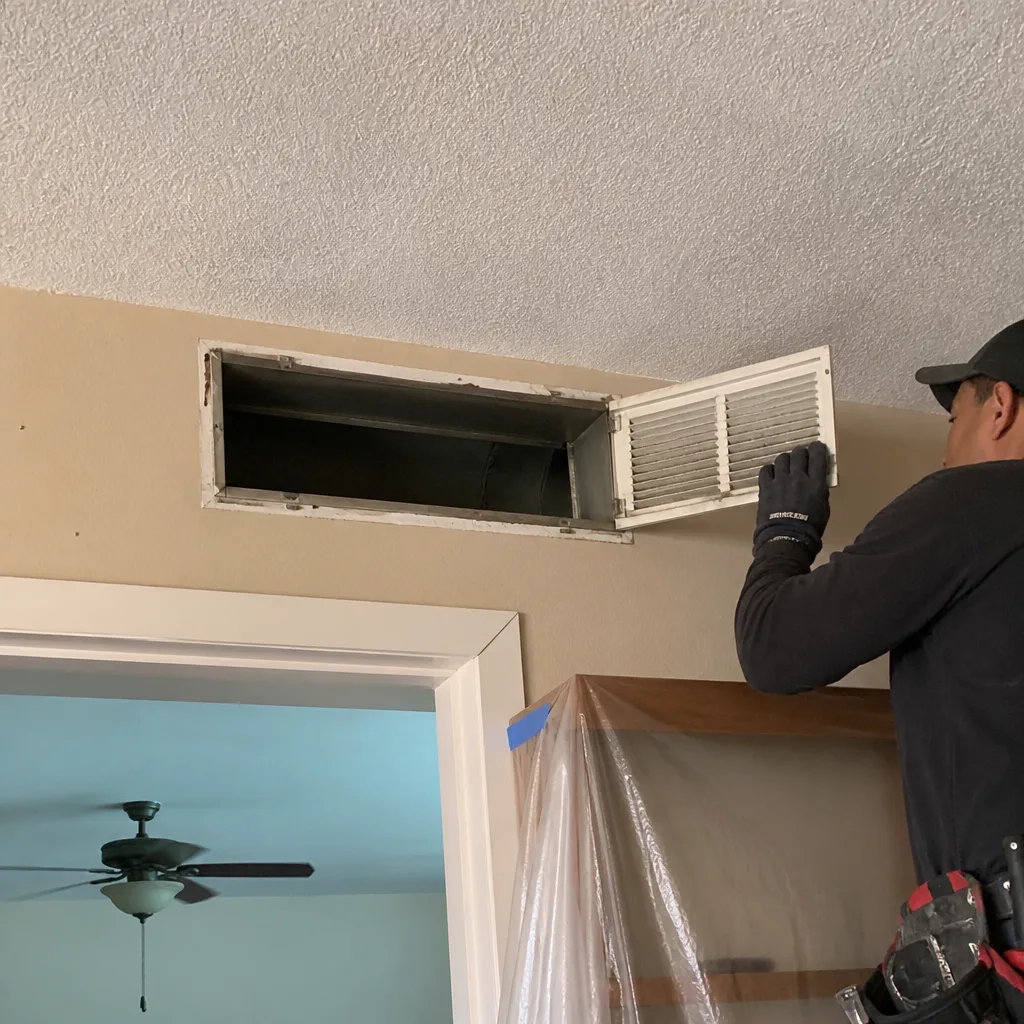
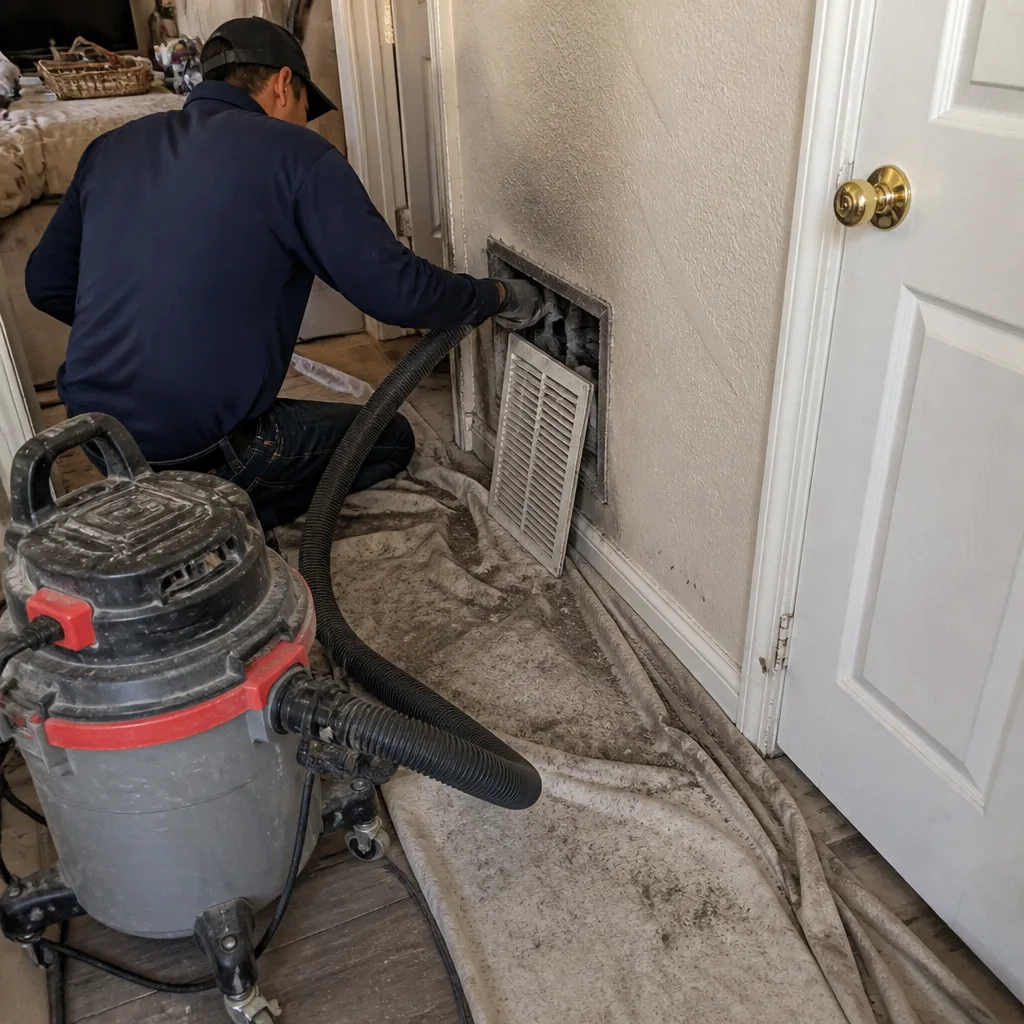
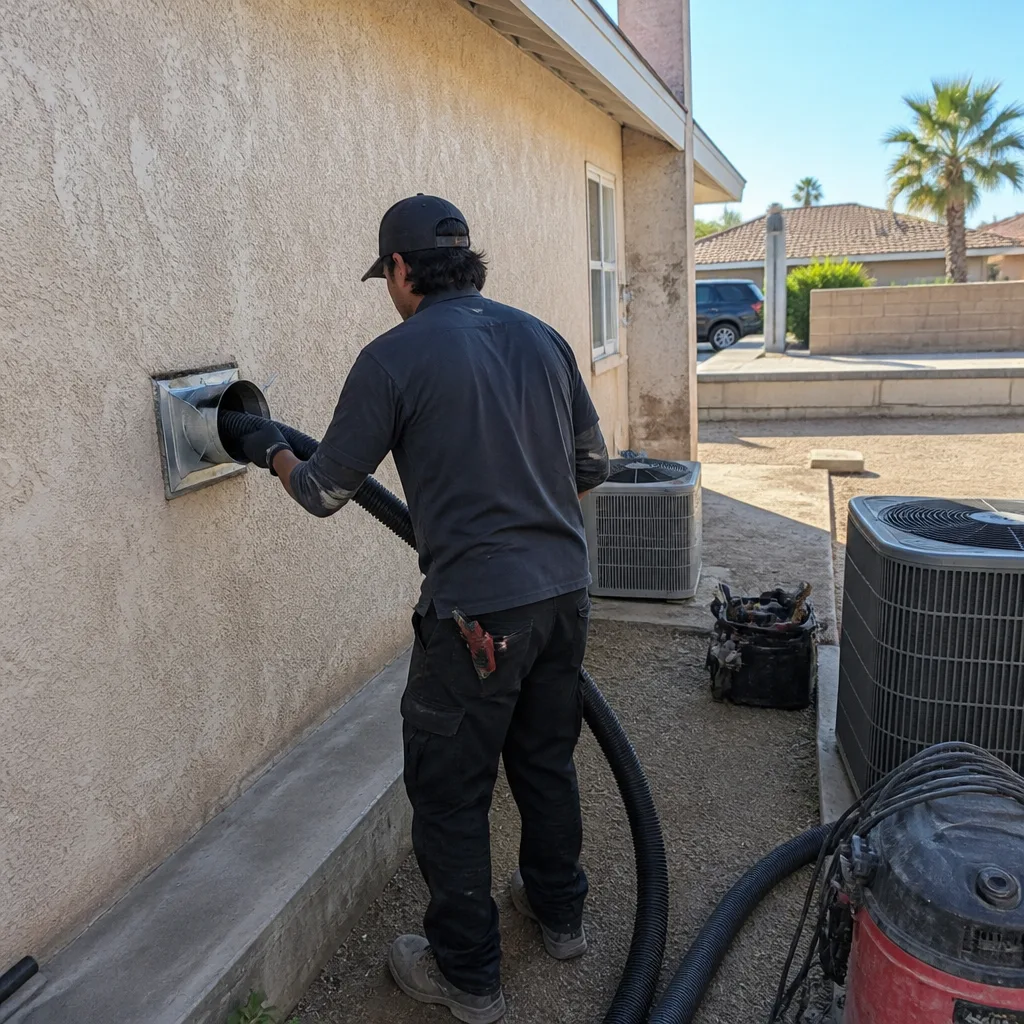
Whole-system duct and dryer vent check with before-and-after photos - you see exactly what came out of your vents
That "$99 whole-house special" is a bait ad - the real number appears once they are in your hallway, or the "clean" is a shop-vac at the register. We photograph the inside of your ducts before and after instead.
Air Duct Cleaning Maintenance Checklist for Hesperia Homeowners
A checklist that tells you to change your filter every 90 days without accounting for Hesperia’s wind events is giving you advice calibrated for a city 300 miles away. The High Desert doesn’t operate on generic HVAC schedules, and neither should your duct maintenance. Hesperia’s combination of Santa Ana wind patterns, fine alkaline dust, summer temperatures that routinely exceed 100°F, and newer construction booms means your ductwork faces specific stresses that coastal or valley homes never encounter. This guide is a working document built around those local realities: the dust intrusion points, the UV degradation on flex duct, the evaporative cooler conversions, and the seasonal overload cycles that actually determine how often your Hesperia air system needs attention.
Quick Answer
The core air duct maintenance cycle for Hesperia homeowners is: inspect registers and visible duct connections every 60 days during wind season (April through June and September through November), replace HVAC filters every 45 to 60 days (more often if you live near unpaved roads or active construction), have a full professional Air Duct Cleaning services visit every 2 to 3 years, and schedule a visual flex-duct inspection every spring before summer cooling loads hit. Homes with evaporative coolers running in parallel with central HVAC need additional monthly damper checks during transition months.
Styles & brands we work with
- Whole-home duct cleaning
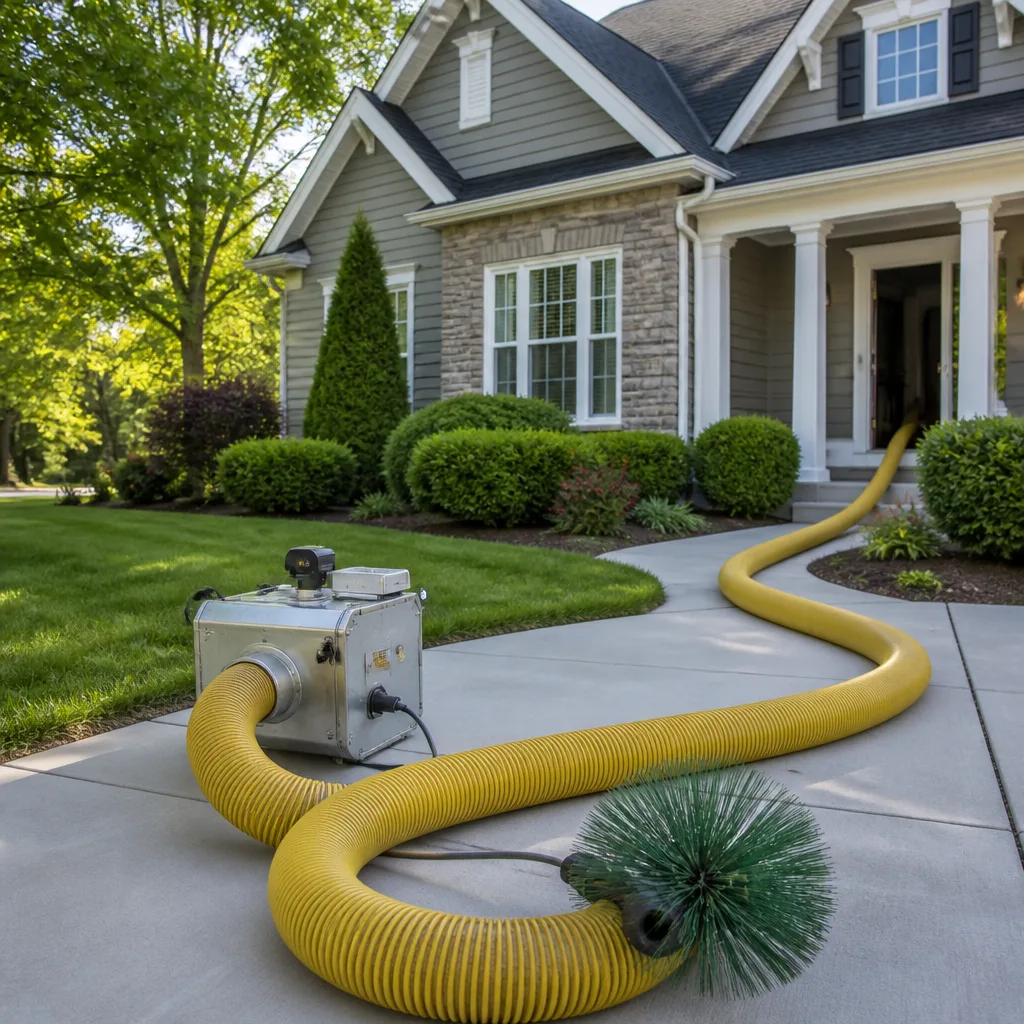
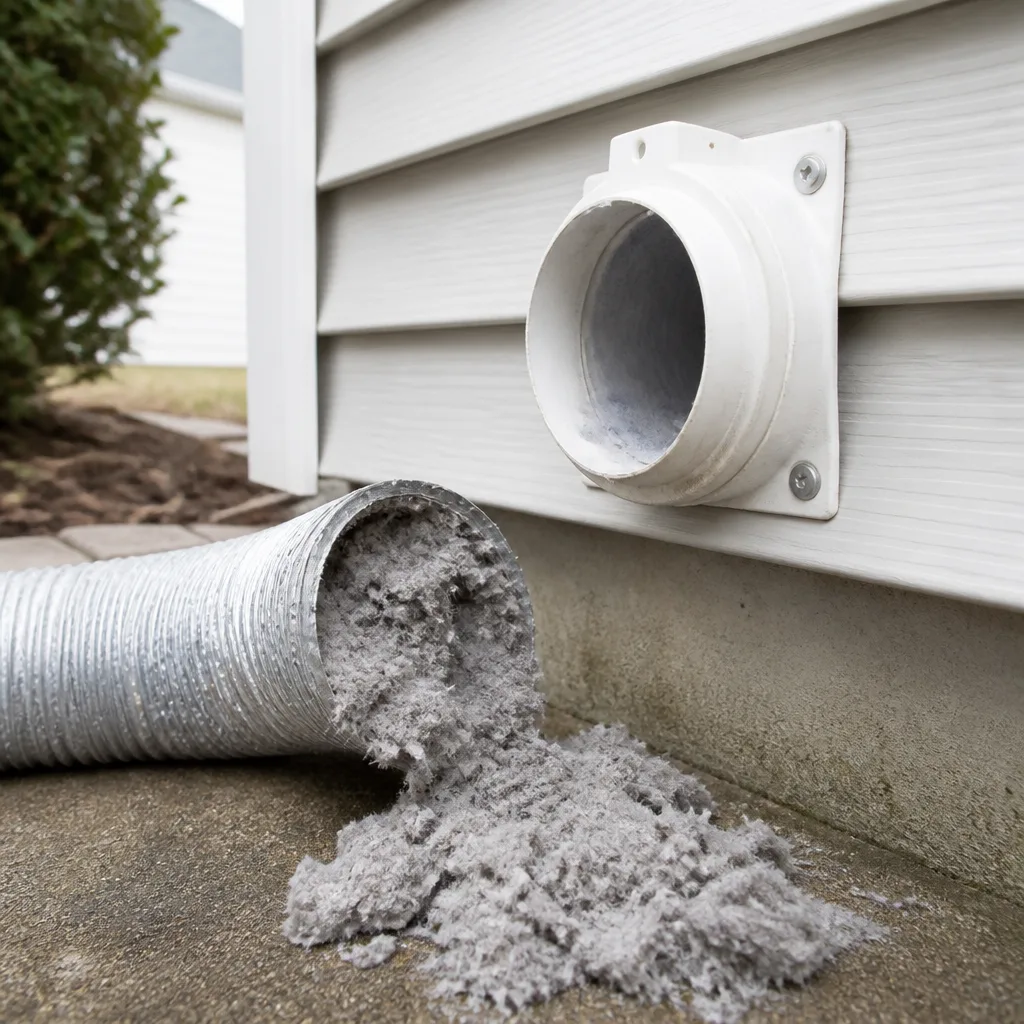
- Dryer vent cleaning
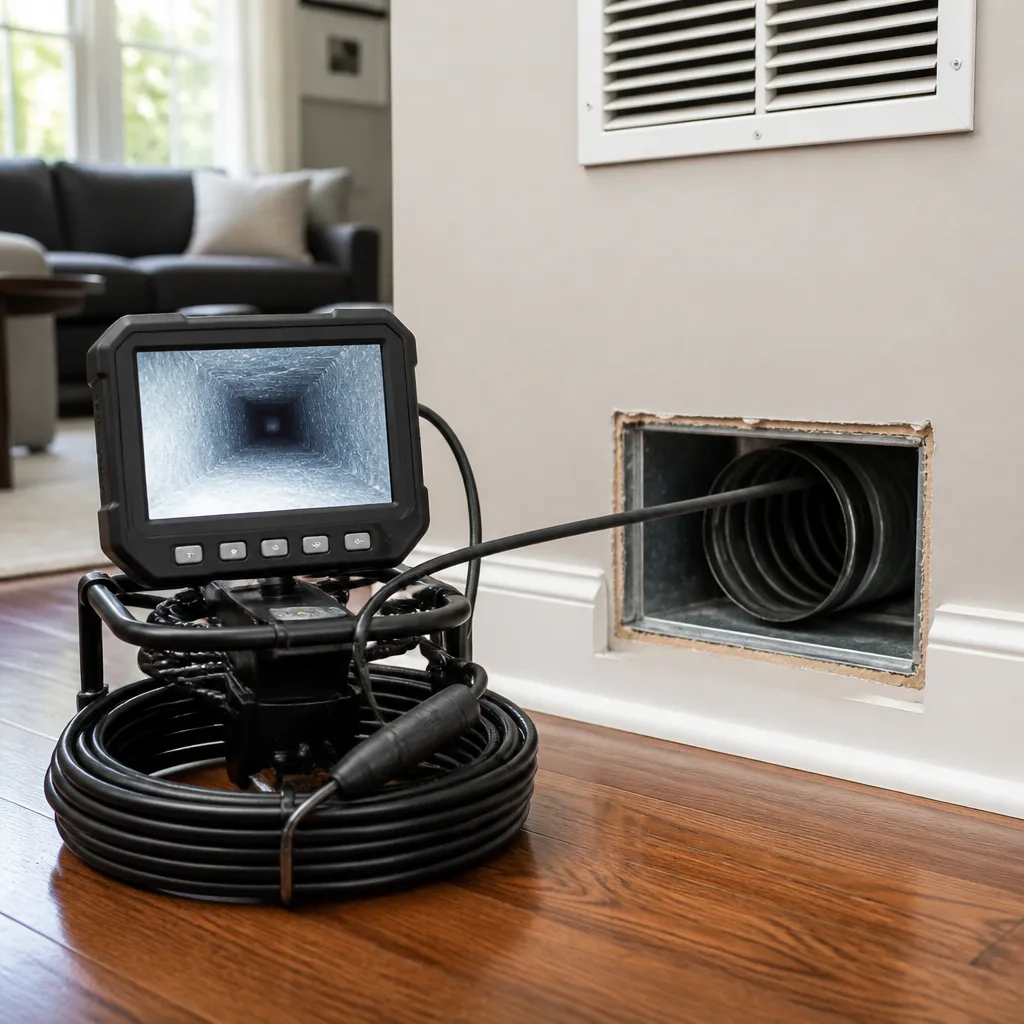
- Camera inspection
- Sanitizing & deodorizing
Table of Contents
- Why Hesperia Ducts Fail Differently
- The Month-by-Month Hesperia Maintenance Calendar
- How to Inspect Flex Duct Connections at Registers and Branch Takeoffs
- Filter Selection for Hesperia Homes: A Decision Tree
- What to Log Between Professional Visits
- Checklist Items for Homes with Evaporative Coolers Running Parallel to HVAC
- Common Mistakes to Avoid
- When to Call a Professional
Why Hesperia Ducts Fail Differently
In our experience working on air systems across the High Desert, the failure patterns we see in Hesperia homes rarely match what a typical HVAC checklist anticipates. The Mojave’s alkaline dust is finer than what you’d find in coastal or inland valley homes. It doesn’t just settle on visible surfaces; it works its way through filter media edges, past poorly sealed register boots, and into the microscopic gaps around duct connections. When Santa Ana winds kick up in the fall, that fine particulate load multiplies. We’ve pulled apart return plenums in Hesperia homes that looked clean from the register side but held a half-inch of compacted dust against the interior walls.
The second factor is UV. Hesperia sits at roughly 3,200 feet of elevation with an average of 280-plus sunny days per year. Exposed flex duct in unconditioned attics, especially the gray or silver insulated-flex lines that run through newer construction, breaks down faster under that UV and heat load. The outer vapor barrier becomes brittle, the inner liner develops pinholes, and the spiral wire support can separate from the connection collars. This isn’t a defect in the material; it’s the local climate doing what it does. A flex duct that would last 20 years in a mild coastal climate may show meaningful degradation in 10 to 12 years in Hesperia.
Third is the summer overload pattern. Hesperia’s cooling season runs longer and harder than most California markets. An HVAC system running 12 to 16 hours a day from May through September pushes more air volume through your ducts in six months than many systems see in two years. That accelerated duty cycle means dust accumulation happens faster, filter loading accelerates, and loose connections get stressed by constant thermal expansion and contraction cycles. The maintenance calendar below reflects these realities, not a generic national average.
For a deeper look at how professional cleaning addresses the dust accumulation side of this equation, see our guide to Air Duct Cleaning in Hesperia.
The Month-by-Month Hesperia Maintenance Calendar
Here’s the schedule we recommend to Hesperia homeowners, calibrated to actual seasonal patterns in the High Desert rather than generic quarterly labels. Follow this and you’ll stay ahead of the dust load, the heat, and the wind events.
January – February: The Deep Winter Check
- Inspect all visible duct connections while the system is in heating mode. Cold air settles differently than warm air, and winter is when you’ll notice cold spots at register boots that indicate a disconnected or poorly sealed run. Check every register box you can reach, especially in rooms you don’t use often.
- Listen for whistling or rattling during a heating cycle. Mild rattling can mean a loose damper inside a register box. A distinct whistling at a specific vent often signals airflow pushing past a partially separated duct collar.
- Check your filter and plan for spring. If you’re running a 1-inch fiberglass filter, January is a good time to consider upgrading before wind season starts. More on that decision tree below.
- Log your system’s cycle times. If the furnace is short-cycling (running for brief bursts and shutting off), that’s often a restricted airflow signal, not an equipment failure. A clogged filter or crushed duct run causes short-cycling more often than most homeowners assume.
March: Pre-Wind-Season Preparation
Hesperia’s spring wind season typically picks up in late March and runs hard through May. You want to enter it clean.
- Replace your filter even if it doesn’t look loaded. The goal is maximum media capacity heading into the dustiest period of the year.
- Check and tighten all accessible register boots. The vibration from wind buffeting against your roof and exterior walls can work loose screws on ceiling registers, creating air gaps that pull attic dust directly into the living space.
- Walk the perimeter of your home and look for gaps where dust enters: unsealed utility penetrations, gaps around the HVAC lineset where it enters the wall, and worn weatherstripping on the garage-to-house door. Duct leakage isn’t the only dust source; outside air pulled into the conditioned space through building gaps gets drawn through your return and distributed through the ducts.
April – May: Peak Wind Season Vigilance
These are the months when Hesperia sees its worst airborne dust. If you live in the Mesa or east toward the open desert, wind-driven dust can coat a clean register in visible film within 48 hours.
- Inspect your filter at 30 days, not 60 or 90. Hold it up to a light source. If you can’t see the light pattern clearly through the media, swap it. In peak wind season, a filter that would last 90 days in Orange County may load out in three to four weeks in Hesperia.
- Run your system fan on “On” for a few hours after wind events. This keeps continuous airflow through the filter and prevents dust from settling inside the duct runs where it accumulates as a future problem.
- Check your flex duct runs visible in the attic or accessible through attic hatch. Look for sagging sections that have pulled away from hangers. A flex duct that sags below the connection point builds condensation and collects dust at the low point.
- Note any new musty smell from specific registers. In Hesperia, this is often dust that’s been pulled in during a wind event and is now being heated and re-circulated. It’s not necessarily mold; it’s dust baking against the heat exchanger. Don’t ignore it, but don’t panic over it either.
June: Pre-Summer Flex Duct Inspection
June is the most important month on the Hesperia maintenance calendar. You’re about to ask your system to run hard for four to five months, and the duct connections that survived the winter heating season may not survive the added thermal expansion of summer. This is a detailed inspection and you want to be thorough. See the section on flex duct inspection below for a full step-by-step.
July – August: Summer Load Management
- Check the filter every 30 days, religiously. When your system runs 14 hours a day, airflow restriction from a loaded filter has a direct impact on cooling performance and energy cost.
- Feel the temperature at multiple registers on a hot afternoon. A register blowing warm air while others blow cold is a classic sign of a disconnected duct run in the attic. The cooled air is escaping into the attic, and the system is pulling attic air into the supply run. This is a problem you address immediately, not in the fall.
- Watch for excessive dust accumulation on visible surfaces. If you’re dusting your furniture every few days in July and it’s not wind season, that dust is likely coming from inside your ducts, not from outside. That’s a signal to schedule a professional cleaning before fall.
September – October: The Second Wind Season
Hesperia’s fall Santa Ana pattern is often sharper than the spring season. It’s also when systems transition from cooling to heating, which is its own maintenance trigger.
- Repeat the pre-wind-season checklist from March: fresh filter, tightened registers, perimeter dust-gap check.
- Consider a professional duct inspection if you didn’t do one in spring. The transition months are our busiest inspection season in Hesperia because homeowners notice smells and airflow changes when the system switches modes. Duct issues that were masked by summer cooling become audible and noticeable once heating starts.
- If you have a whole-house humidifier or plan to use portable humidifiers in winter, now is the time to check your supply run for any signs of past condensation damage, which looks like water-stained insulation or rust spots at sheet metal connections.
November – December: Post-Wind-Season Recovery
- Replace the filter with a clean one for the heating season, even if your fall filter still looks serviceable.
- Do a full register inventory: count every supply and return in your home and make a written list. Note which rooms are comfortable and which run hot or cold. This simple log makes your next professional service visit dramatically more productive.
- Assess the year. If you changed filters more than eight times, had visible dust on registers within days of cleaning, or smelled any mustiness when the system ran, your ducts are overdue for professional cleaning. Schedule it during the winter when our calendar has more flexibility than spring or fall.
Need the full professional cleaning process broken down? Start with our Duct Cleaning Hesperia home page for service details and scheduling.
How to Inspect Flex Duct Connections at Registers and Branch Takeoffs
Flex duct failures in Hesperia follow a predictable pattern. The connection point where the flex duct’s inner liner meets a metal register boot or branch takeoff collar is the first place to check. Duct tape (the classic gray tape, not UL-rated foil tape) fails under Hesperia’s attic heat, and many homes in the High Desert have older installs where cloth-backed tape was used at these connection points. It dries out, loses adhesion, and the duct separates. Here’s how to catch the failure before it becomes a full disconnect.
- Turn your system fan to “On” at the thermostat. You need constant airflow during the inspection. Heat or cool mode doesn’t matter; you need air moving through the system.
- Go to each register in the home, one room at a time. Place your hand flat over the register face and feel the airflow. Note the relative strength. A register that moves noticeably less air than its neighbors is suspect. A register that moves no air is a confirmed issue.
- Remove the register cover (usually two screws or simple friction clips) and look inside the register boot with a flashlight. You’re looking for the junction where the flex duct attaches to the boot. Feel around the seam with your fingers. If you can feel a gap, a rough edge, or the duct material separating from the metal, you’ve found a leak.
- Check for dust staining around the boot exterior. In Hesperia, a disconnected or leaky duct connection at a register boot pulls attic dust through the gap. The dust leaves a telltale dark ring or streaking on the inside of the boot and the surrounding drywall. If you see a gray halo around a register opening, there’s a connection problem behind it.
- If you have attic access, inspect the branch takeoffs where flex runs split off the main trunk. Look for the same signs: sagging flex, tape that’s cracked or peeling, visible gaps at the collar, and dust rings where the connection should be sealed. Also look for insulation that’s been torn or disturbed; in Hesperia attics, rodents and birds occasionally nest and damage duct insulation.
- Document what you find with photos. A phone photo from the same angle each time builds a useful comparison record. When a professional arrives, those photos tell them exactly where to start looking.
One safety note: Attic work in Hesperia between May and September is dangerous. Attic temperatures routinely reach 140°F or higher during summer afternoons. Do flex duct inspections in the early morning before the attic absorbs heat, wear a dust mask, and wear long sleeves to protect against fiberglass insulation contact. If you’re not comfortable in an attic environment, this is exactly the kind of inspection a professional handles as part of standard service.
If an inspection turns up separation or damage, the fix is specifically what our Air Duct Repair in Hesperia service addresses. Most Hesperia companies only clean and walk away; we find and repair.
Filter Selection for Hesperia Homes: A Decision Tree
The right filter for a Hesperia home depends on where you live relative to unpaved roads, active construction, and wildfire smoke corridors. Here’s the decision process we walk homeowners through:
Step 1: Assess Your Dust Exposure
- Home near unpaved or dirt roads (common in the Mesa, Summit Valley, and the Ranchero corridor): You need a filter with a MERV rating of at least 11. The fine alkaline dust from dirt roads passes through basic fiberglass and MERV 8 filters. Go to MERV 11 or 13.
- Home within half a mile of active construction (much of Hesperia’s newer subdivisions and all along the Main Street corridor): You’re dealing with construction dust that includes concrete particulate, drywall dust, and fiberglass fibers. MERV 11 minimum, and plan on more frequent replacement during construction phases.
- Home in a wildfire smoke corridor (generally the foothill areas along Highway 173 and the northern edge of the city): A MERV 13 filter with a carbon component helps with smoke particulate during fire season. If you’re in this zone, keep a spare MERV 13 on hand for September and October.
- Interior home in an established neighborhood with paved streets, no construction nearby: MERV 8 to 10 is generally adequate for the visible dust load, but you’ll still need a 45 to 60-day replacement schedule.
Step 2: Match Filter to System Capability
Before you buy a high-efficiency filter, check your system’s static pressure tolerance. Older blowers and undersized return drops can’t handle the airflow restriction of a MERV 13 pleated filter. If your system is more than 15 years old or you’re not sure, have a professional check static pressure before upgrading. A filter that’s too restrictive does more damage than no filter at all: it causes your blower to work harder, it worsens duct leakage because the system runs at higher static pressure, and in Hesperia’s heat, a struggling blower is a failure waiting to happen.
Step 3: Establish Your Replacement Cadence
- MERV 8 fiberglass: 30 to 45 days in Hesperia, regardless of manufacturer’s 90-day claims.
- MERV 8 to 10 pleated: 45 to 60 days in average Hesperia conditions.
- MERV 11 to 13 pleated: 60 days typical, but inspect at 30 days during wind season.
- 4-inch media filters (if your system has a media cabinet): 6 to 12 months, but inspect every 60 days during wind season.
The rule in Hesperia is simple: whatever the manufacturer’s replacement interval says, cut it by a third. Our dust load is higher than the national average those recommendations are based on.
What to Log Between Professional Visits: The Homeowner’s Log
Here’s something most checklists miss: the single highest-value thing a Hesperia homeowner can do between professional cleanings is keep a simple written log. When a technician arrives at your home with a blank diagnosis, they’re working from what they can see that day. When you hand them a log of six months of observations, they’re working from a pattern. Patterns diagnose. Individual observations only point.
What to record, and when:
- Filter replacement dates and what you saw. Each time you replace a filter, note the date and describe the loading pattern: even gray, dark streaks, a concentrated dirty spot on one side. A filter that loads unevenly signals an airflow imbalance or a duct leak on the dirty side.
- Odor events. When you smell something from the registers (musty, burning, sour, chemical), note the date, the smell, which rooms, and whether the system was in heat or cool mode. A smell that appears only at the start of a heating cycle after months of cooling is often dust on the heat exchanger. A smell that persists is a different issue.
- Airflow changes. If a room that used to stay comfortable now runs hot or cold, log it. Note the room, the date, and what you observed. Airflow changes that develop over weeks are duct or filter related. Changes that happen overnight are more likely a disconnection or a damper failure.
- Visible dust accumulation rates. After a deep house cleaning, note the date. Then note when you first see a visible dust film on dark furniture. The shorter the interval, the more likely you have a duct leak or a return-side penetration pulling particulate into the system.
- Energy bill anomalies. A summer cooling bill that spikes 20 to 30 percent over the previous year’s same month, with no change in thermostat habits, frequently traces back to duct leakage in the attic. Your system runs more to cool the same space because cooled air is escaping into the attic.
- Any work done on the home that could affect the ducts: roof repairs, pest control treatments, insulation work, bathroom remodel exhaust fan installs, anything. If a tradesperson worked in your attic, your ducts may have been moved, stepped on, or disconnected. Note the date and the trade.
This log doesn’t have to be formal. A note on your phone or a page in a notebook works. The point is the record. When we arrive for a professional cleaning in Hesperia and a homeowner hands us a log like this, the visit is faster, the diagnosis is more accurate, and the outcome is better. You’re not just getting your ducts cleaned; you’re giving the technician the information they need to identify why they got dirty in the first place.
Checklist Items for Homes with Evaporative Coolers Running Parallel to HVAC
A significant number of Hesperia homes either run evaporative coolers exclusively or have a swamp cooler connected in parallel with central HVAC, often switching between the two seasonally or even daily. This configuration creates maintenance requirements that standard HVAC checklists never address. If your home has both, add these items to your calendar:
- Seasonal damper verification (twice per year). The duct damper that isolates the evaporative cooler from the central HVAC system must be positioned correctly when you switch between systems. If the damper isn’t fully sealed on the unused side, the running system pulls air through the inactive equipment. In winter, that means your furnace pulls cold outside air through the evaporative cooler. In summer, your AC pulls attic-warmed air through the cooler when the cooler isn’t running. Check the damper in April when switching to cooling and in November when switching to heating. If your system uses a manual damper rather than an automatic one, label it clearly so you don’t forget which position is which.
- Monthly filter check during cooler season. Evaporative coolers pull outside air directly into your home. When the spring winds blow dust through Hesperia, that dust goes straight into your ducts unless the cooler has adequate filtration (many don’t). Check any filter media at the cooler air inlet weekly during wind events and monthly during normal conditions. A cooler running with no filtration during Hesperia’s spring winds will load your ducts with more dust in one month than a year of normal HVAC operation.
- Duct moisture inspection after each cooling season. Evaporative coolers add humidity. That’s their function. But when you run a swamp cooler for months and then switch to central HVAC, the moisture that accumulated in the duct runs (especially flex duct in cooler attic spaces) becomes a mold and mildew concern. After you shut down the cooler for the season, inspect accessible duct runs for any sign of interior condensation or musty odor during the first few days of HVAC operation. If you catch a damp or musty smell then, address it immediately.
- Register and boot cleaning between cooler and HVAC seasons. Swamp cooler air carries mineral particulate from the water (Hesperia’s water is hard, which adds to the mineral load). This mineral film coats register faces and boot interiors. When you switch from cooler to HVAC, clean all register faces and vacuum out the boots as far as you can reach. The mineral film acts like glue for subsequent HVAC dust, building a crust that’s much harder to remove later than it is to prevent.
- Whole-house humidifier awareness. If you supplement winter heating with a whole-house humidifier, be aware that Hesperia’s cold desert nights can create condensation inside poorly insulated duct runs. Humidified air hitting cold duct surfaces condenses, and that moisture accumulates. If you use a humidifier, inspect supply runs for condensation damage each January and February.
Many Hesperia homes have evaporative coolers that were abandoned or converted when central HVAC was added later. These orphaned systems, especially if they’re still connected to the ductwork through a sealed but unmaintained damper, can create phantom airflow issues and unexpected dust sources. If your home has both systems and you’re unsure how they interact, ask a professional to trace the ductwork and confirm the isolation points.
Need air quality upgrades beyond cleaning? We carry Honeywell and Aprilaire product lines for filtration and humidity control, which integrate with your existing system. Learn more about the equipment we bring to every job through our dryer vent cleaning in Hesperia to understand our full mechanical approach.
Common Mistakes to Avoid
- Treating a filter’s package rating as the replacement schedule. A filter box that says “lasts 90 days” is making a claim calibrated for average U.S. conditions. Hesperia’s dust load during wind season is not average. If you follow the 90-day schedule, you’re running a loaded filter for the last third of its life, restricting airflow and forcing your system to work harder in heat that’s already extreme.
- Cleaning only the registers and ignoring the boots. The register cover is the visible part, but the boot (the metal box behind it) is where dust accumulates and where duct connections live. A homeowner who cleans register faces every month but never pulls a register to check the boot is maintaining the wrong part of the system.
- Ignoring a room-specific airflow change. “The guest room has always been a little warmer” is the most expensive sentence in Hesperia HVAC maintenance. A room that’s noticeably hotter or colder than its neighbors has a duct problem, not a room problem. Ignoring it lets the issue compound until the entire system is compromised.
- Sealing vents in unused rooms to save energy. Closing supply registers in unused rooms increases static pressure in the duct system, which in turn increases leakage at every connection point. In Hesperia’s heat, that leakage is lost cooling. If you want to zone your home, do it with a properly designed damper system, not by closing registers.
- Trusting old duct tape to hold. That gray tape on your flex duct connections was likely not UL-rated for duct use even when it was installed, and Hesperia’s attic heat has been baking it since day one. If you see old cloth-backed tape on your duct connections, it’s failed or failing. The fix is professional re-sealing with proper foil tape or mastic, not more gray tape.
- Doing the first duct inspection during a heat wave. Every July, someone discovers a duct problem at the worst possible time. By then, the issue has been building for months and the attic is 140 degrees. The June pre-season inspection exists precisely so you don’t find yourself in that spot.
- Assuming a new home means clean ducts. New construction in Hesperia is notorious for leaving construction dust, drywall compound debris, and even trash inside duct runs blocked off with register covers that were never removed. If you bought a new construction home in the last two years, have the ducts inspected now. The previous owner never did.
When to Call a Professional
Some items on this checklist are homeowner work: filter replacement, register cleaning, basic observations, log keeping. But certain findings demand professional attention. If a flex duct inspection reveals separation at a register boot or branch takeoff, you’re looking at a repair, not a wipe-down. If a room airflow problem persists after filter replacement and register cleaning, the restriction is inside the duct run and needs camera inspection to locate. If a musty smell persists after seasonal transitions, you need a professional assessment of moisture intrusion. If your filter loads up weeks earlier than it should, you may have a return-side duct leak pulling attic dust into the system. And if you’ve never had your ducts professionally cleaned and your home is more than five years old, the baseline condition is unknown. Before scheduling, review Air Duct Cleaning Permits, Codes & Inspections in CA: What You Need to Know. Duct Cleaning Hesperia offers free estimates in Hesperia. Call (877) 331-2951 to schedule an inspection. Clean it. Fix it. Improve it. We do all three.
See the difference
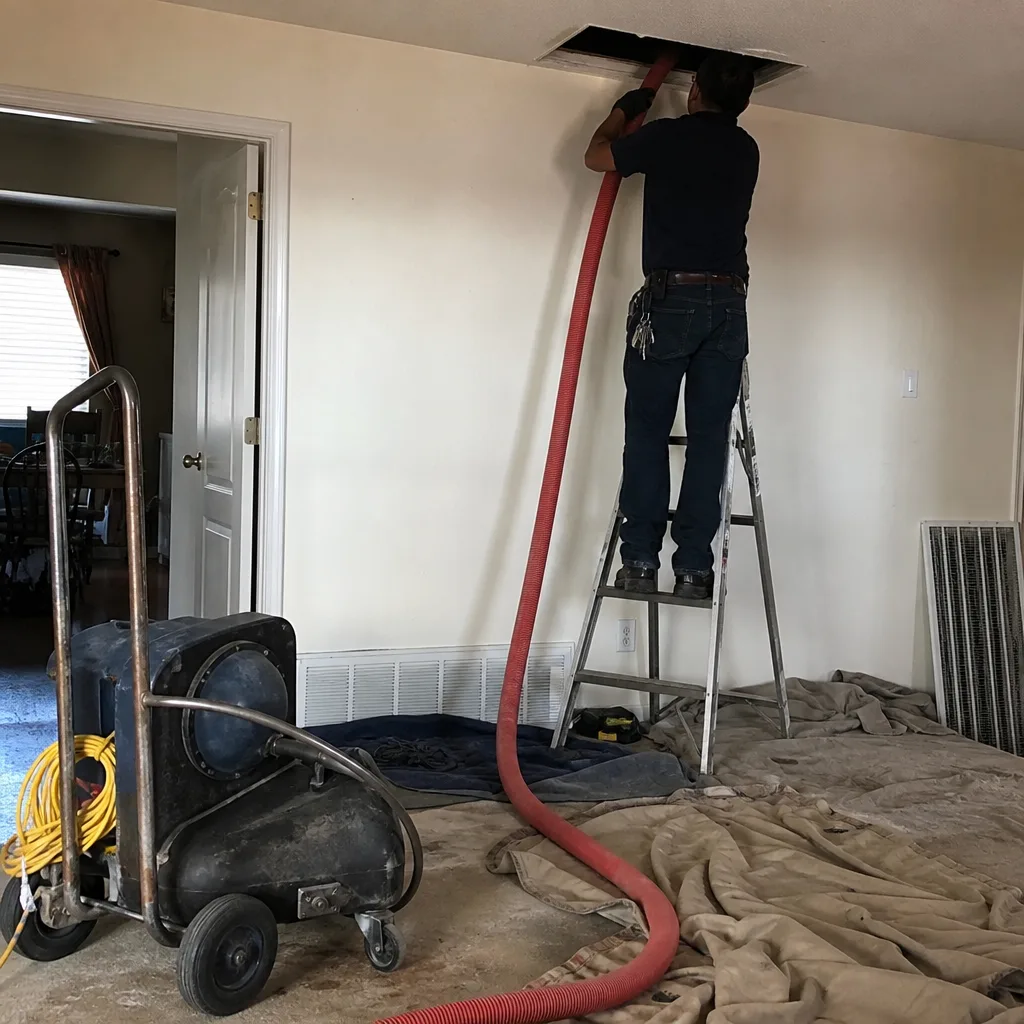 Before
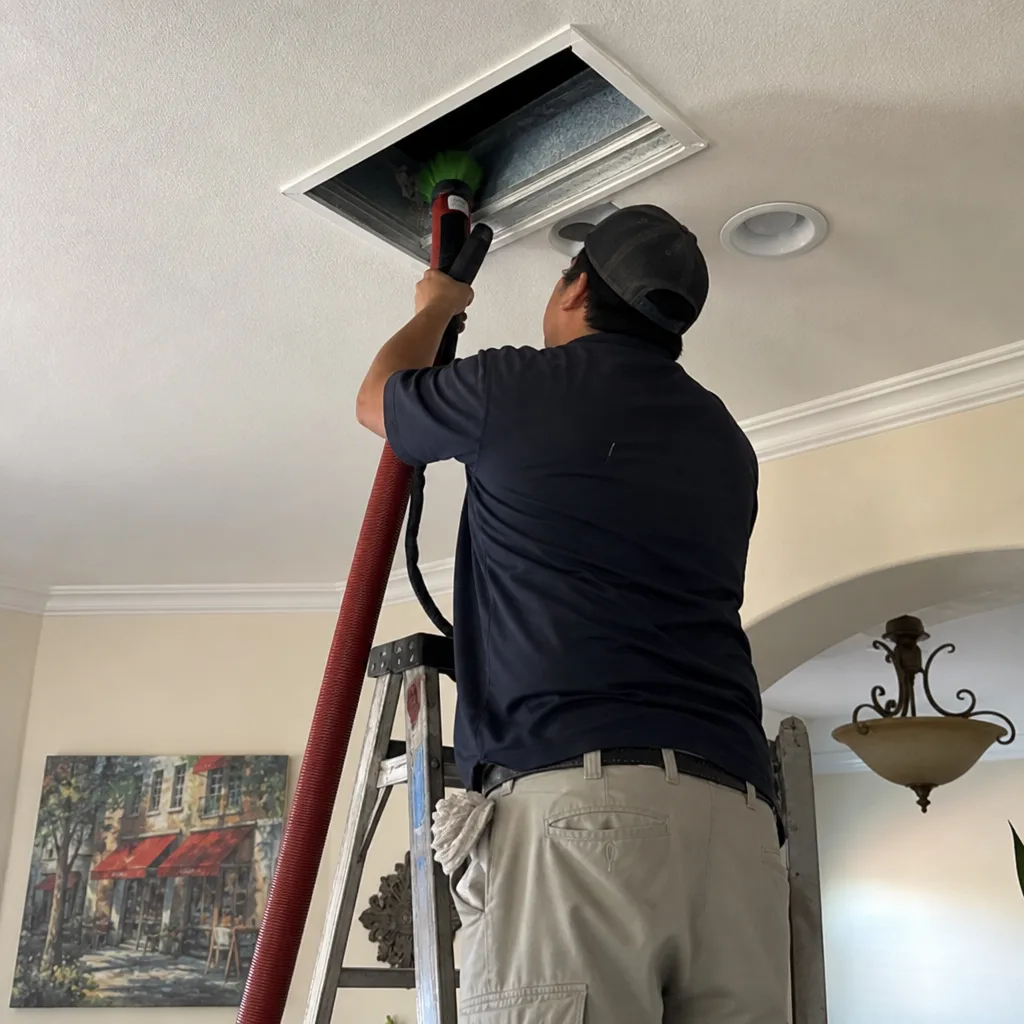 After
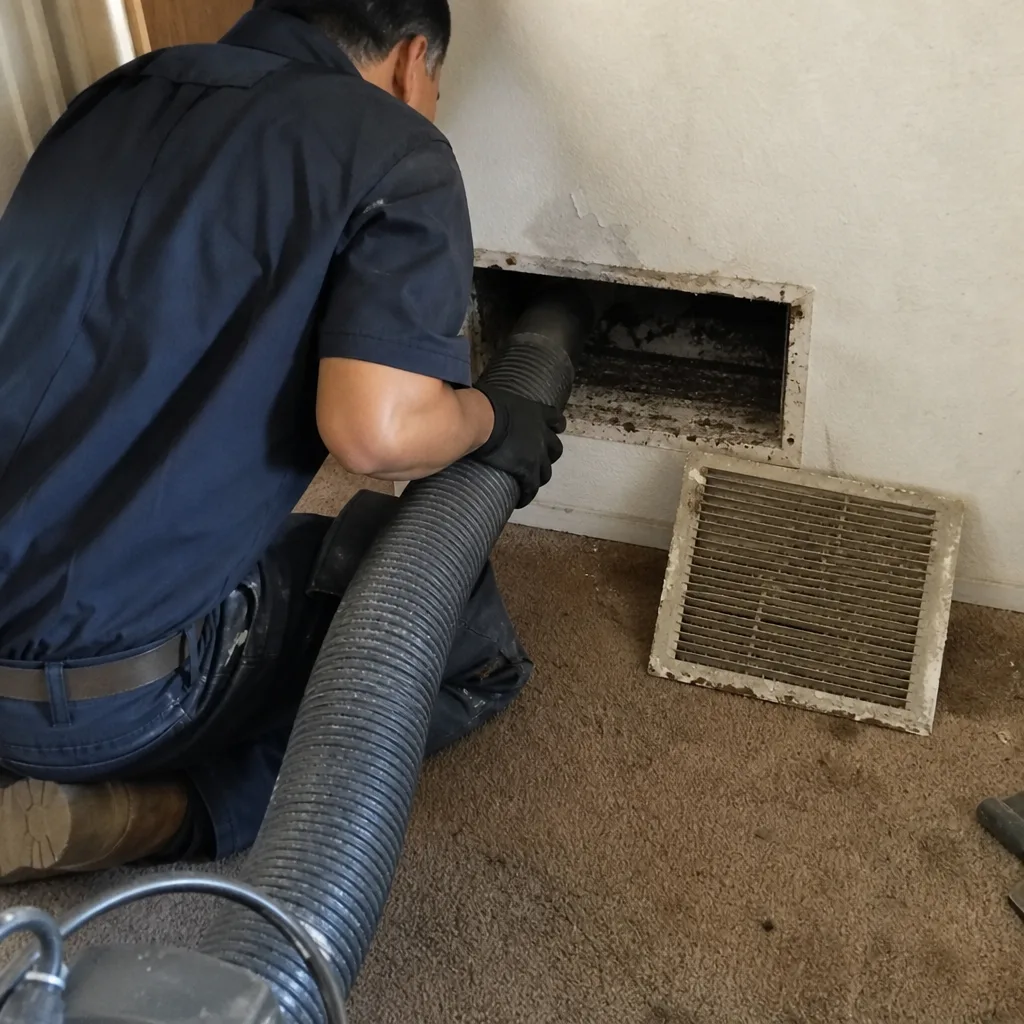 Before
 After
 Before
 After
Frequently Asked Questions
For most Hesperia homes, full professional air duct cleaning every 2 to 3 years is appropriate. Homes near unpaved roads, active construction, or wildfire smoke corridors may need cleaning annually. Homes with evaporative coolers running parallel to HVAC should be evaluated every 12 to 18 months. Call (877) 331-2951 for a free assessment based on your home’s specific exposure.
The price difference typically reflects equipment and scope. A low-price duct cleaning often uses a consumer-grade shop vac system that can’t generate the negative pressure or agitation needed to actually remove accumulated dust from the full duct run. Professional systems like the Rotobrush and Nikro units we use are industrial-grade equipment built for the job. A low-price quote also often excludes the inspection, the repair findings, or the after-cleaning verification. Ask what equipment the company uses and what the price includes before you book.
Ask for before-and-after photos of the interior of your ducts. Any professional air duct cleaning company should be able to provide visual evidence showing the duct interior before cleaning and after. At Duct Cleaning Hesperia, we capture and share these images as standard practice. If a company can’t or won’t provide them, that’s a signal.
Professional air duct cleaning removes accumulated dust, pollen, and other particulate that gets pulled into your system and re-circulated through your living space. For Hesperia homeowners with dust-related allergies or respiratory sensitivities, removing that reservoir of particulate from the ducts genuinely reduces the environmental load. It won’t eliminate all allergens, and it’s not a substitute for filtration upgrades, but it addresses a real source of indoor particulate that air filters alone can’t reach.
A shop vac does not generate the negative pressure, agitation force, or reach required to clean past the first few feet of a duct run. Duct runs in Hesperia homes extend 20 to 60 feet through attics, and the dust you see at the register is only the leading edge of what’s accumulated along the entire length. Professional cleaning uses equipment like the Rotobrush and Nikro systems we operate, which combine high-powered negative air flow with mechanical agitation designed specifically for duct interiors. A shop vac gives you clean registers and dirty ducts.
A thorough professional air duct cleaning of a typical Hesperia single-family home (1,500 to 2,500 square feet) takes 2 to 4 hours depending on the number of systems, the degree of accumulation, and the accessibility of the duct runs. Homes with multiple HVAC systems or particularly difficult attic access may take longer. We do not rush the process; the goal is a system that’s actually clean, not a fixed time slot.
The Bottom Line
A working air duct maintenance checklist for Hesperia is a document that reflects the actual desert environment: wind season vigilance in spring and fall, flex duct inspections before summer, honest filter replacement every 30 to 60 days, professional cleaning every 2 to 3 years, and a written log that turns guesswork into diagnosis. Your system works harder, picks up more dust, and fights more heat than comparable homes in nearly any other California market. The maintenance schedule has to match that. Most checklists don’t. This one does. When your log tells you it’s time for professional intervention, call (877) 331-2951. We’re the equipment-serious, full-scope air duct specialist in Hesperia. Industrial-grade equipment, residential pricing. Air you can actually breathe.
Written by the team at Duct Cleaning Hesperia, serving Hesperia since 2014.